1728
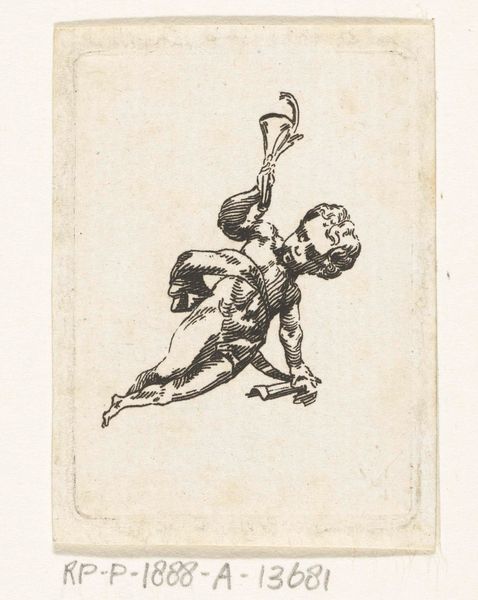
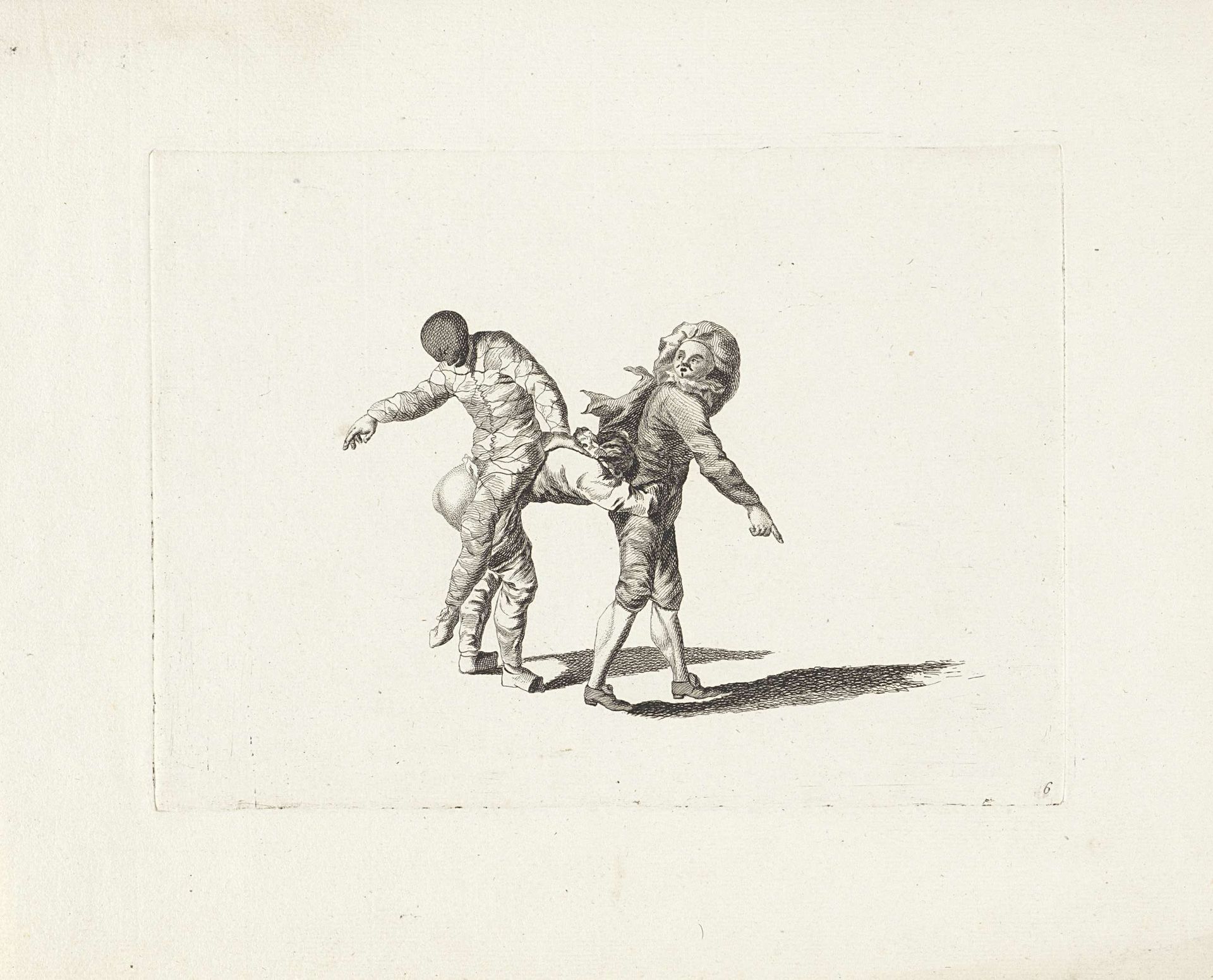
Harlekijn slaat een nar op de blote billen

Listen to curator's interpretation
Curatorial notes
This small, anonymous print depicts Harlequin spanking a jester. It speaks to the carnivalesque culture of early modern Europe, where social hierarchies were often inverted through satire and performance. Harlequin, with his checkered costume and black mask, was a stock character from the Italian commedia dell'arte tradition. Usually a clever servant, here he seems to have risen in status. The jester being spanked might represent the foolishness of those in power, who are being brought down a peg. Prints like these circulated widely, acting as a form of social commentary. The humor is broad, even crude, but it reflects a world where the boundaries between high and low culture were more porous, and where laughter could be a form of resistance. The act of spanking itself, rendered so publicly, underscores a culture grappling with issues of bodily autonomy, power, and the performance of social roles. This piece is so intriguing, precisely for its capacity to lay bare the raw nerves of a society in transition.