painting, watercolor
#
art-nouveau
#
painting
#
landscape
#
house
#
oil painting
#
watercolor
#
geometric
#
expressionism
#
cityscape
Dimensions: 22 x 28.5 cm
Copyright: Public domain
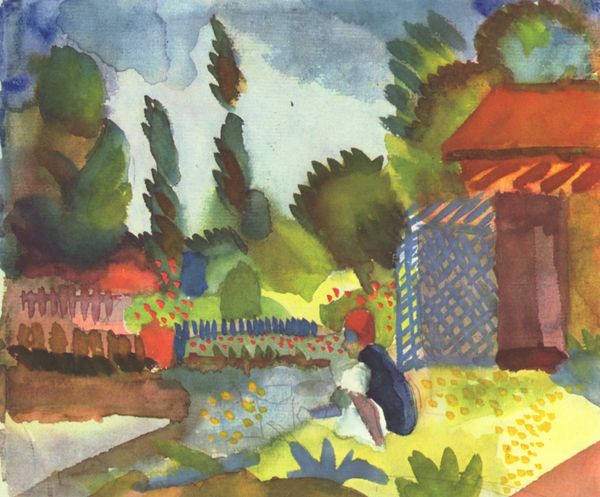
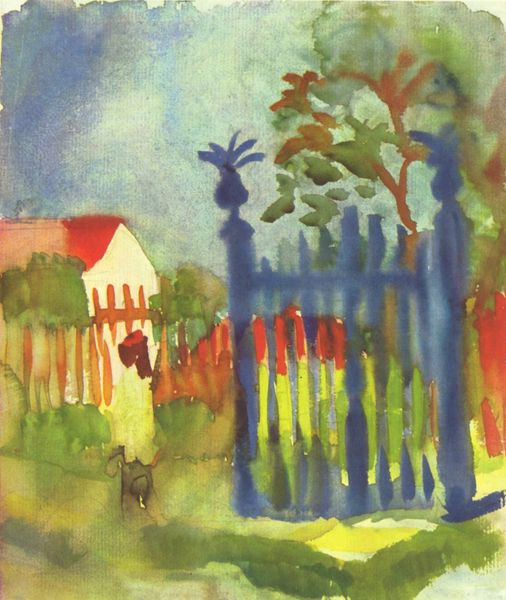
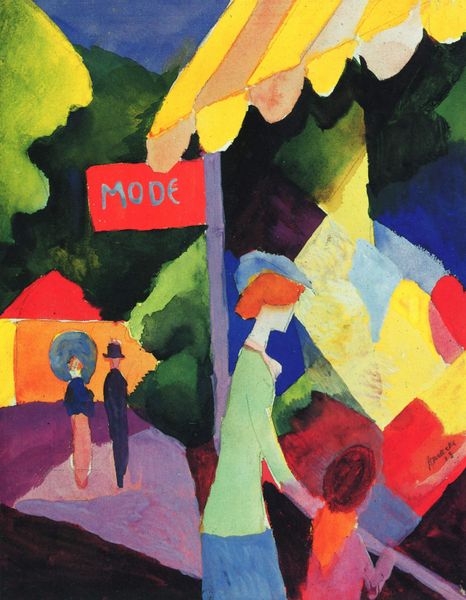
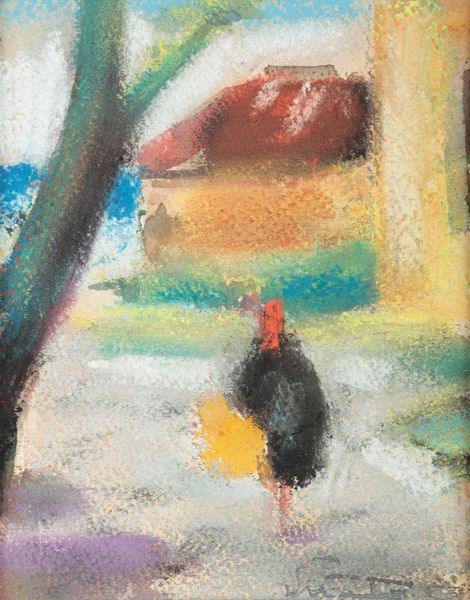
Curator: August Macke's watercolor, "House in the Garden," painted in 1914, presents us with a fascinating exploration of form and color within a domestic setting. Editor: Oh, I like it. It's wonderfully whimsical, isn't it? A touch…childlike almost? Like a memory of a garden, shimmering through the heat. Curator: Indeed. Note how Macke uses geometric forms to delineate the house and the surrounding foliage, yet the colors bleed and blend, softening the structural rigidity. Editor: Yes, and that slightly wonky perspective gives it a playful feel. It's not about perfect representation, but about capturing the *essence* of the place. Almost dreamlike. That roof—the colour sings! What kind of house do you reckon it is, beneath all those shapes? Curator: We might consider the semiotic function of the colors. The predominance of blues and greens—cool tones—establishes a sense of tranquility and harmony with nature. However, the bursts of red, punctuating the green, introduce a vibrant counterpoint. Editor: Right—little jolts of energy, eh? Keeps the eye moving. Those reds pop against the quieter blues in the house; and those soft yellows peek out, making me think of light filtering through the leaves on a sunny day... Curator: Exactly. Furthermore, the materiality of the watercolor itself is crucial. Its inherent fluidity allows for the subtle gradations of tone and the gentle merging of forms, characteristic of Expressionism. Editor: So, it's about letting the paint *do* its thing, almost like collaborating with the medium to evoke that fleeting moment, you know? Less control, more intuition. I wonder what was in his mind that afternoon? What colours surrounded him? Curator: One could read it as a synthesis of order and chaos, perhaps mirroring the artist's internal state during a period of rapid societal change preceding World War I. Editor: War…wow, yes! To think this lovely little house was painted on the cusp of such unimaginable destruction. Suddenly it feels more poignant; like a little safe haven tucked away from the madness. Curator: A pertinent interpretation. Ultimately, "House in the Garden" presents us with a multifaceted experience, revealing the dynamic interplay between structure and emotion. Editor: Exactly. The painting makes us linger on those details; makes us want to stay a little longer within its playful embrace, doesn’t it? Like visiting the childhood home you have never visited...
Comments
No comments
Be the first to comment and join the conversation on the ultimate creative platform.
 Collect
 React
React Comment
More like this