1888
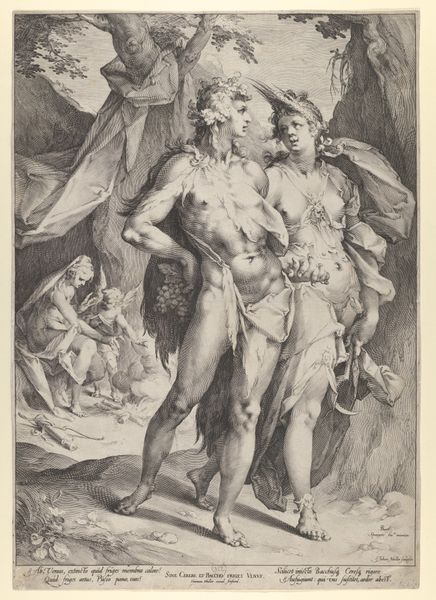
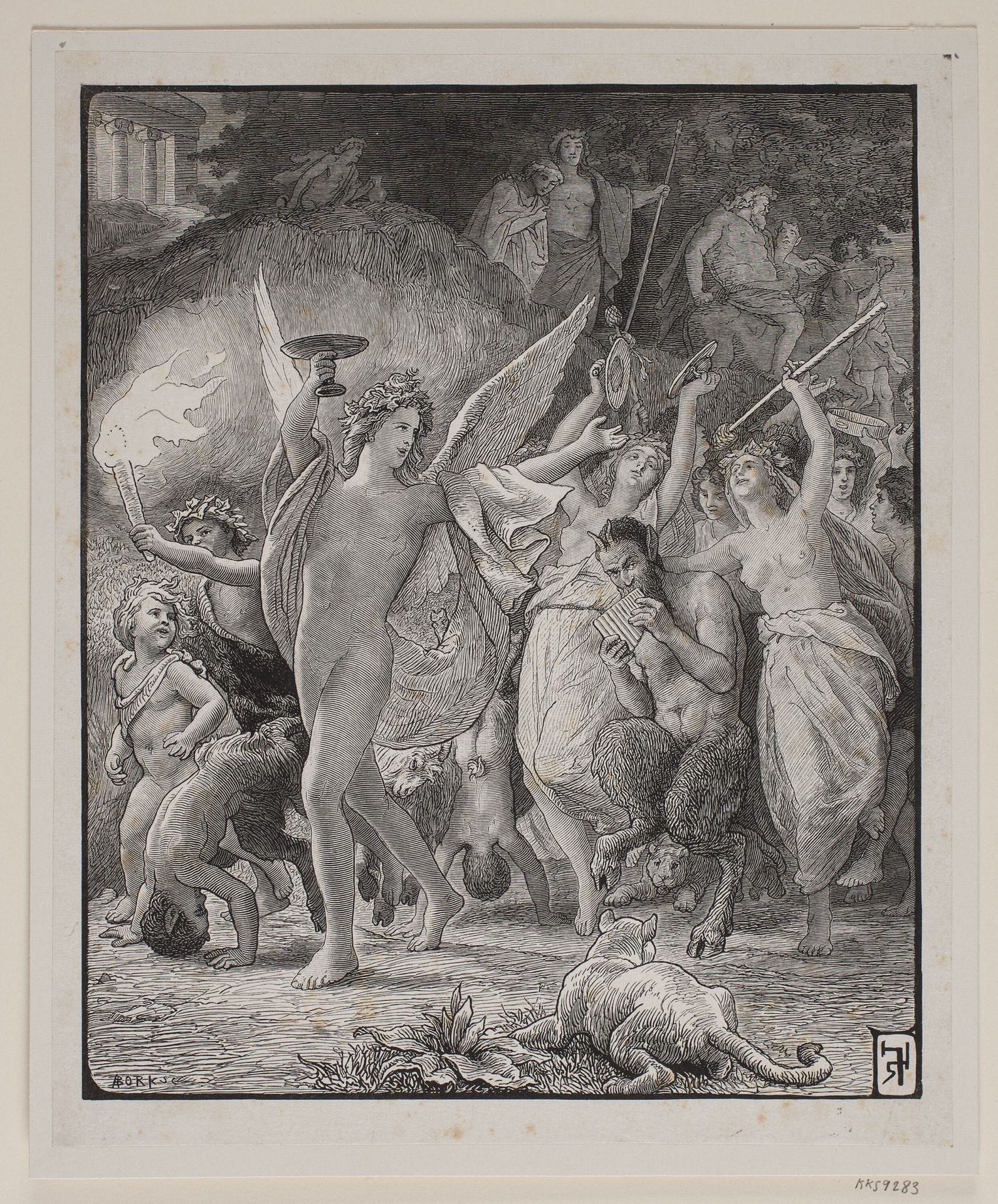
Amor hos Bacchus


Listen to curator's interpretation
Curatorial notes
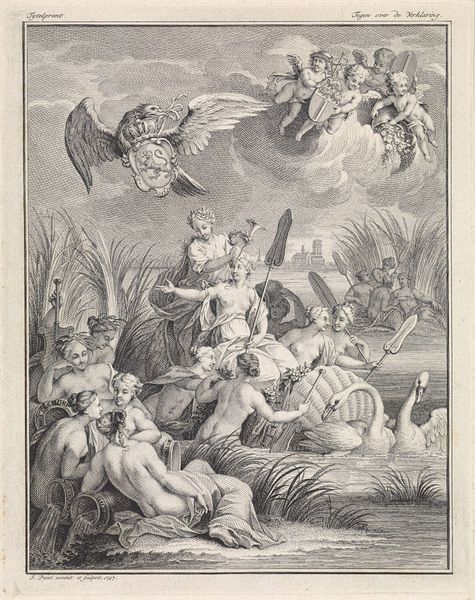
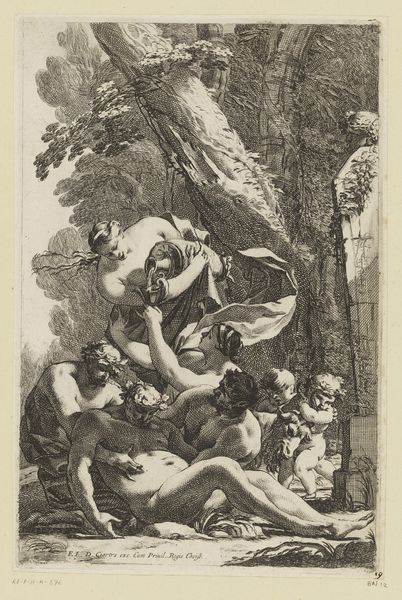
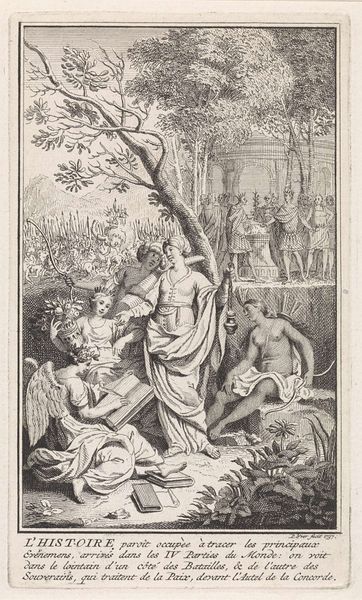
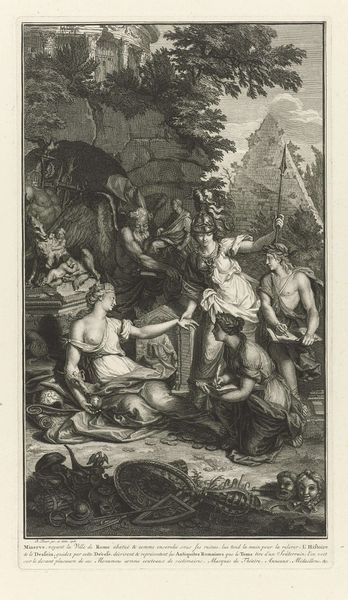
Curator: What a scene! Bork’s 1888 print, "Amor hos Bacchus," radiates a frenzied energy. The composition, though detailed, feels almost chaotic. Editor: Yes, an ordered chaos. The medium itself—engraving—lends it this incredible textured density, all that line work. You feel the physical labor involved. It's a dense thicket of figures and symbols all vying for attention. Curator: Indeed. Consider how the lines themselves delineate forms, creating both volume and a certain ethereality. It’s the strategic interplay of light and shadow that draws your eye through the composition. Editor: I’m thinking about the original block, and the physical act of carving each line. How decisions about line weight and density directly affect the social impact of a print such as this. Was it easily reproduced? Who had access to it? Curator: I understand. But note how the artist has created distinct spatial zones using line and shading to denote foreground and background? A mastery of chiaroscuro. The composition relies heavily on visual cues such as linear perspective to orchestrate an allegorical narrative of, well, love amongst Bacchus' revelers. Editor: You mentioned allegory and there’s that labor in reproducing ancient narratives. A history re-performed. And who is consuming this allegory? How is this print, this object, different when accessed in different social settings? Curator: Precisely! The naked forms themselves are deliberately stylized, lending themselves to ideals that reach to Neoclassicism. There is an undeniable focus on structure here. Editor: And structure also reflects a social order. Are the nudes representing access? Sensuality? This particular approach to printmaking would limit dissemination only to certain individuals who possessed certain social currency. Curator: An interesting way of thinking about it! This gives us quite a bit to contemplate. Editor: Definitely a fresh way of looking at this engraving! It will be interesting to explore the labor this suggests when the object meets an audience.