


Curatorial notes
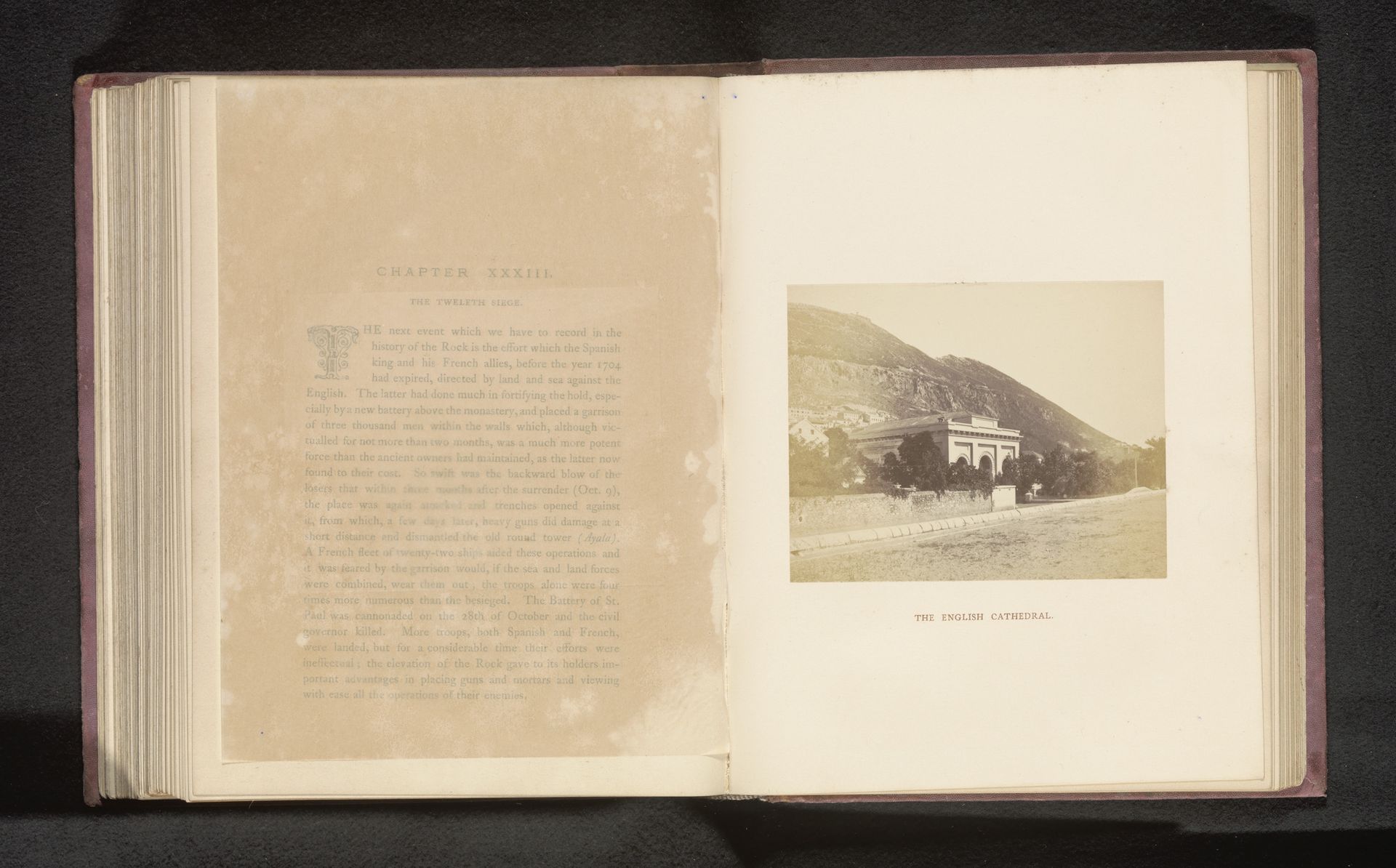
Editor: So, this is an albumen print, "The English Cathedral," created before 1870 by J.H. Mann. I'm immediately struck by how the building seems to nestle right into the landscape. It feels less like a distinct structure and more like an extension of the hill behind it. What do you see in this image, from your perspective? Curator: It's fascinating how photography at this time attempts to capture something seemingly eternal. Note how the Cathedral, while bearing signs of British neoclassical design, also evokes a classical ruin integrated with its surroundings. Buildings, particularly sacred ones, speak to our longing for permanence and transcendence. This is cleverly evoked in this depiction of the temple resting comfortably at the base of that craggy, enduring hill. How does that position change how you experience it? Editor: That's an interesting point. By placing it beneath the hill, the photograph subtly acknowledges a hierarchy of power, or maybe just… time? Curator: Precisely! It could signify both. Look at the clarity given to architectural elements versus nature; this signifies not just the material accomplishment but spiritual importance vested within these structures. Does the use of photography, rather than painting or drawing, impact how believable you consider its symbolic nature? Editor: That's a great question, I think the documentary nature of early photography adds to the reading that we're witnessing and recording cultural symbols for posterity. Curator: Absolutely. And it preserves our continuous dialogue with the cultural echoes of that bygone era, each element layered, representing its people and our history. Editor: I see now, there’s such an interesting tension created here.