About this artwork
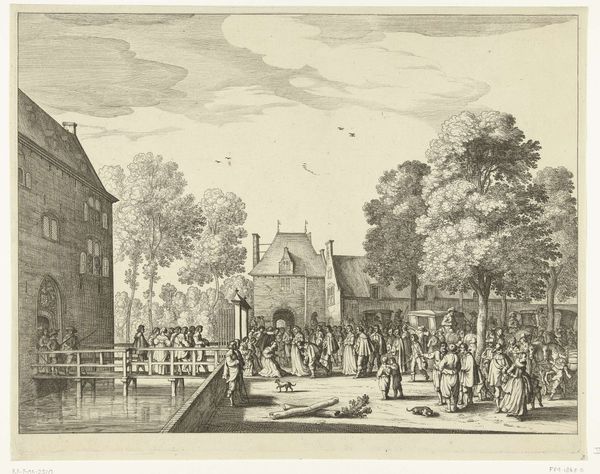
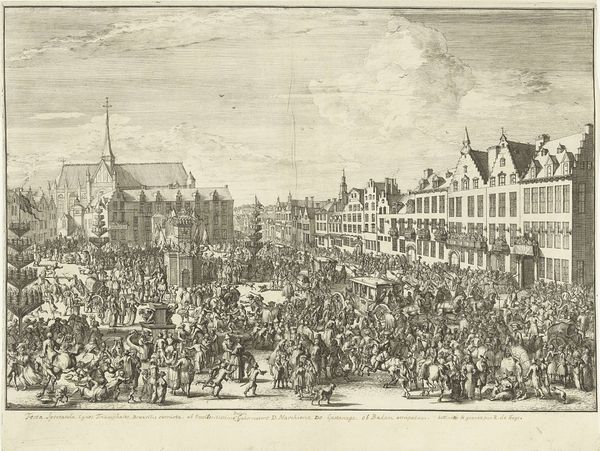
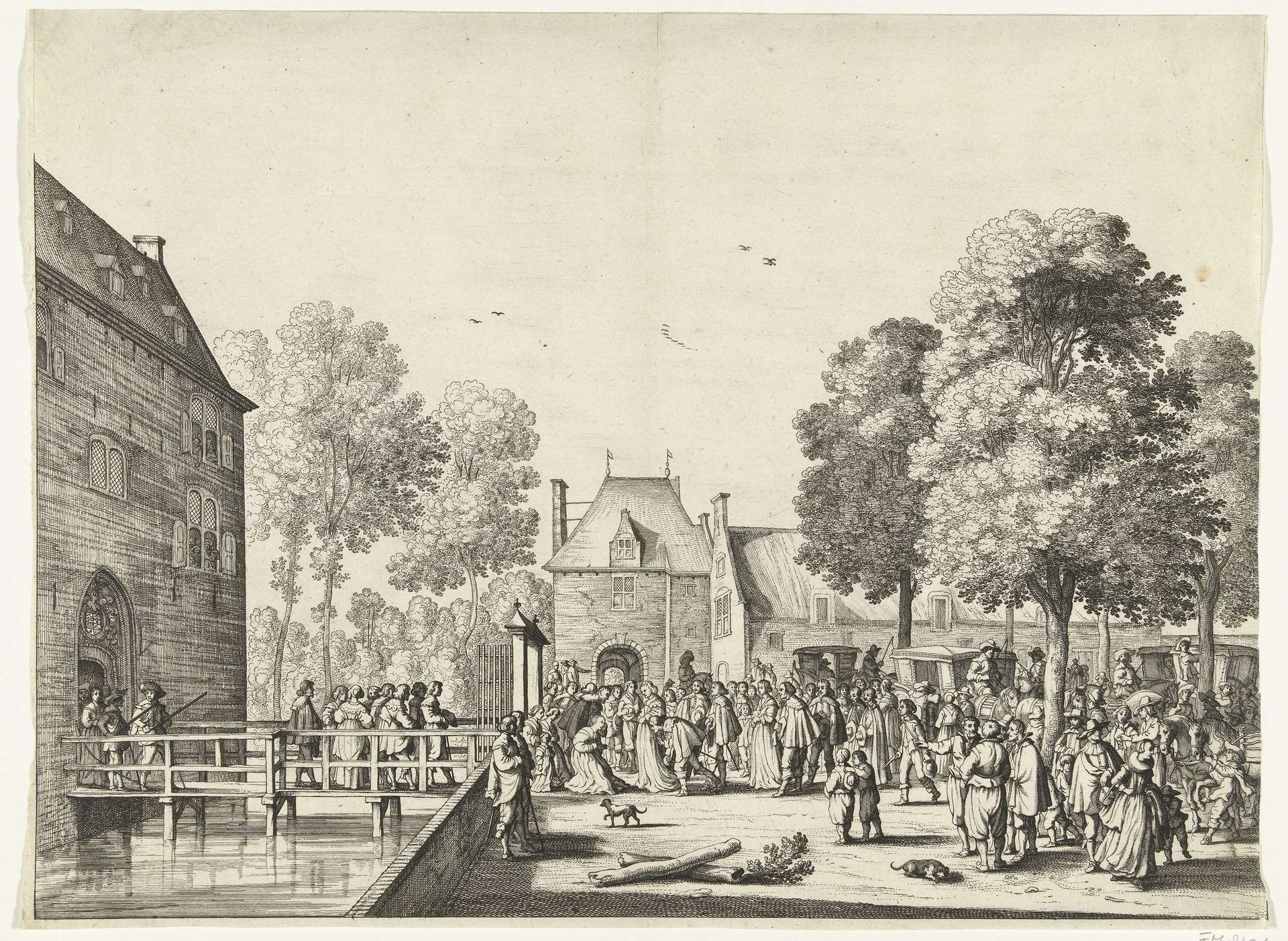
This anonymous engraving captures Queen Henrietta Maria's visit to Adriaen Pauw's castle in Heemstede in 1642. The castle itself, a formidable structure surrounded by water, embodies more than just physical defense. It represents the owner's power, status, and security in a tumultuous world. The formal greeting ceremony, with courtiers and dignitaries bowing, is a spectacle of deference and protocol. This symbolic gesture of kneeling has ancient roots, from subjects before monarchs to devotees before deities. Consider how this motif appears in medieval religious paintings, where saints kneel before the Virgin Mary, or in ancient Egyptian reliefs, where supplicants prostrate themselves before pharaohs. Each context imbues the act with a new layer of meaning, yet the core message of submission and reverence remains. Such displays of power are not merely political; they resonate deeply with our primal understanding of hierarchy, tapping into a collective memory of social structures. They remind us of the potent, often subconscious, forces that shape our perceptions and interactions.
Bezoek van koningin Henrietta Maria aan Adriaen Pauw op het Slot te Heemstede, 1642
after 1642

Anonymous
@anonymousLocation
RijksmuseumArtwork details
- Medium
- drawing, print, engraving
- Dimensions
- height 288 mm, width 389 mm
- Location
- Rijksmuseum
- Copyright
- Rijks Museum: Open Domain
Tags
Comments
Share your thoughts
About this artwork
This anonymous engraving captures Queen Henrietta Maria's visit to Adriaen Pauw's castle in Heemstede in 1642. The castle itself, a formidable structure surrounded by water, embodies more than just physical defense. It represents the owner's power, status, and security in a tumultuous world. The formal greeting ceremony, with courtiers and dignitaries bowing, is a spectacle of deference and protocol. This symbolic gesture of kneeling has ancient roots, from subjects before monarchs to devotees before deities. Consider how this motif appears in medieval religious paintings, where saints kneel before the Virgin Mary, or in ancient Egyptian reliefs, where supplicants prostrate themselves before pharaohs. Each context imbues the act with a new layer of meaning, yet the core message of submission and reverence remains. Such displays of power are not merely political; they resonate deeply with our primal understanding of hierarchy, tapping into a collective memory of social structures. They remind us of the potent, often subconscious, forces that shape our perceptions and interactions.
Comments
Share your thoughts