About this artwork
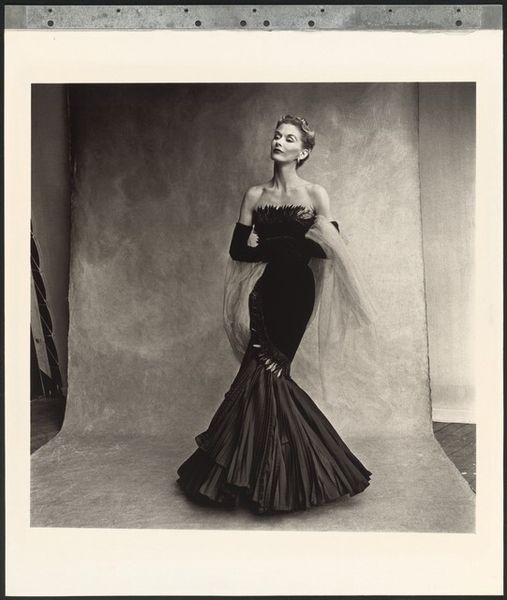
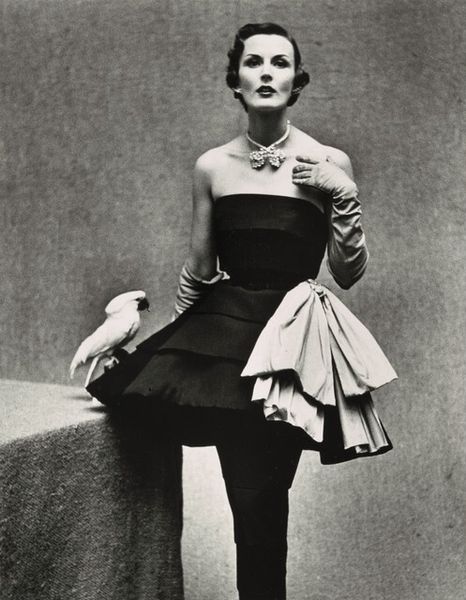
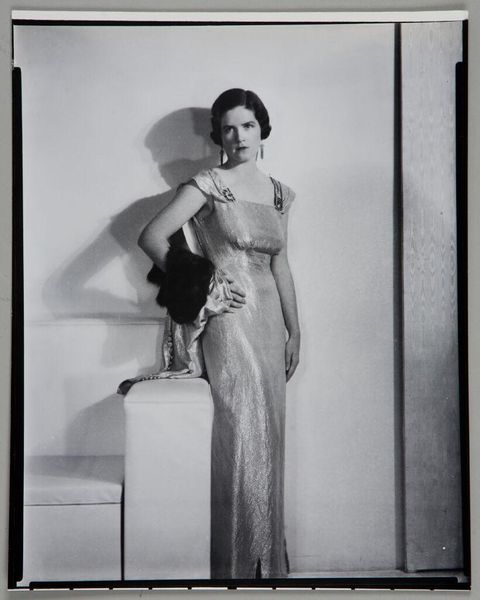
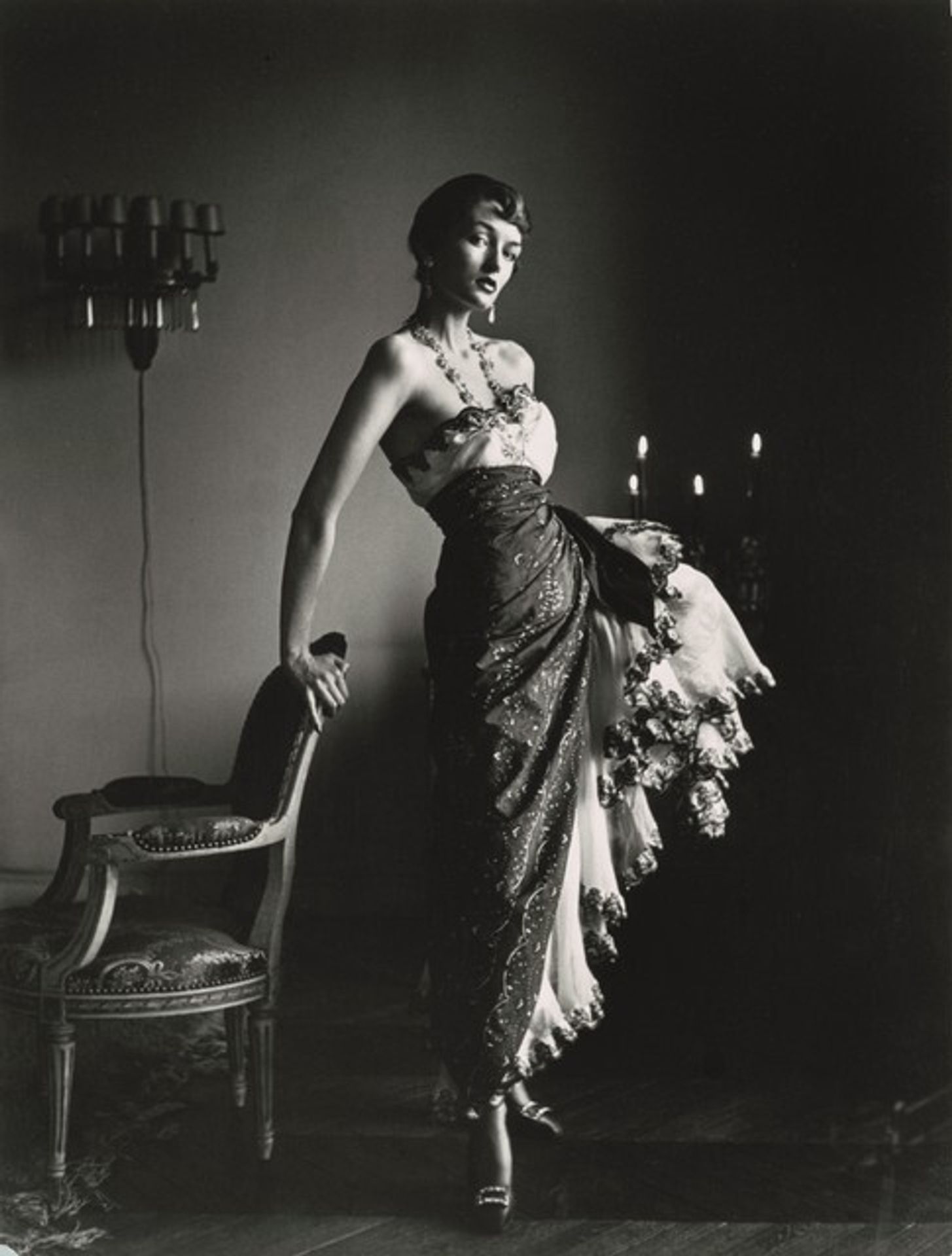
Gordon Parks made this photograph of Countess Maxime de la Falaise in Paris, wearing a Schiaparelli gown. What strikes me first is the monochrome palette, rendered with such a sensitivity to tonal variation. It’s like a painting in shades of gray, where light and shadow dance across the surface. Look at the way the light catches the ruffles of the dress, creating these incredible textures. The fabric seems to swirl and cascade around her, a physical manifestation of movement and energy. Parks captures this interplay so well, freezing a moment in time while simultaneously conveying the fluidity of the scene. I think of other fashion photographers like Richard Avedon, who also sought to capture more than just an image, but a feeling and an emotion. Ultimately, it's a reminder that art exists in dialogue, constantly borrowing and building upon what came before.
Countess Maxime de la Falaise in Schiaparelli gown, Paris
after 1949


Artwork details
- Medium
- photography, gelatin-silver-print
- Dimensions
- sheet: 50.5 × 41.1 cm (19 7/8 × 16 3/16 in.) image: 46.8 × 35.6 cm (18 7/16 × 14 in.)
- Copyright
- National Gallery of Art: CC0 1.0
Tags
portrait
still-life-photography
archive photography
photography
black and white theme
cultural celebration
black and white
gelatin-silver-print
monochrome photography
monochrome
monochrome
Comments
Be the first to share your thoughts about this work.
About this artwork
Gordon Parks made this photograph of Countess Maxime de la Falaise in Paris, wearing a Schiaparelli gown. What strikes me first is the monochrome palette, rendered with such a sensitivity to tonal variation. It’s like a painting in shades of gray, where light and shadow dance across the surface. Look at the way the light catches the ruffles of the dress, creating these incredible textures. The fabric seems to swirl and cascade around her, a physical manifestation of movement and energy. Parks captures this interplay so well, freezing a moment in time while simultaneously conveying the fluidity of the scene. I think of other fashion photographers like Richard Avedon, who also sought to capture more than just an image, but a feeling and an emotion. Ultimately, it's a reminder that art exists in dialogue, constantly borrowing and building upon what came before.
Comments
Be the first to share your thoughts about this work.