drawing, pencil
#
portrait
#
pencil drawn
#
drawing
#
mother
#
pencil sketch
#
pencil
#
genre-painting
#
realism
Dimensions: height 292 mm, width 223 mm
Copyright: Rijks Museum: Open Domain
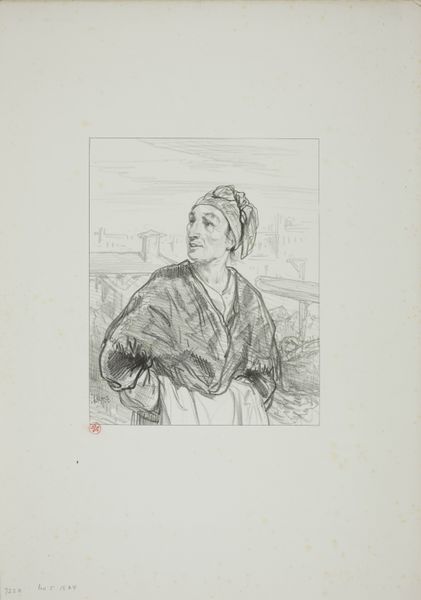
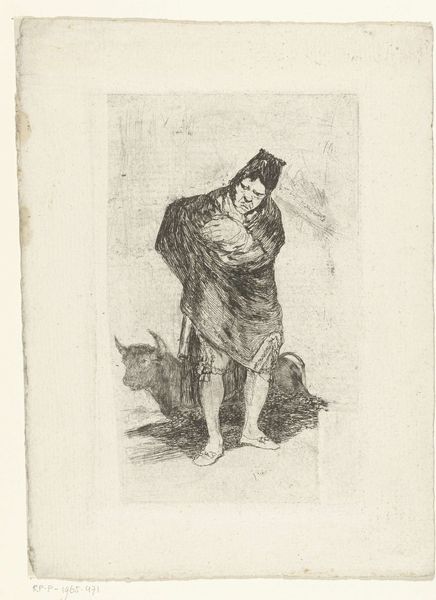
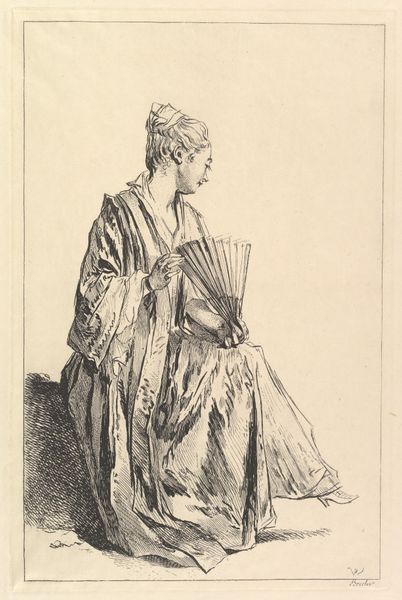
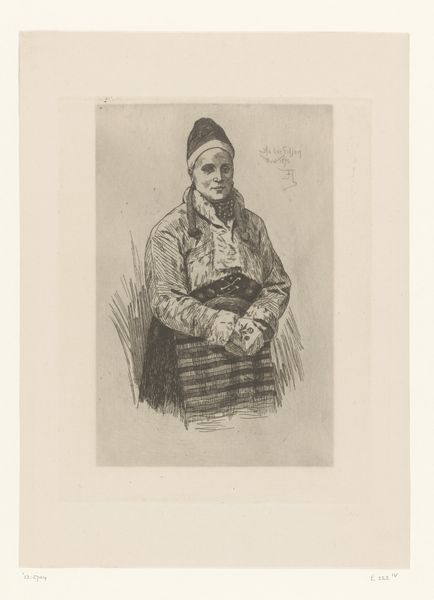
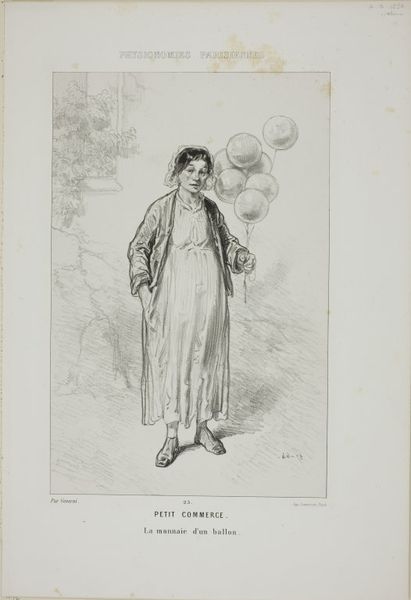
Editor: This is "Poor Woman with Baby Begging for Alms" by Paul Gavarni, created around 1857-1858, using pencil. I'm struck by the woman's direct gaze. It feels both desperate and dignified. What stands out to you about this piece? Curator: The extended hand, palm open, isn't merely a gesture of supplication. Think of similar poses in religious iconography – the Virgin Mary, saints bestowing blessings. What's echoed here isn't divine power, but rather a primal human plea, layered with a sense of inherent worth. How does that tension resonate for you? Editor: That’s a powerful reading. I was focusing on the sadness in her expression. But you're right, her gaze has a strength that contradicts that. The vulnerability is in the outstretched hand, almost a challenge. Curator: Precisely. The wrapped head covering, almost a halo in its placement, contrasts with the clear, almost clinical line work. Think about what those symbols – poverty juxtaposed with almost saintly presentation– would evoke for the 19th-century viewer. Are we meant to sympathize or judge? Or both? Editor: So the realism is kind of deceptive, inviting deeper reflection on those social issues, more than just showing poverty, then? Curator: It’s a cultural echo chamber. What appear to be the real circumstances depicted, instead point to social stigmas. Did anything surprise you as we looked deeper? Editor: Definitely the visual link to religious imagery. I would not have considered it without your insights. Thanks. Curator: And you prompted me to look past immediate assumptions of vulnerability, and consider resilience as an iconographical device.
Comments
No comments
Be the first to comment and join the conversation on the ultimate creative platform.
 Collect
 React
React Comment
More like this