About this artwork
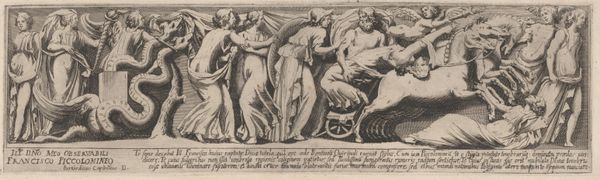
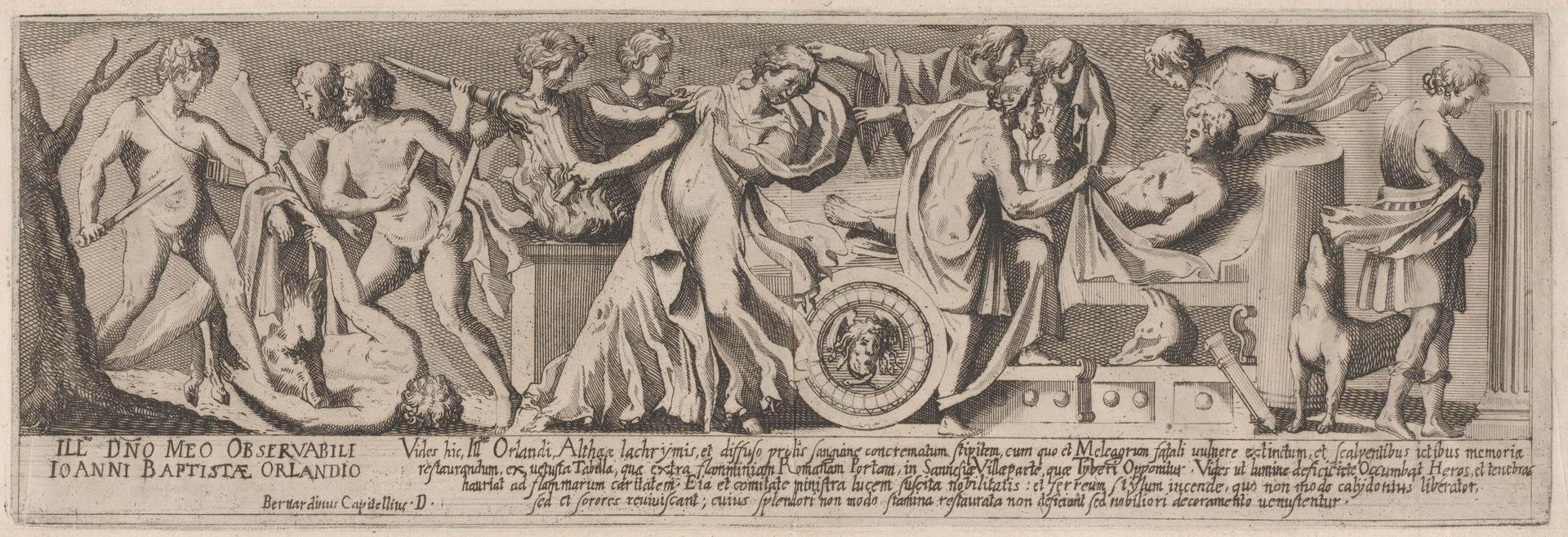
Bernardino Capitelli created this engraving, “The Death of Meleager,” in the 17th century. Capitelli was working in a moment when artists returned to classical antiquity for subject matter and inspiration. This print depicts a scene from Greek mythology that explores themes of fate, revenge, and familial conflict. Meleager's fate is sealed when his mother makes a fateful decision, leading to his tragic demise. The women around Meleager express grief which is contrasted with the stoicism displayed by male figures on either side of the scene. This contrast raises questions about gender roles and emotional expression in the context of ancient narratives. The clean lines of the engraving lend a sense of formality, while the drama of the scene evokes deep emotional responses. This balance between form and emotion invites us to consider the complexities of human relationships and the consequences of our choices.
The Death of Meleager
1628 - 1638

Bernardino Capitelli
1590 - 1639
The Metropolitan Museum of Art
Metropolitan Museum of Art, New York, NYArtwork details
- Medium
- drawing, print, engraving
- Dimensions
- Sheet (Trimmed): 4 3/4 × 14 1/8 in. (12 × 35.9 cm)
- Location
- Metropolitan Museum of Art, New York, NY
- Copyright
- Public Domain
Tags
Comments
Share your thoughts
About this artwork
Bernardino Capitelli created this engraving, “The Death of Meleager,” in the 17th century. Capitelli was working in a moment when artists returned to classical antiquity for subject matter and inspiration. This print depicts a scene from Greek mythology that explores themes of fate, revenge, and familial conflict. Meleager's fate is sealed when his mother makes a fateful decision, leading to his tragic demise. The women around Meleager express grief which is contrasted with the stoicism displayed by male figures on either side of the scene. This contrast raises questions about gender roles and emotional expression in the context of ancient narratives. The clean lines of the engraving lend a sense of formality, while the drama of the scene evokes deep emotional responses. This balance between form and emotion invites us to consider the complexities of human relationships and the consequences of our choices.
Comments
Share your thoughts