1904
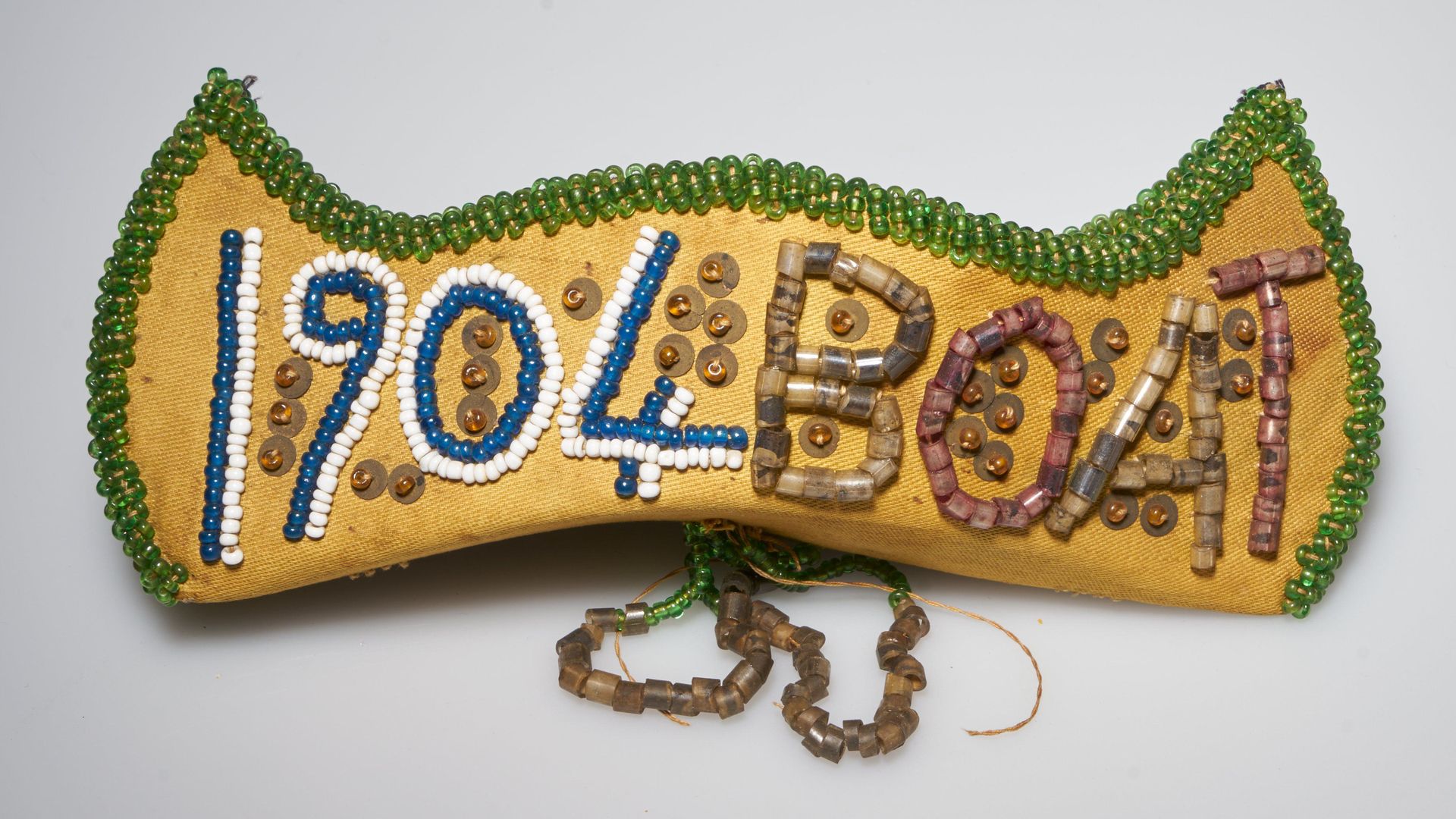
Whimsey in the Form of a Boat


Listen to curator's interpretation
Curatorial notes
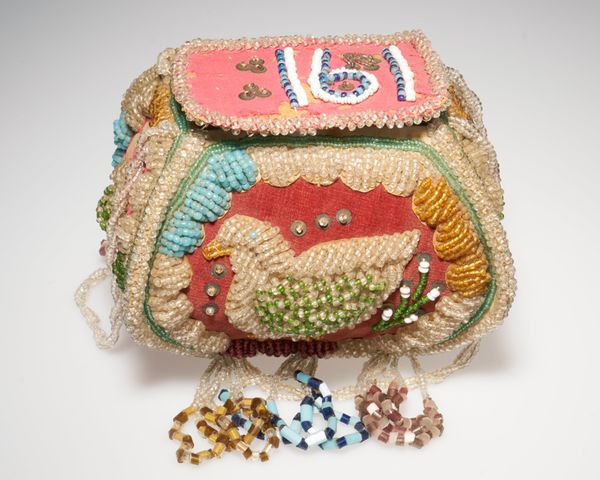
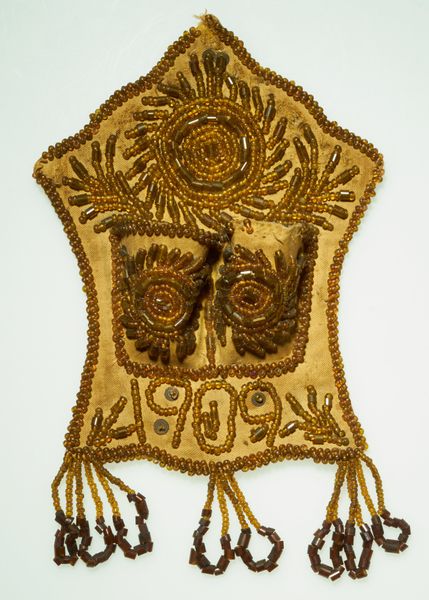
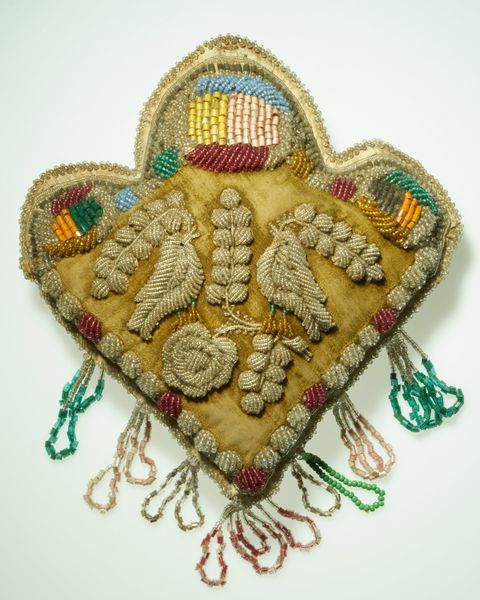
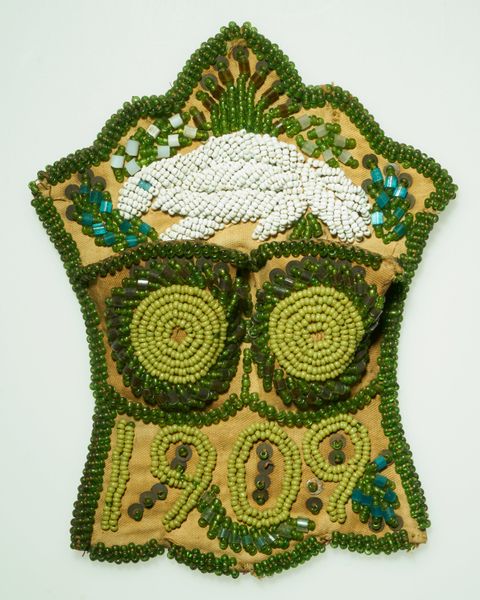
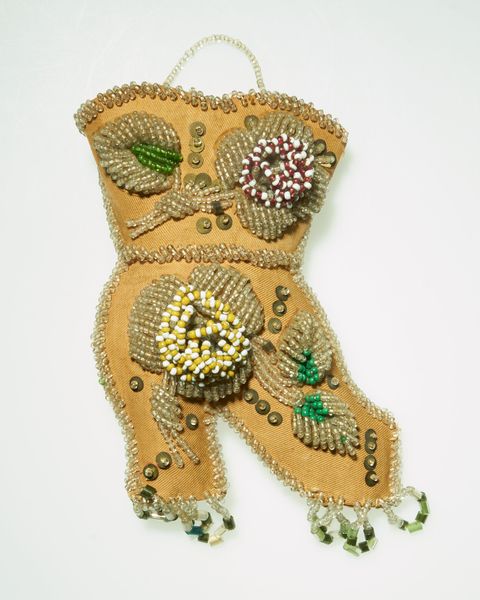
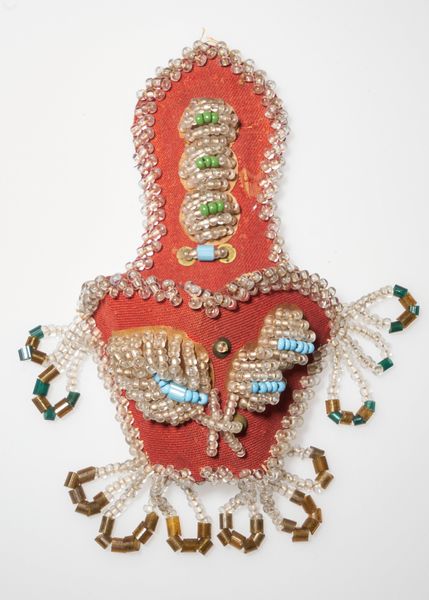
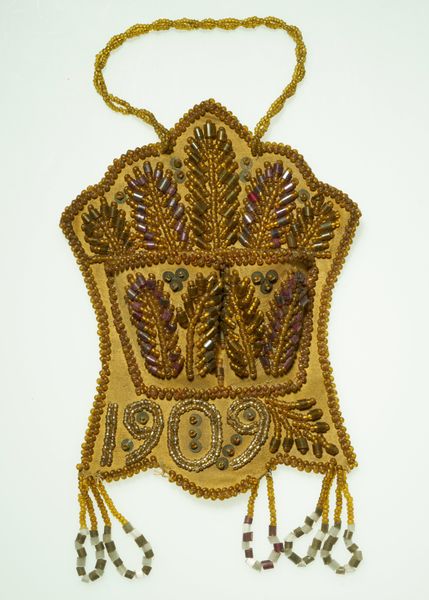
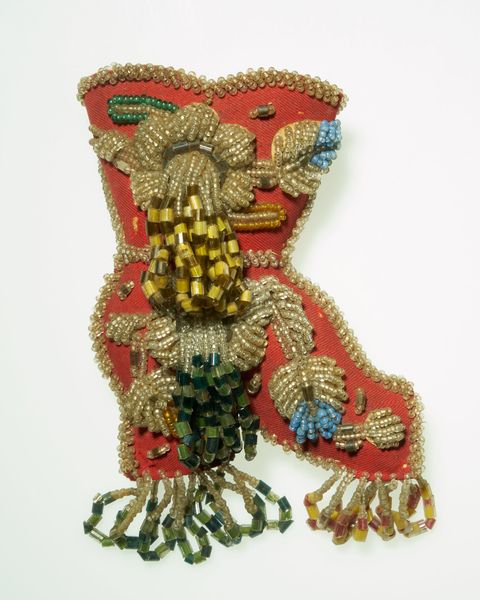
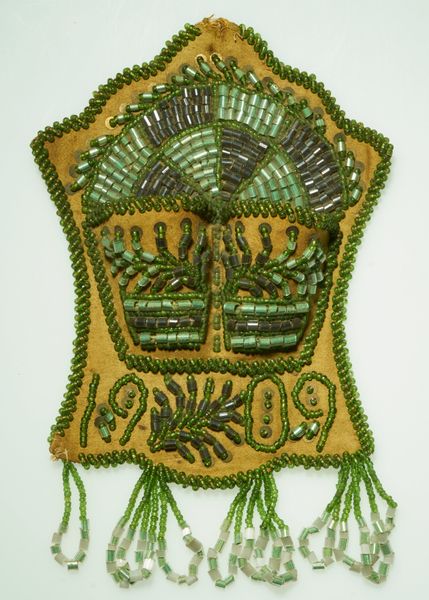
Curator: Oh, this little piece just makes you smile, doesn't it? Editor: Well, I find myself first noticing the color contrasts, the chromatic relationships, specifically the assertive juxtaposition of the olive-green beadwork outlining a kind of ochre field upon which other elements play. What's the piece? Curator: This delightful work is entitled "Whimsey in the Form of a Boat." It's a textile piece crafted in 1904 by a Kahnawake Mohawk artist, here in the United States, and is currently housed in the collection of the Minneapolis Institute of Art. It’s fashioned from cotton and fiber. Editor: Indeed, the piece feels playful, almost tongue-in-cheek with the lettering. Look closely at the juxtaposition between the crispness of "1904" done with tiny seed beads and the chunky cylindrical beads that clumsily spell out "BOAT." Curator: Precisely! It’s this contrasting texture that just delights. The artist has used small metal disks across the textile's surface. They remind me of nail heads along the strakes of a wooden boat. The choice of material makes you consider trade, or contact with the industrialized world beyond. It adds another layer to understanding its possible symbolism. Editor: There's a clear distinction in form, though—a tension. "1904" almost exists as a pristine, imposed declaration alongside a more… let’s say ‘organic,’ construction of "BOAT." This dichotomy hints at cultural interactions, artistic agency… perhaps, adaptation and continuity, with the piece working as a testament to the culture and innovation. Curator: It speaks volumes, despite its modest scale, doesn't it? Editor: Yes. This isn't merely a decorative object. The considered structure—chromatic, textural, and compositional—all suggests deliberate semiotic meaning and communicative intent. Curator: Exactly! I think the work invites us to embrace curiosity. It evokes reflection. Editor: I would say, beyond mere evocation, its considered articulation and structural juxtaposition compel such reflection.