1862
Horatio Potter


Listen to curator's interpretation
Curatorial notes
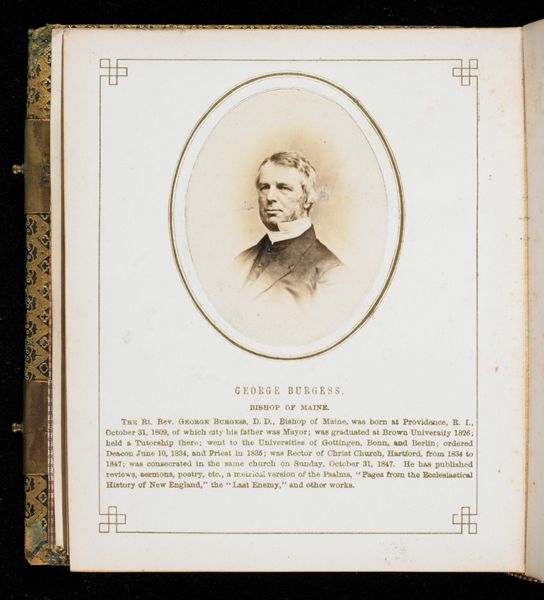
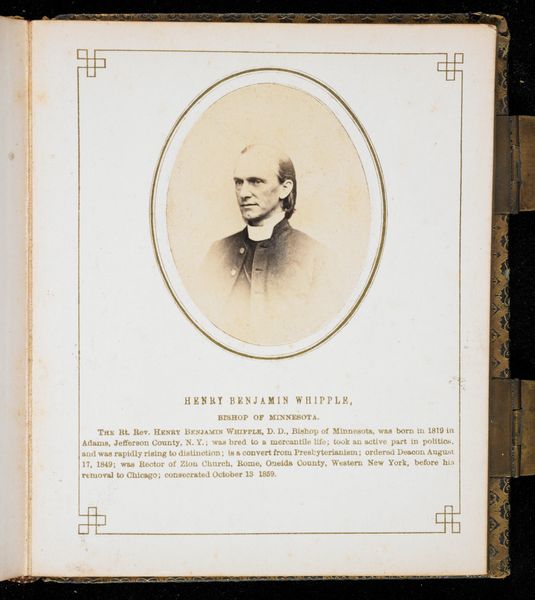
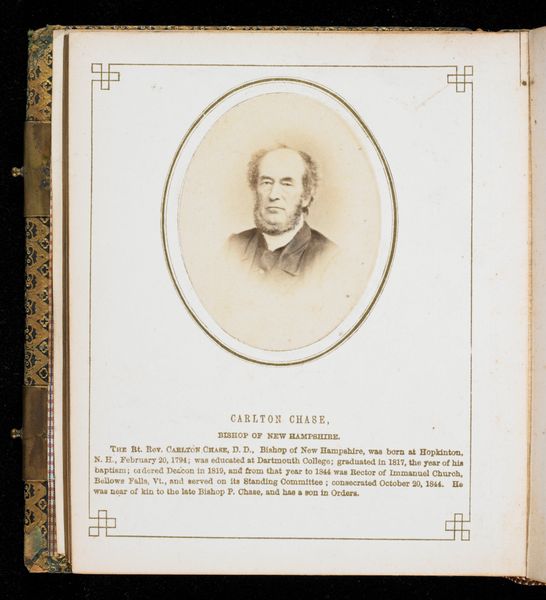
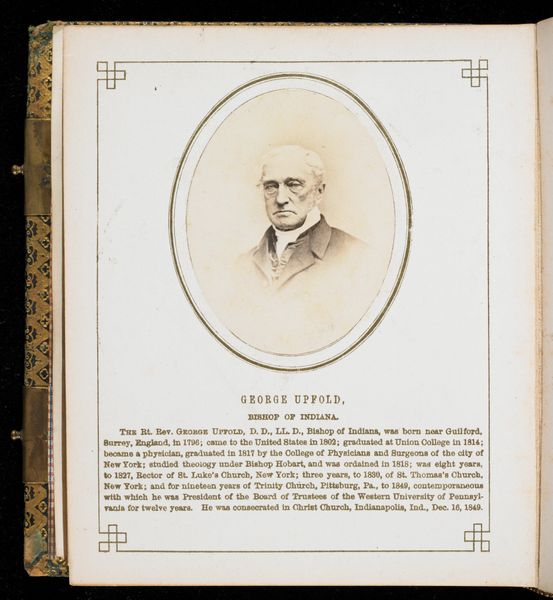
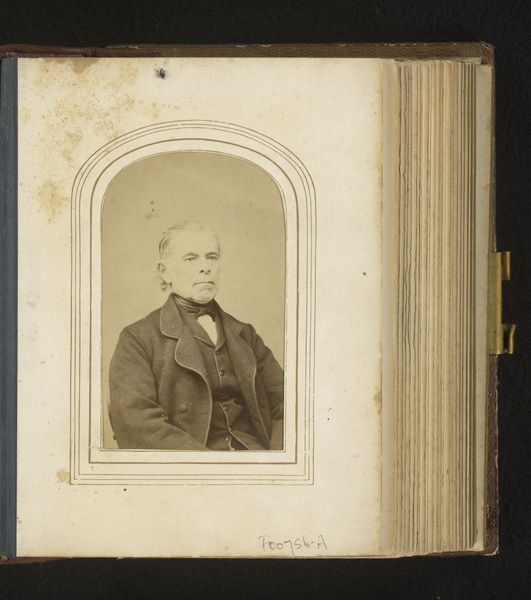
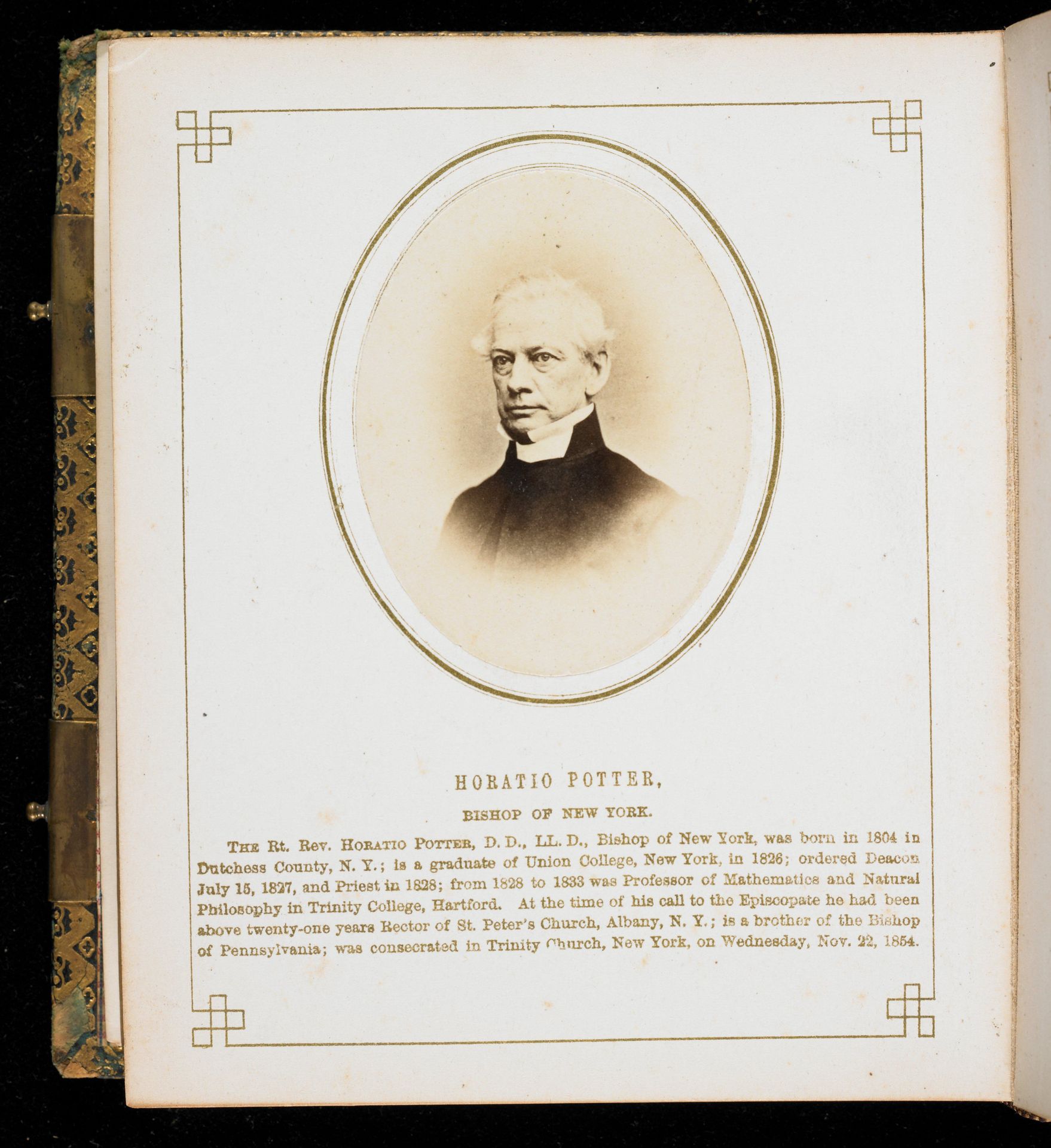
Curator: This is an albumen print of Horatio Potter, Bishop of New York. Jeremiah Gurney created this portrait in 1862. It's part of a bound album now residing here at the Minneapolis Institute of Art. Editor: Immediately, I’m struck by its delicate and fading quality. The sepia tones, that oval frame… it lends a sense of timeless formality. And what an intense gaze. Curator: Gurney was a prominent photographer, very successful in New York City. He was known for these formal portraits, catering to the elite. What you’re sensing as formality was also very much a marker of social standing. Consider that photography was gaining ground, allowing access to wider audiences than painted portraiture, while still holding value. Editor: True, the context is vital. Potter was a powerful figure, head of the Episcopal Diocese. Seeing him presented this way raises questions about the power dynamics at play, doesn't it? The church’s role in a society grappling with industrialization and, of course, the Civil War. He would be seen as upholding traditional structures during upheaval. Curator: Precisely. The very act of commissioning such a portrait and presenting himself this way was part of constructing that image. Note also the detail given to his face versus the simple cleric’s coat – conveying moral and intellectual authority. Editor: And I wonder, looking at this, about the people who *didn't* have access to such representation. What perspectives are lost when only those in power can shape their visual narrative? Curator: Absolutely. Think of the enslaved people, the working class – those voices deliberately excluded from visual culture. This single image reminds us of that historical imbalance. These formal portraits acted like social gatekeepers. Editor: Looking at it with fresh eyes, I now see this photo as so much more than just a portrait. It is a statement on power, exclusion, and representation during a very specific, and fraught, moment in history. Curator: I concur, considering the societal implications of these images and reflecting on what the existence and preservation of pieces like this represent offers significant learning potential.