


Curatorial notes
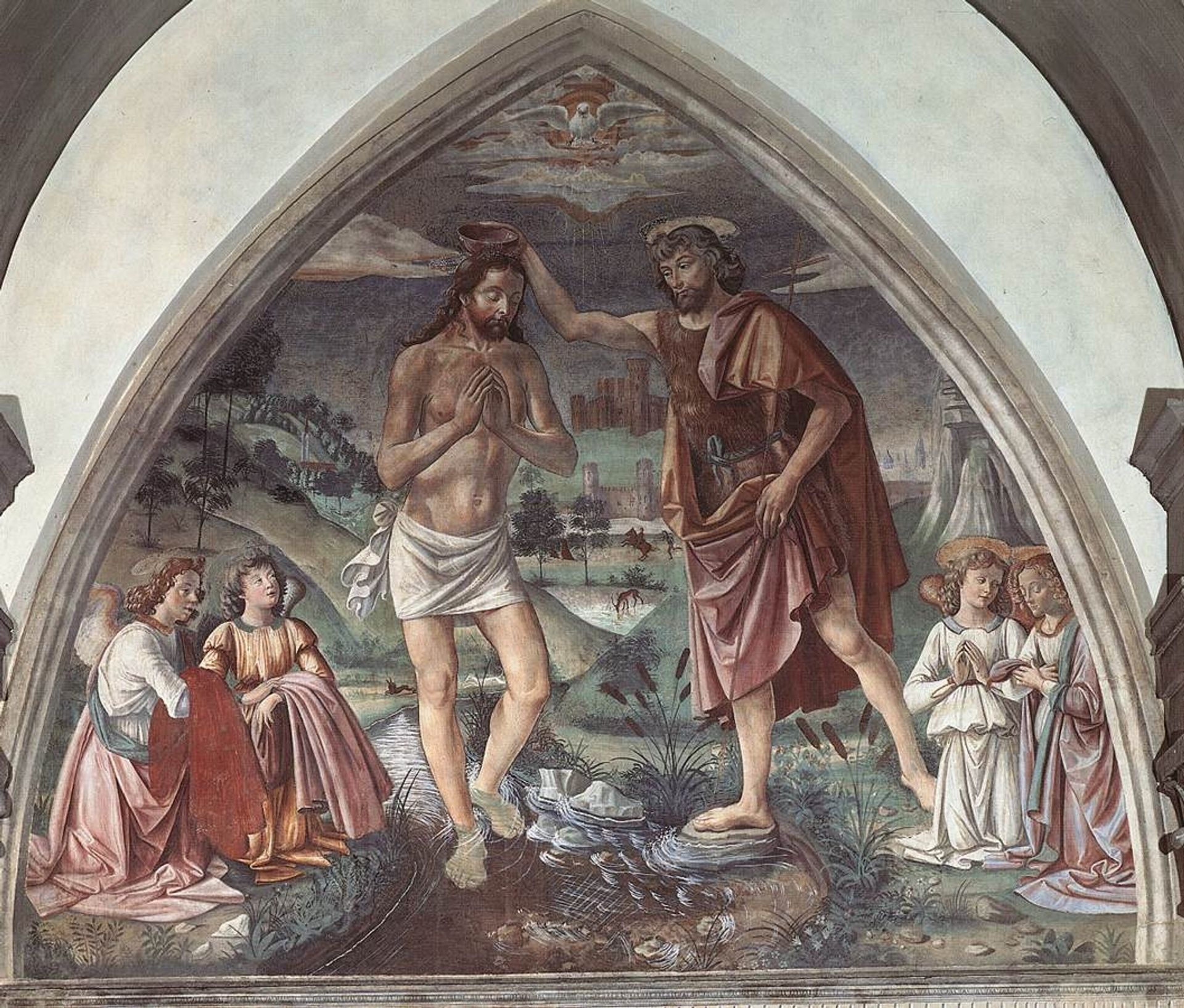
Editor: Here we have Domenico Ghirlandaio's "Baptism of Christ," a fresco from 1473. It has a solemn, almost reserved quality, don't you think? The figures seem very composed, even as the water rushes around them. What’s your perspective on it? Curator: Reserved is a good word, and yet I find a deep undercurrent of expectation. Ghirlandaio positions John the Baptist not so much *performing* a baptism as presenting Christ – imagine the anticipation of the witnesses. This fresco breathes the Early Renaissance: earthly but also touched by something profoundly spiritual. Do you notice the details of the landscape receding behind them? The real world placed just behind the sacred event? Editor: I see the background, it's rendered with detail but is pretty pale. I didn't appreciate its function as staging for the event. Tell me more about Ghirlandaio and this sort of composition? Curator: For Ghirlandaio, perspective wasn’t just a matter of making things look realistic. He's using it to guide your eye, placing figures in a context that feels both familiar and otherworldly. Note the placement of the angels; aren't they like figures caught between reverence and curious observation? And above it all, God watches. Editor: It’s almost like he’s directing a play. The landscape is the backdrop, and the figures are carefully arranged actors, each with their part to play. Curator: Exactly! Each detail feels like a carefully chosen word in a poem, creating a world that's simultaneously believable and divinely inspired. Ghirlandaio is building meaning one deliberate stroke at a time. Editor: This has made me look at this work with new eyes. It is like seeing a frozen moment in a very important scene! Curator: Indeed, isn't it glorious to think that even now, the paint holds secrets, whispers of a world once known? It keeps us curious, which is why we need great editors like you to keep sharing these magnificent moments!