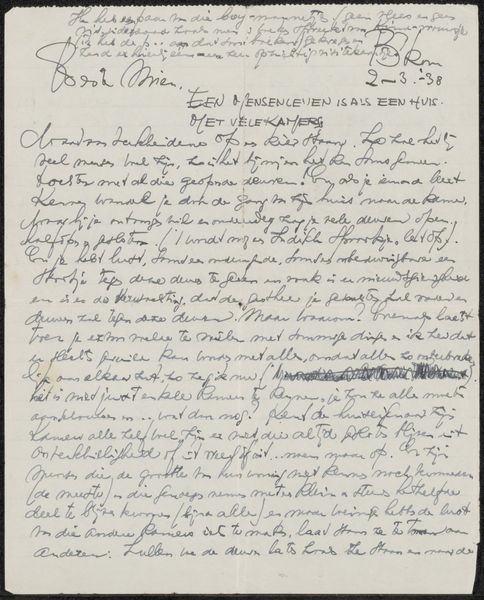
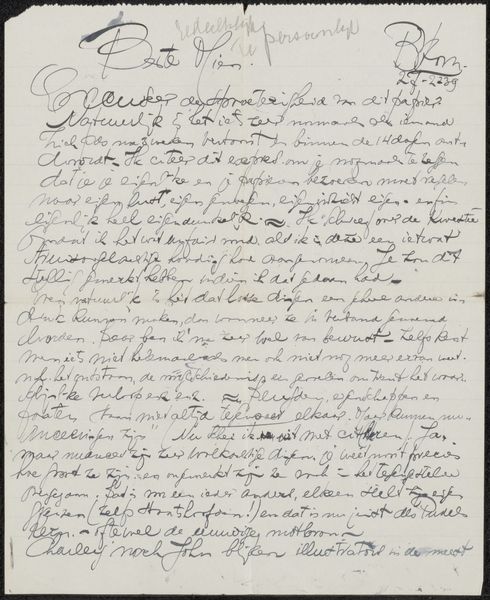
drawing, paper, ink, pen
#
drawing
#
hand-lettering
#
hand drawn type
#
hand lettering
#
paper
#
personal sketchbook
#
ink
#
hand-drawn typeface
#
pen-ink sketch
#
ink and pen line
#
pen work
#
sketchbook drawing
#
pen
#
sketchbook art
#
calligraphy
Copyright: Rijks Museum: Open Domain
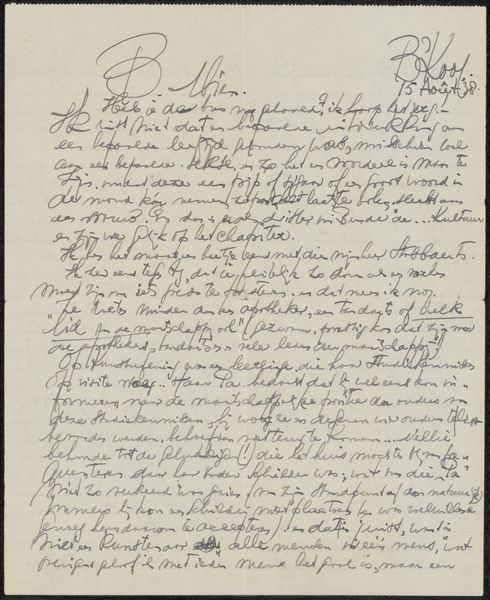
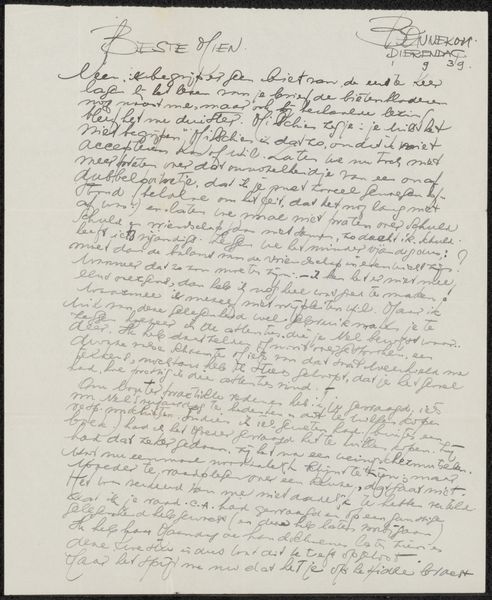
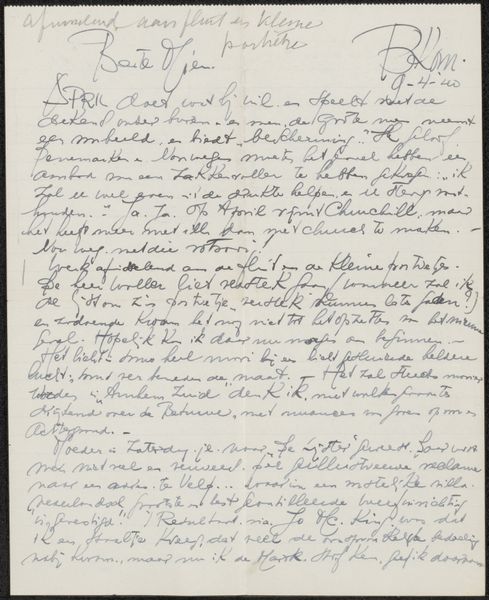
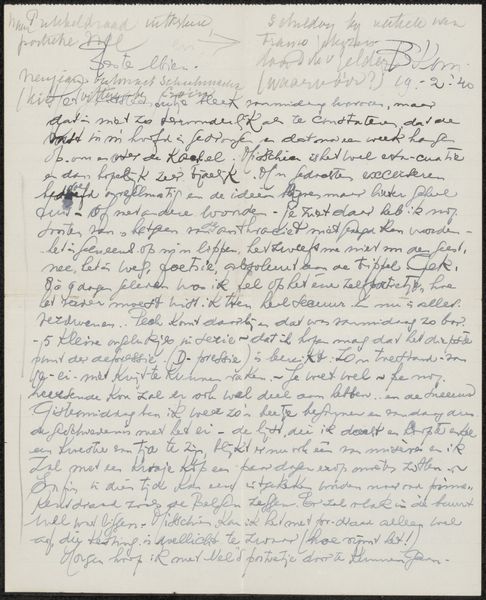
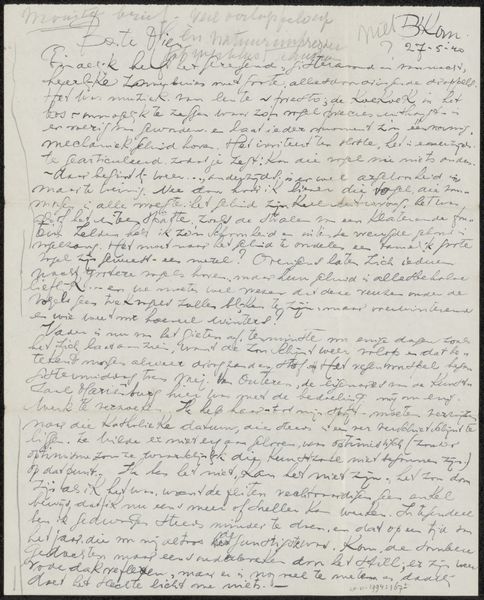
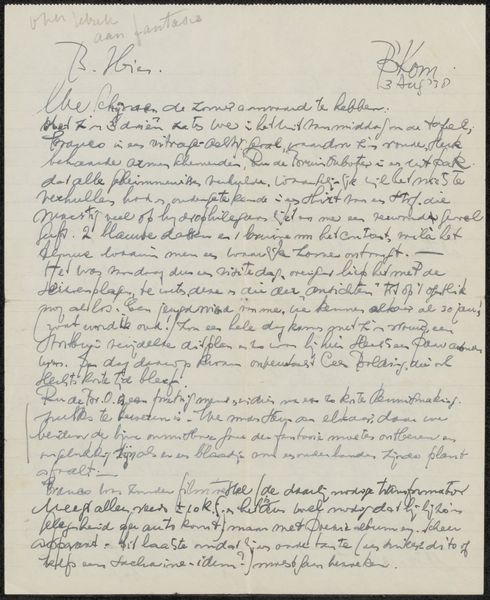
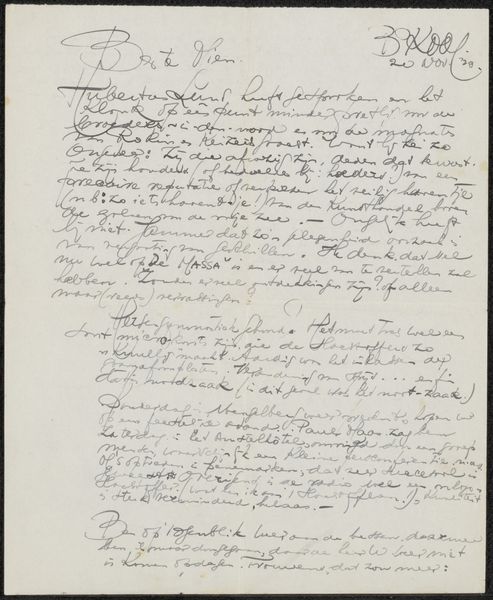
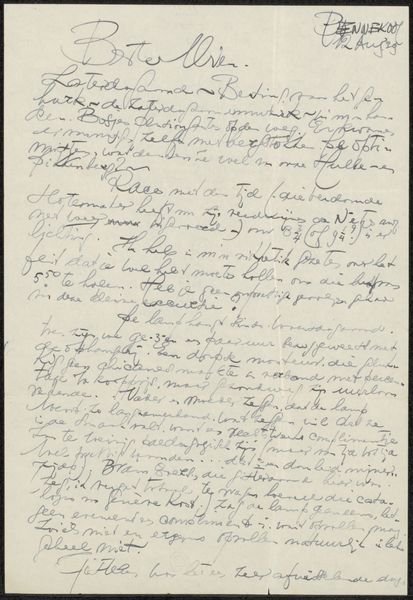
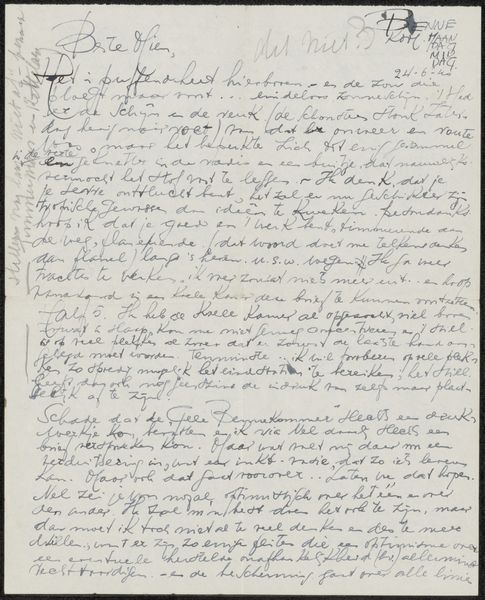
Editor: This is "Brief aan Mien Cambier van Nooten," possibly from 1938, by Dick Ket. It's a drawing in ink on paper currently at the Rijksmuseum. It feels intimate, like a page from a personal sketchbook, covered in elegant calligraphy, yet I can’t read a word! What meaning do you find embedded in a piece like this? Curator: Well, look closer. The script *is* the image. Think about it – the act of handwriting carries a tremendous cultural and personal weight. Each curve, each flourish, reflects a unique individual, even more so than a printed typeface. Calligraphy, even when illegible, signifies learning, refinement, perhaps even longing for a time of elegance and handwritten correspondence. Editor: So you're saying that even though we can't read it, the handwriting *itself* communicates? Curator: Precisely. It transforms language into visual art. The form echoes function, as handwriting preserves memory in script. But let’s consider something further - can you notice instances of this method anywhere else? Editor: You mean where handwriting is the art, not just conveying meaning? I am thinking street art… and graffiti where taggers use unique lettering as their signature… Curator: Excellent. This artistic choice by Dick Ket connects across eras, through both the art world and subcultures. What does the choice of script evoke for you now, considering that link? Editor: A sense of immediacy… almost rebellion maybe? Because now handwriting in the age of keyboards feels counter-cultural, intimate…even revolutionary. I would not have seen that before. Curator: Yes, but it continues and also reinvents old traditions. Symbols don't exist in a vacuum, do they? Editor: Definitely not. It’s amazing how handwriting, something so common, can hold so much meaning. Thanks for this cultural decoding!
Comments
No comments
Be the first to comment and join the conversation on the ultimate creative platform.
 Collect
 React
React Comment
More like this