About this artwork
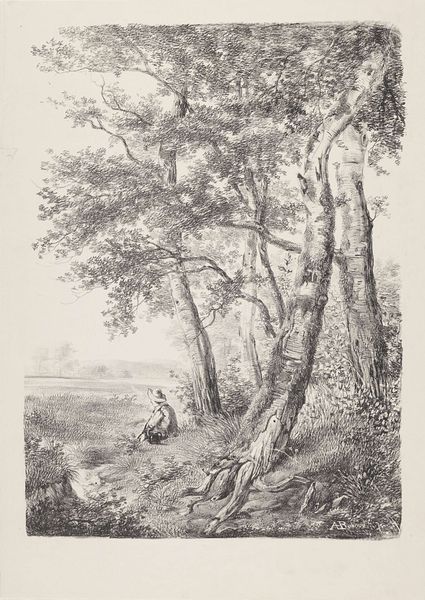
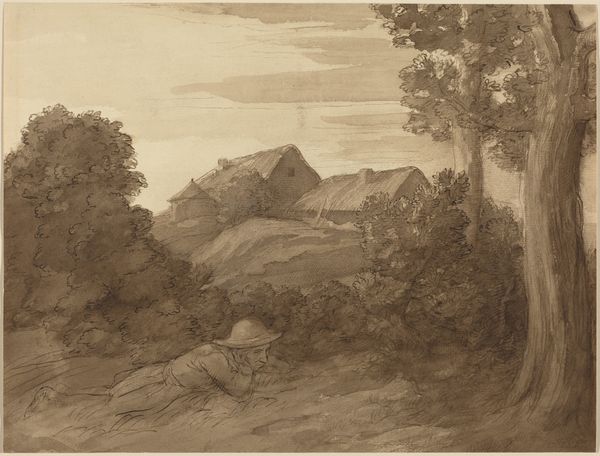
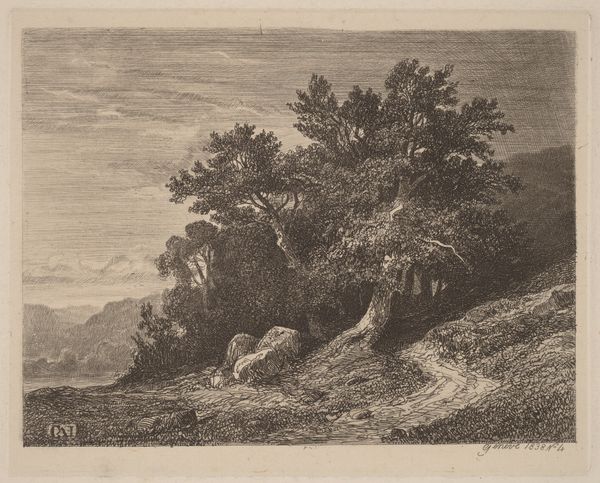
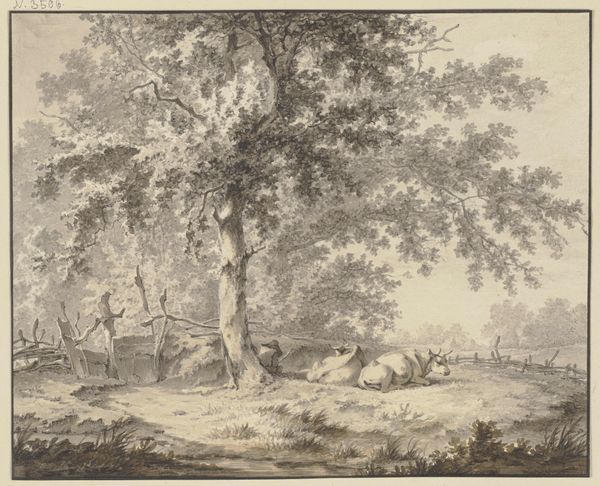
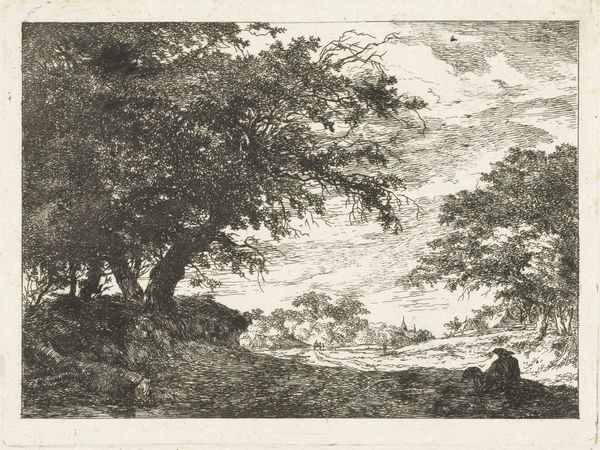
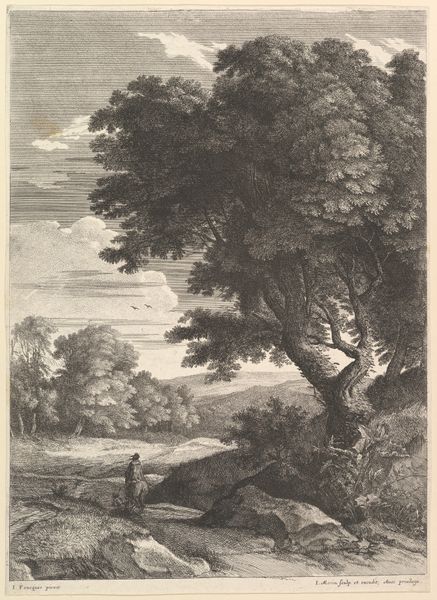
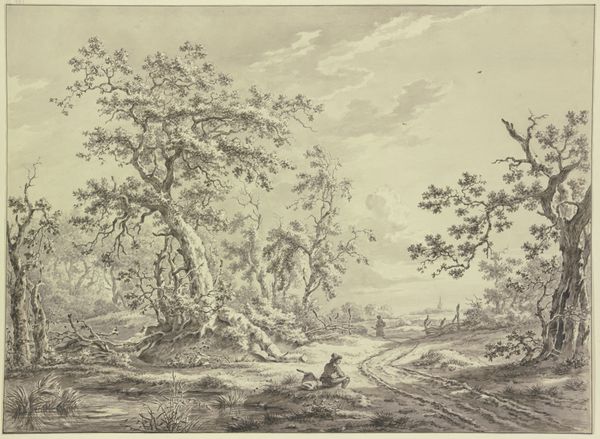
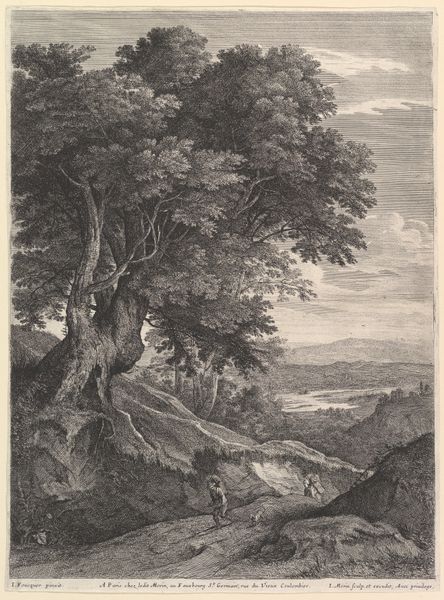
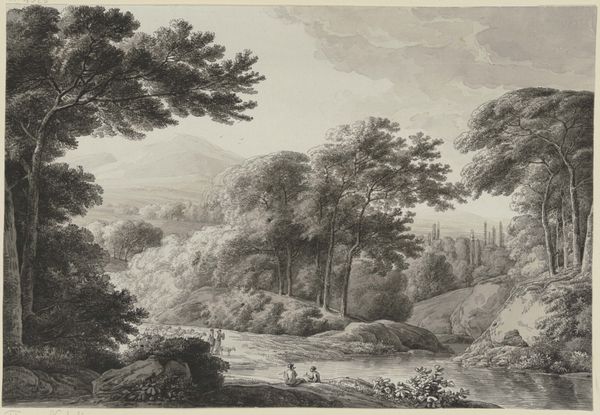
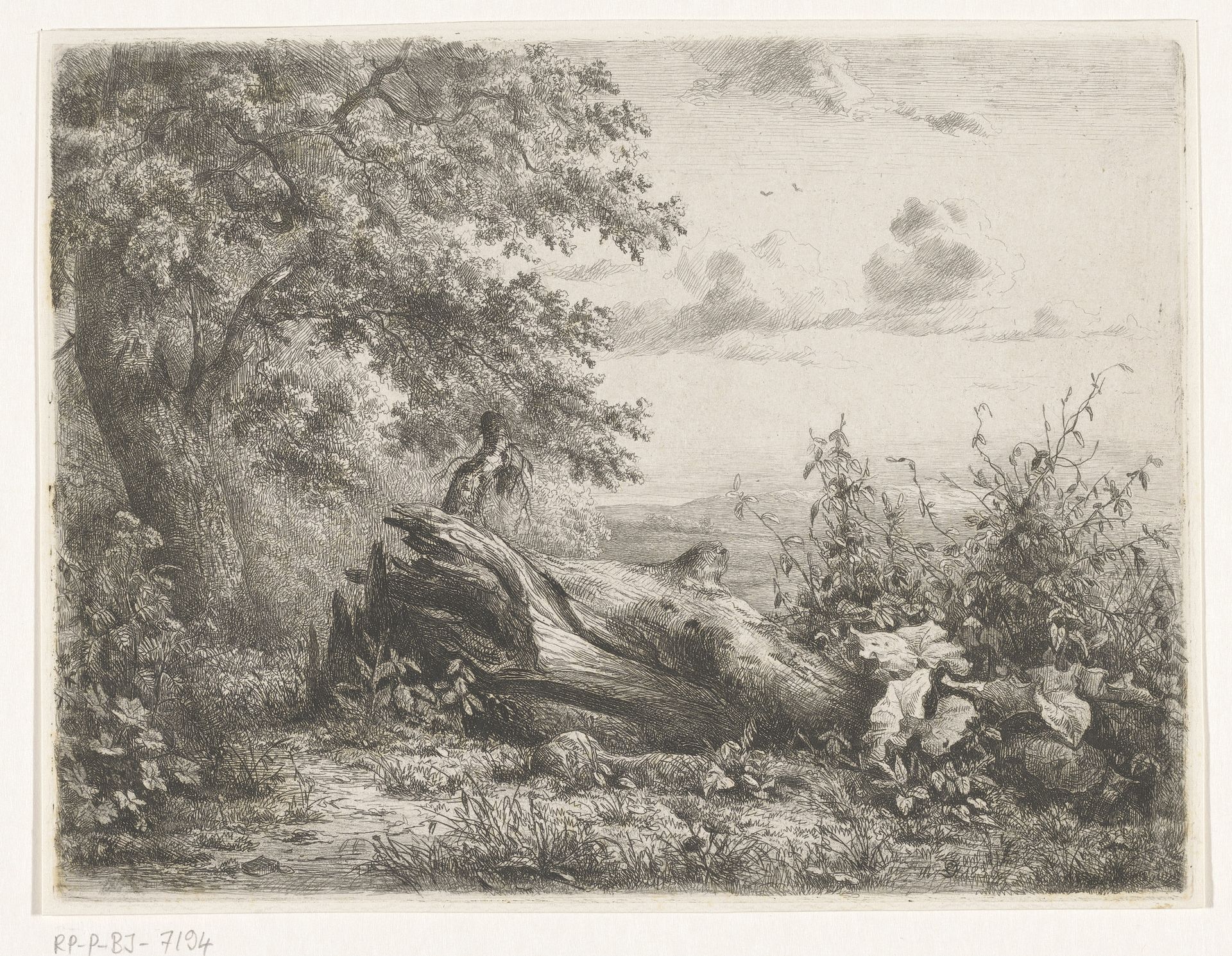
Pierre Louis Dubourcq etched "Fallen Tree at the Edge of the Forest" in the 19th century, capturing a scene imbued with symbols of life, death, and the passage of time. The fallen tree itself is a potent symbol, a memento mori, reminding us of the transience of existence. Consider the ancient Roman depictions of fallen warriors, or the countless artistic representations of the crucifixion, where a fallen figure embodies both mortality and sacrifice. The image resonates with the pathos formula, eliciting feelings of empathy and reflection. Yet, even in its fallen state, the tree is surrounded by flourishing vegetation, a visual counterpoint emphasizing the cyclical nature of life. It suggests that decay is not an end but a transformation, a necessary stage for renewal. This constant interplay between destruction and regeneration reflects our deepest understanding of the world, where every ending is a new beginning. The forest engages the viewer on a visceral level, tapping into our collective subconscious.

Artwork details
- Medium
- etching
- Dimensions
- height 173 mm, width 228 mm
- Location
- Rijksmuseum
- Copyright
- Rijks Museum: Open Domain
Tags
Comments
Share your thoughts
About this artwork
Pierre Louis Dubourcq etched "Fallen Tree at the Edge of the Forest" in the 19th century, capturing a scene imbued with symbols of life, death, and the passage of time. The fallen tree itself is a potent symbol, a memento mori, reminding us of the transience of existence. Consider the ancient Roman depictions of fallen warriors, or the countless artistic representations of the crucifixion, where a fallen figure embodies both mortality and sacrifice. The image resonates with the pathos formula, eliciting feelings of empathy and reflection. Yet, even in its fallen state, the tree is surrounded by flourishing vegetation, a visual counterpoint emphasizing the cyclical nature of life. It suggests that decay is not an end but a transformation, a necessary stage for renewal. This constant interplay between destruction and regeneration reflects our deepest understanding of the world, where every ending is a new beginning. The forest engages the viewer on a visceral level, tapping into our collective subconscious.
Comments
Share your thoughts