c. 1821
Twenty-four Japanese examples of filial piety for the Honchôren

Yashima Gakutei 屋島岳亭
1786 - 1868Location
RijksmuseumListen to curator's interpretation
Curatorial notes
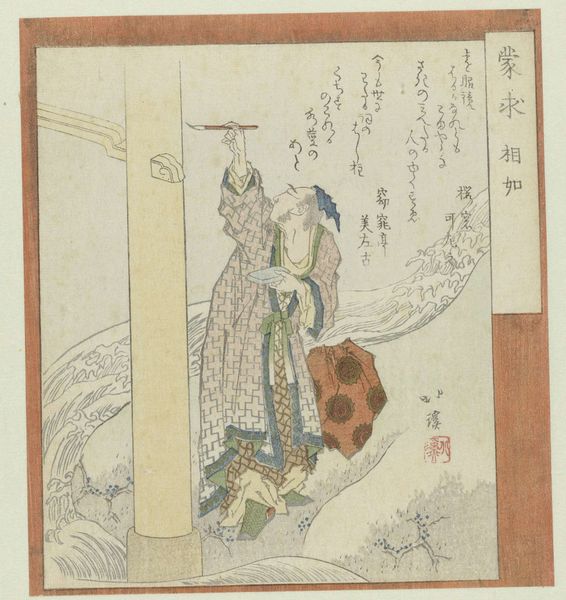
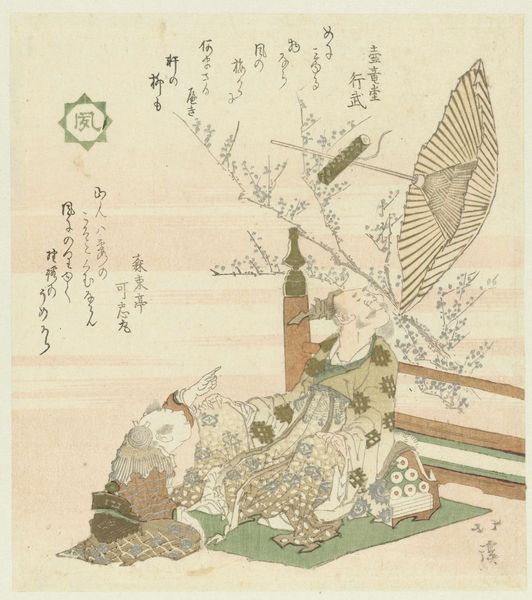
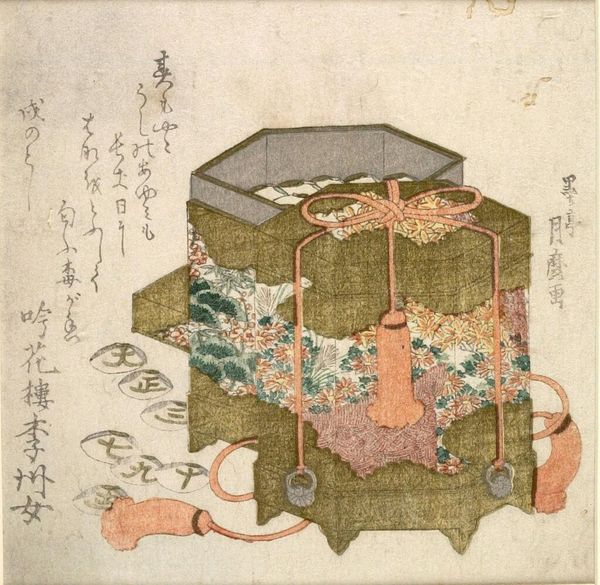
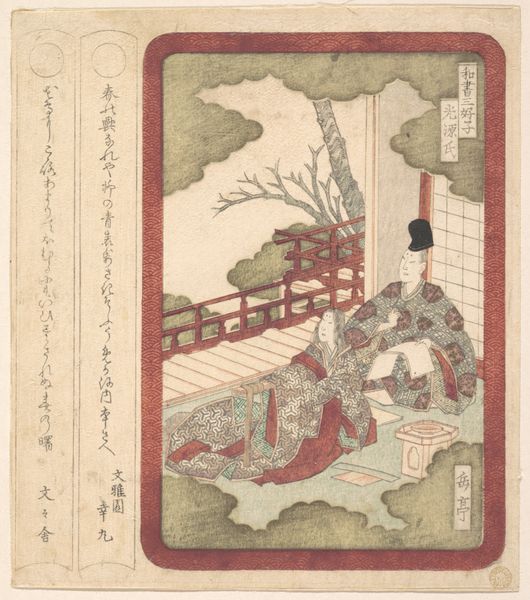
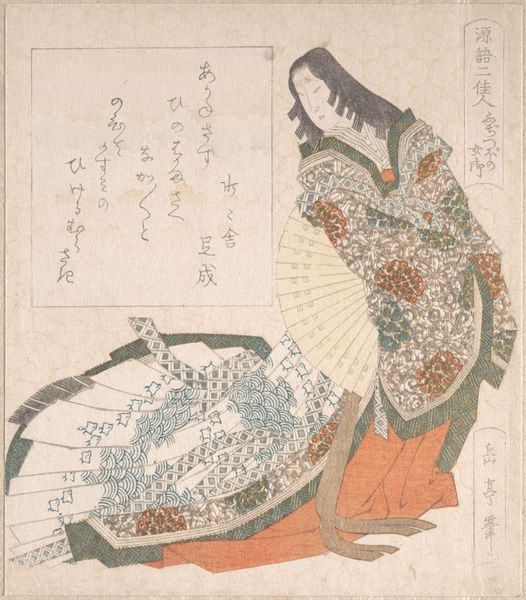
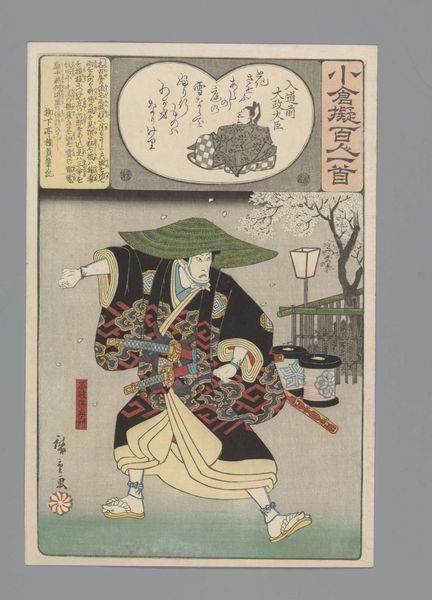
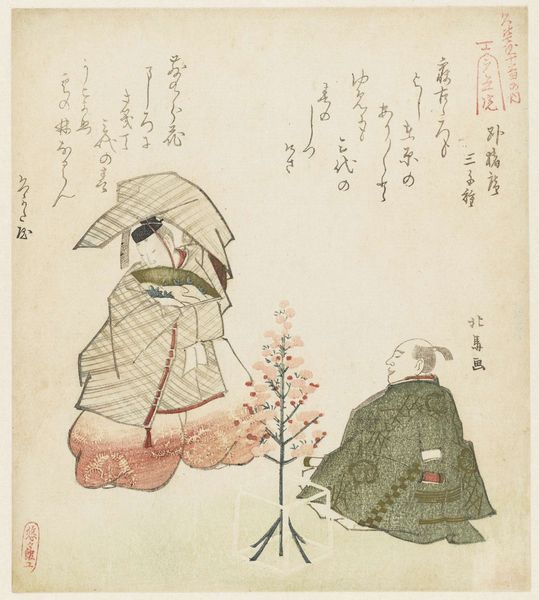
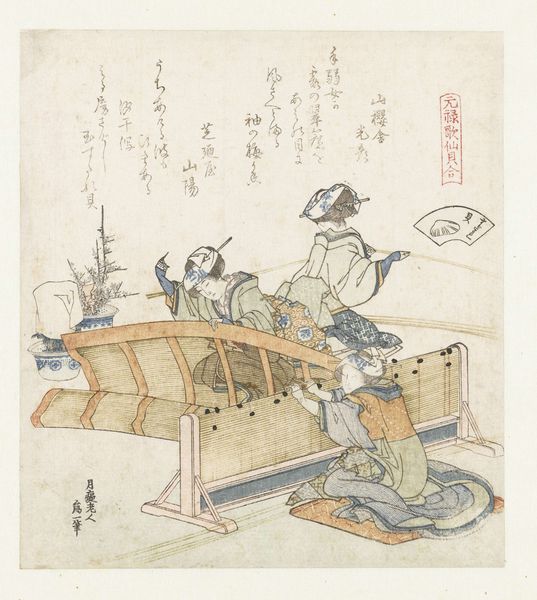
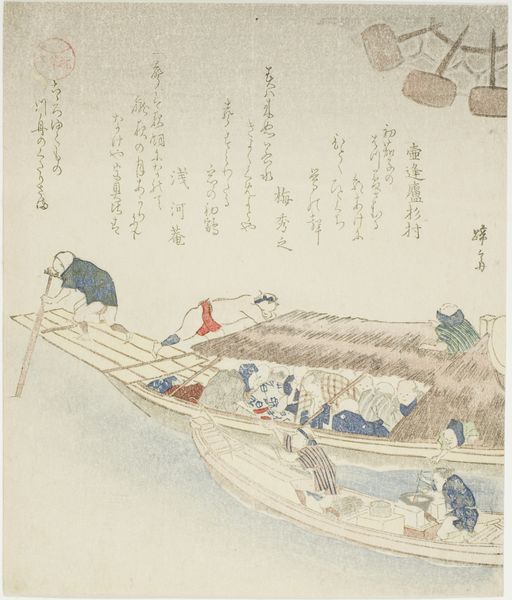
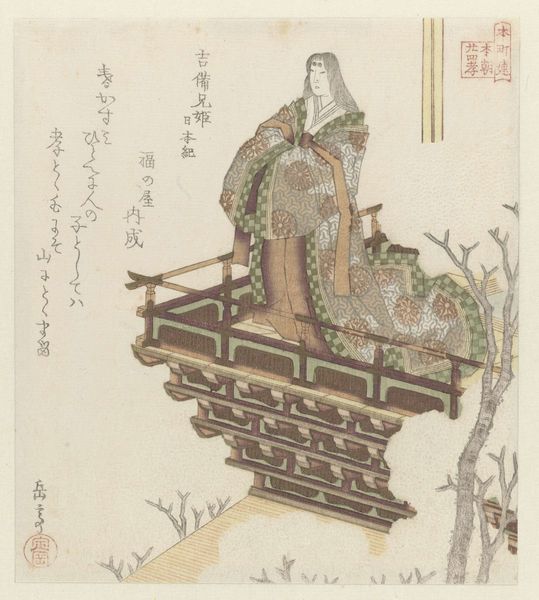
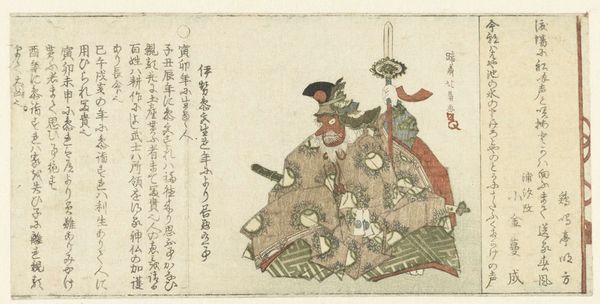
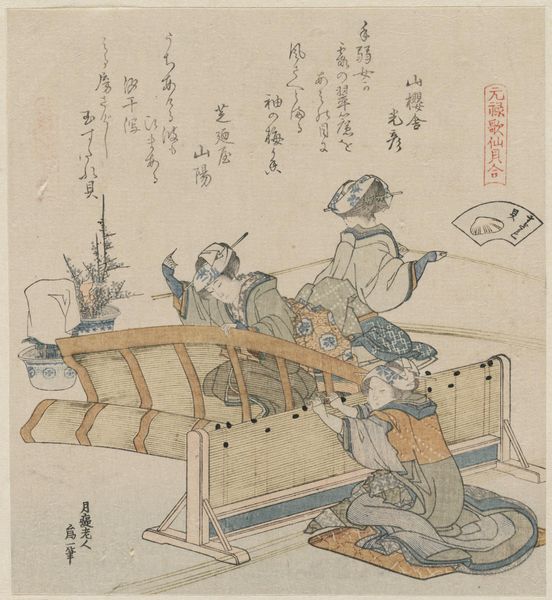
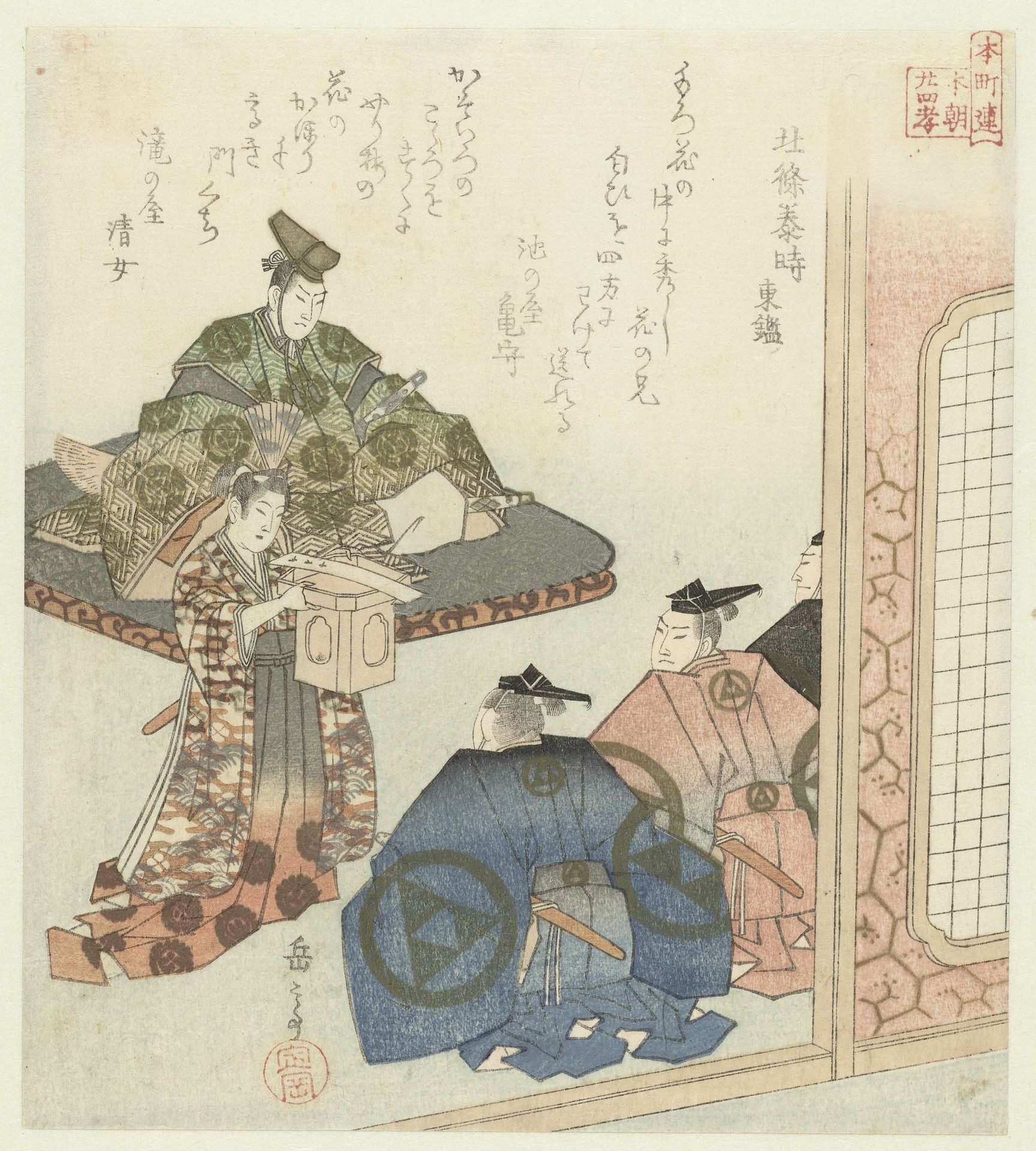
Yashima Gakutei created this print, “Twenty-four Japanese examples of filial piety for the Honchôren”, in the Edo period using woodblock printing techniques. The composition is divided into distinct spatial zones. On the left, a figure reclines on an elevated cushion, while another figure kneels, presenting a box. To the right, we see figures seated near a screen. The patterned screen and garments introduce complex textures, contrasting with the flat, unmodulated areas of color. Note the strategic use of empty space, or "ma," which focuses our attention on the figures and their interactions. The formal structure reflects the cultural codes of filial piety, a theme that emphasizes hierarchical relationships and social harmony. Gakutei skillfully uses the interplay of line, color, and form to create a visual narrative that speaks to broader cultural values. The arrangement destabilizes traditional portraiture through asymmetry and perspective. This print operates as a sophisticated commentary on social roles and artistic representation.