About this artwork
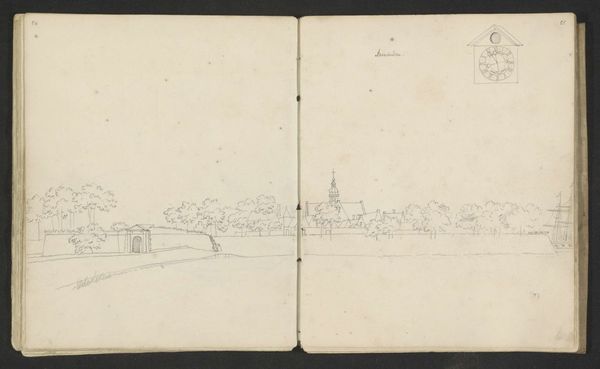
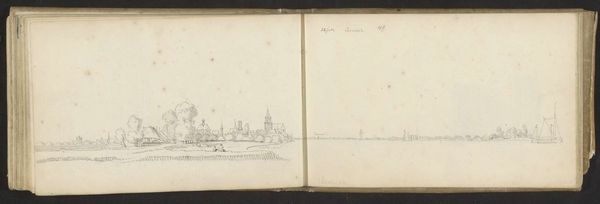
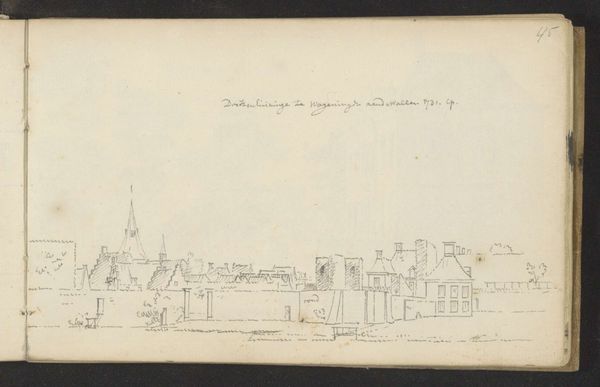
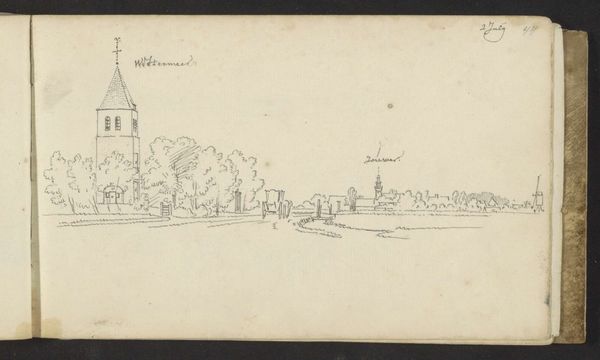
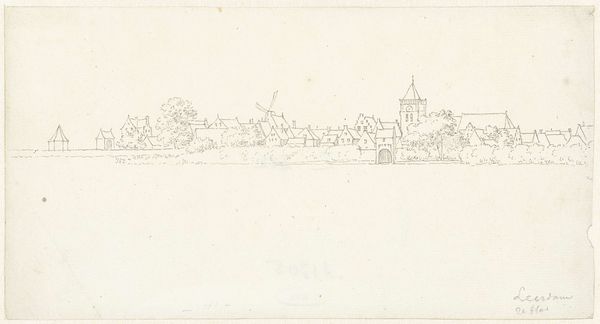
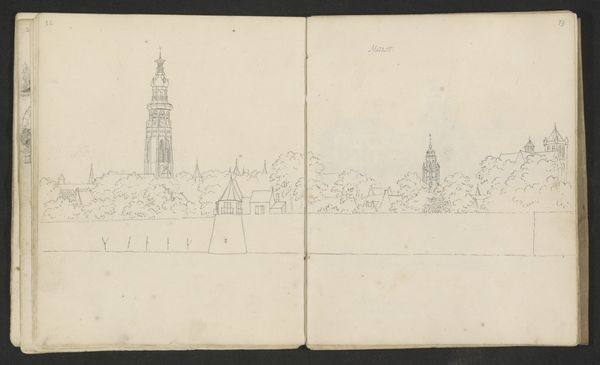
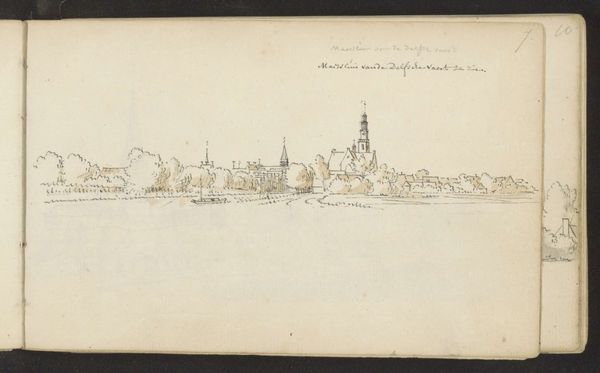
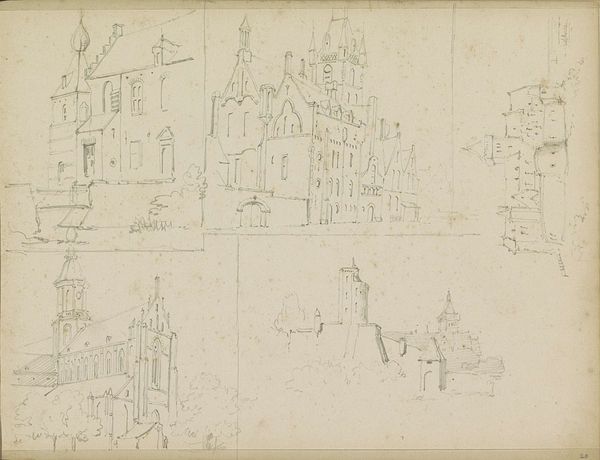
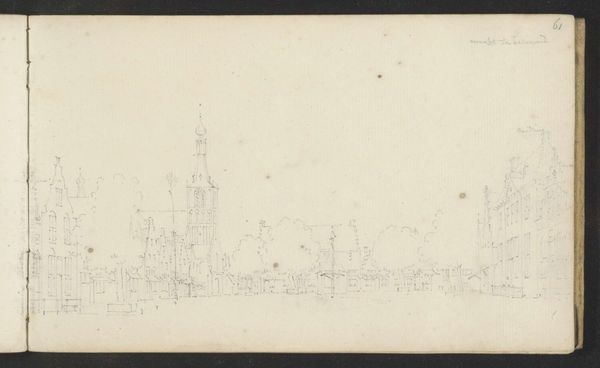
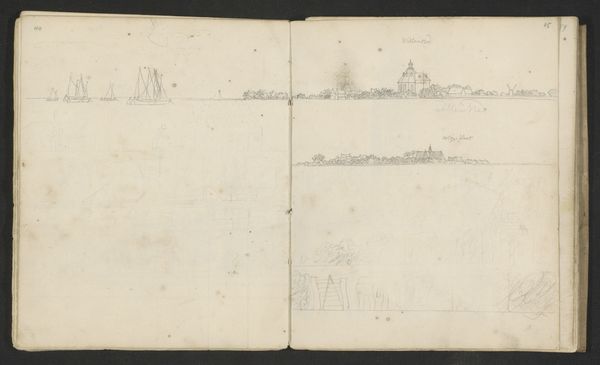
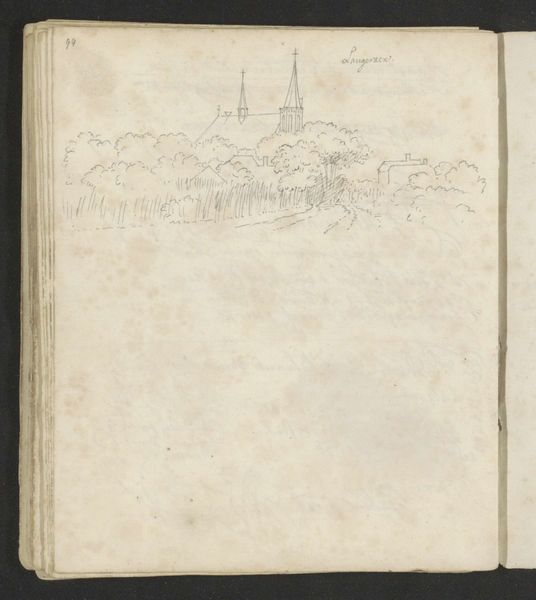
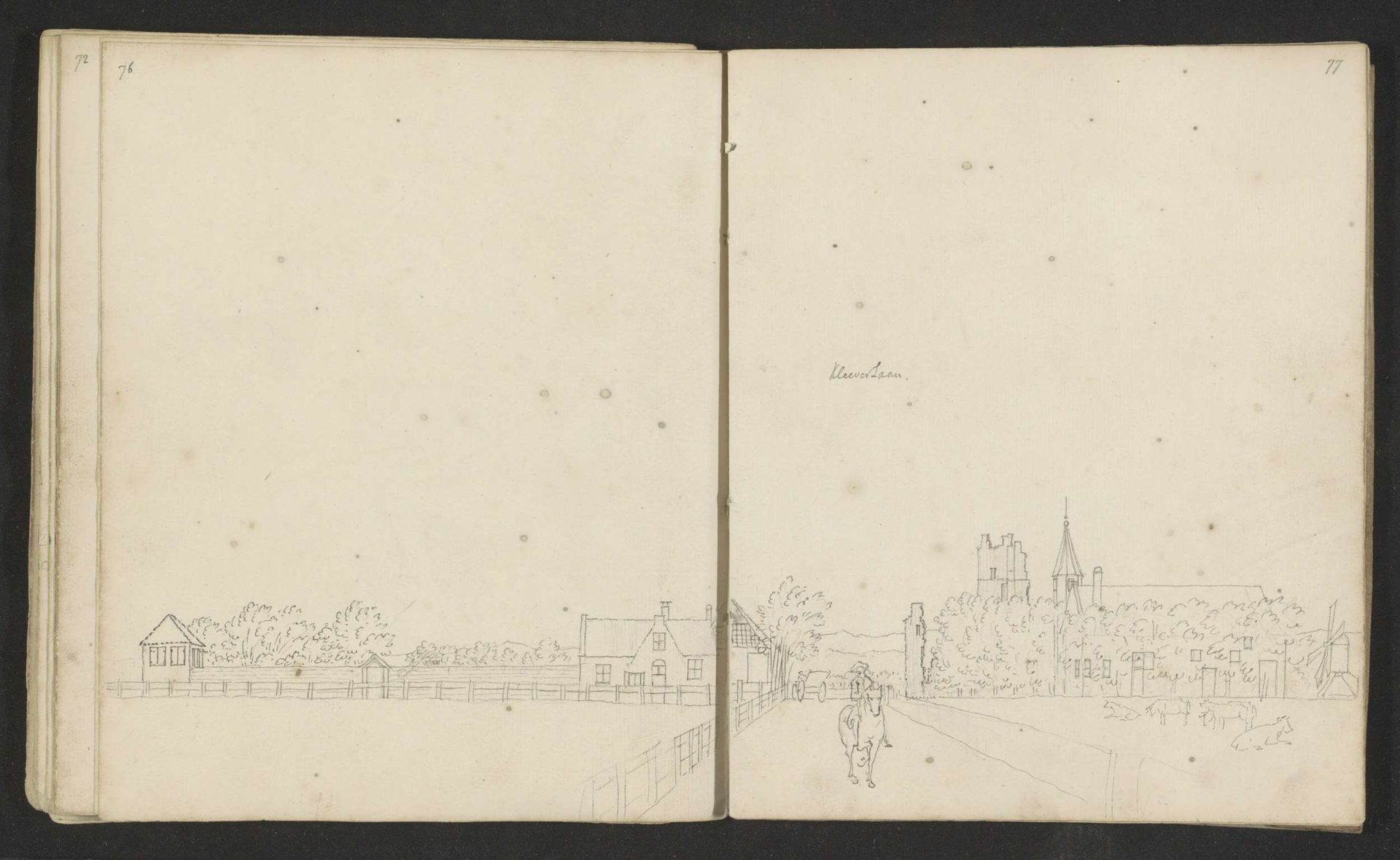
Curator: This drawing, attributed to Cornelis Pronk, offers a glimpse of the Kleverlaan in Haarlem, sometime between 1728 and 1732. Editor: My initial reaction is, wow, it's incredibly delicate. It's almost a whisper of a landscape. Very minimal. What was his intention, I wonder? Curator: Pronk was known for his topographical drawings, often commissioned to document specific locations. This ink on paper piece, displayed across two pages of a sketchbook, feels almost like a field study, captured on the go. It could even have been done *en plein air*. Editor: Ah, that explains the immediacy. So, it's a form of visual note-taking, recording the environment? I’m immediately thinking about access and representation here. Who was this landscape for, and who *wasn't* it for, in that era? Land ownership, class, power dynamics… all subtly present, wouldn't you say? Curator: Absolutely. It’s subtle, yet there’s a prevailing order evident, especially if we zoom in. The careful arrangement of the trees, the road leading toward the buildings, everything points to a well-maintained, controlled environment. I also get the feeling Pronk has taken great delight in portraying details with precision, almost lovingly drawing in all those leaves! Editor: You're right, there's a sort of idealized serenity about it. But consider who is at the centre. There is somebody riding down the road. The composition implicitly reinforces a sense of dominance, even if subtle. It makes me think of the larger issues related to colonialism that run all the way through art history of this period. Curator: True. What began as a fleeting impression takes on increasing meaning, reflecting on those dynamics. You make me consider more how art, even in seemingly straightforward forms, serves as a signifier for all aspects of life. Editor: Exactly, it's the perfect reminder of how vital art becomes as documentation for understanding culture. I hadn’t realised the historical dimensions until we began discussing the setting and those societal layers within that relatively uncomplicated representation.

Artwork details
- Medium
- drawing, plein-air, paper, ink
- Location
- Rijksmuseum
- Copyright
- Rijks Museum: Open Domain
Tags
drawing
baroque
dutch-golden-age
plein-air
sketch book
landscape
paper
ink
genre-painting
Comments
No comments
About this artwork
Curator: This drawing, attributed to Cornelis Pronk, offers a glimpse of the Kleverlaan in Haarlem, sometime between 1728 and 1732. Editor: My initial reaction is, wow, it's incredibly delicate. It's almost a whisper of a landscape. Very minimal. What was his intention, I wonder? Curator: Pronk was known for his topographical drawings, often commissioned to document specific locations. This ink on paper piece, displayed across two pages of a sketchbook, feels almost like a field study, captured on the go. It could even have been done *en plein air*. Editor: Ah, that explains the immediacy. So, it's a form of visual note-taking, recording the environment? I’m immediately thinking about access and representation here. Who was this landscape for, and who *wasn't* it for, in that era? Land ownership, class, power dynamics… all subtly present, wouldn't you say? Curator: Absolutely. It’s subtle, yet there’s a prevailing order evident, especially if we zoom in. The careful arrangement of the trees, the road leading toward the buildings, everything points to a well-maintained, controlled environment. I also get the feeling Pronk has taken great delight in portraying details with precision, almost lovingly drawing in all those leaves! Editor: You're right, there's a sort of idealized serenity about it. But consider who is at the centre. There is somebody riding down the road. The composition implicitly reinforces a sense of dominance, even if subtle. It makes me think of the larger issues related to colonialism that run all the way through art history of this period. Curator: True. What began as a fleeting impression takes on increasing meaning, reflecting on those dynamics. You make me consider more how art, even in seemingly straightforward forms, serves as a signifier for all aspects of life. Editor: Exactly, it's the perfect reminder of how vital art becomes as documentation for understanding culture. I hadn’t realised the historical dimensions until we began discussing the setting and those societal layers within that relatively uncomplicated representation.
Comments
No comments