1885
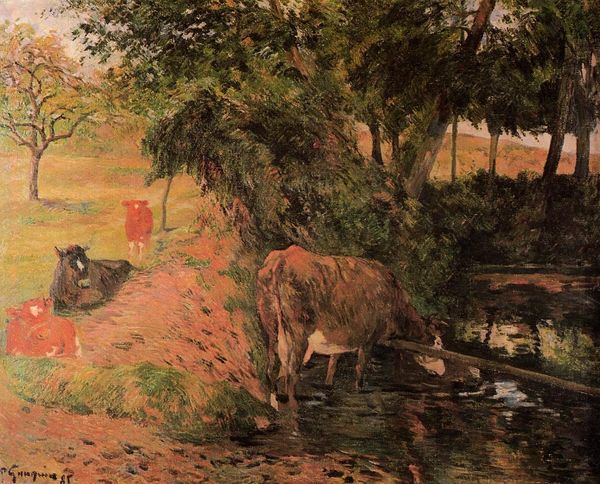
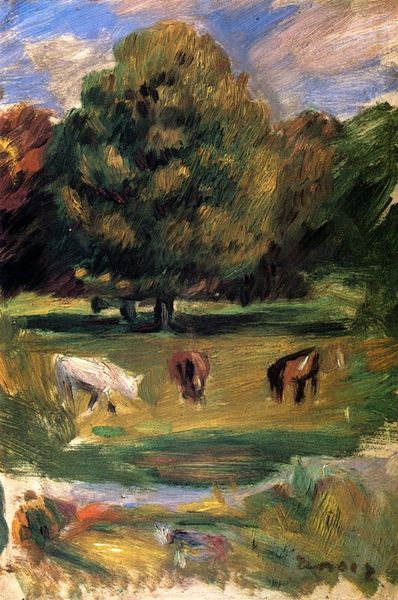
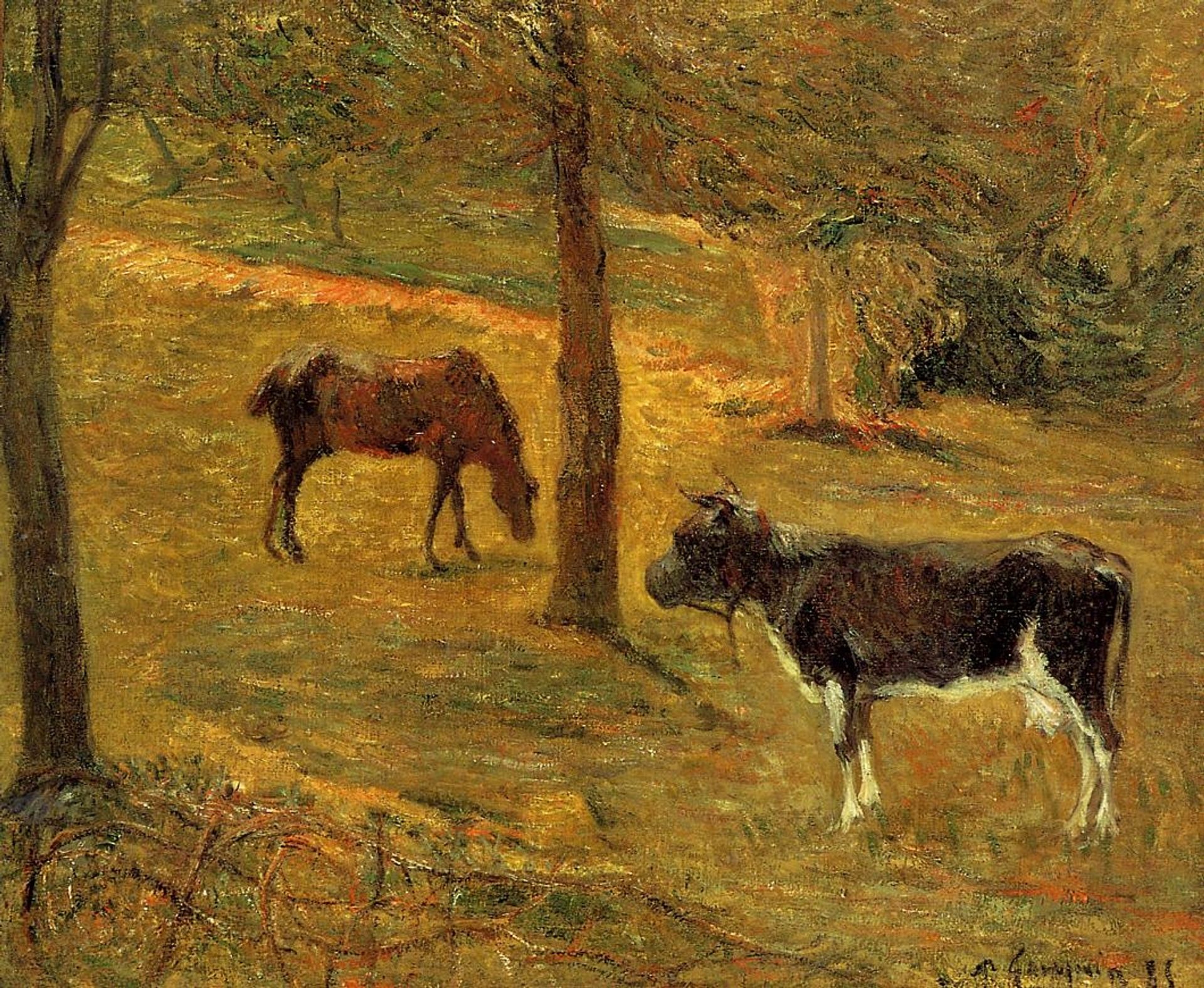
Horse and Cow in a Meadow

Paul Gauguin
1848 - 1903Location
Private CollectionListen to curator's interpretation
Curatorial notes
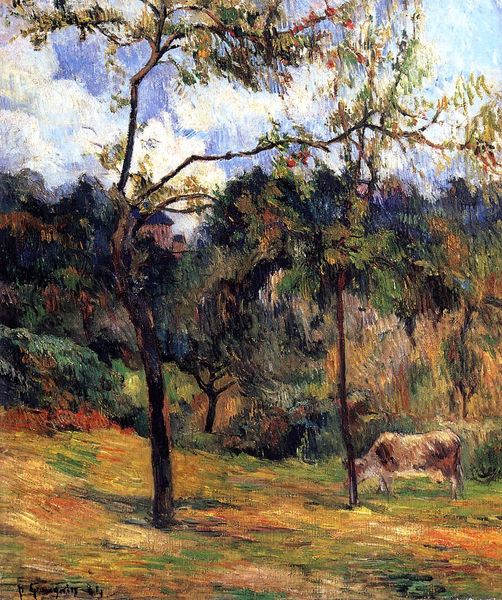
Paul Gauguin's "Horse and Cow in a Meadow" is an oil on canvas painting where a pervasive golden hue bathes the entire scene, creating a sense of warmth and tranquility. The composition is structured around a vertical emphasis by the trees. These elements visually divide the canvas into distinct zones, framing the animals. Gauguin's brushstrokes are short and textured, adding a tactile quality to the surface. The forms of the horse and cow are simplified, reduced to their essential shapes, aligning with a broader move towards abstraction in late 19th-century art. This reduction of form and emphasis on color relates to Symbolist ideas about conveying inner emotional states through visual means rather than objective representation. The painting challenges conventional notions of realism, inviting viewers to engage with the artwork on a more intuitive level. Gauguin uses color and form to move beyond literal depiction and explore the subjective experience of the landscape. The golden light, which permeates the scene, creates a harmonious and self-contained visual world, inviting endless readings.