c. 100 - 500
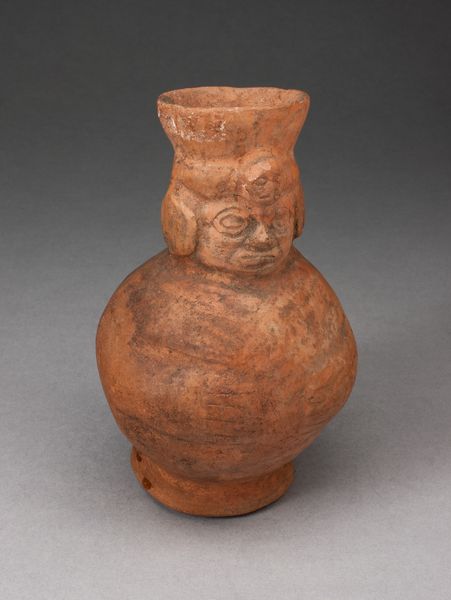
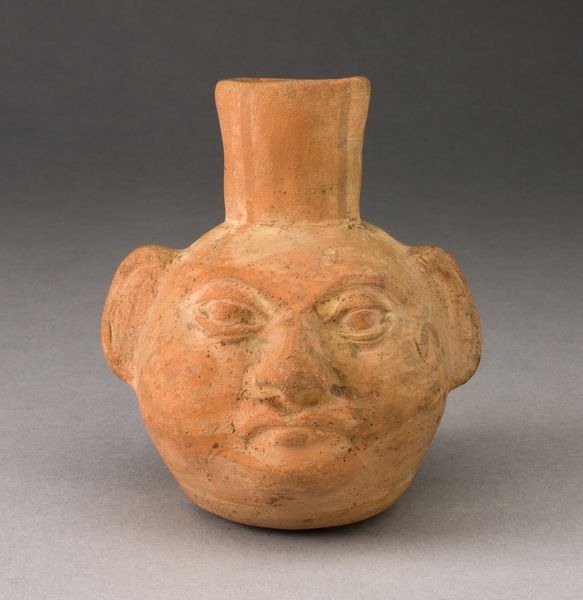
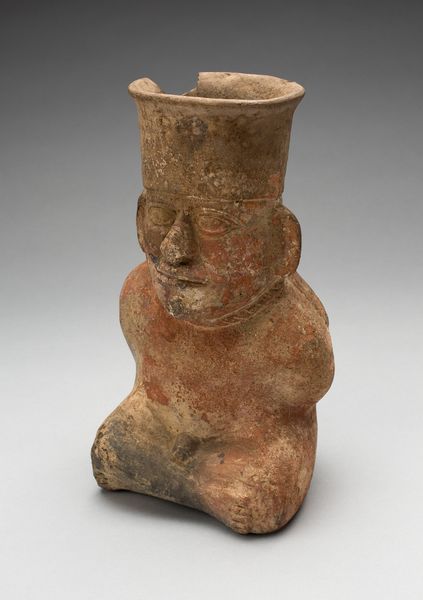
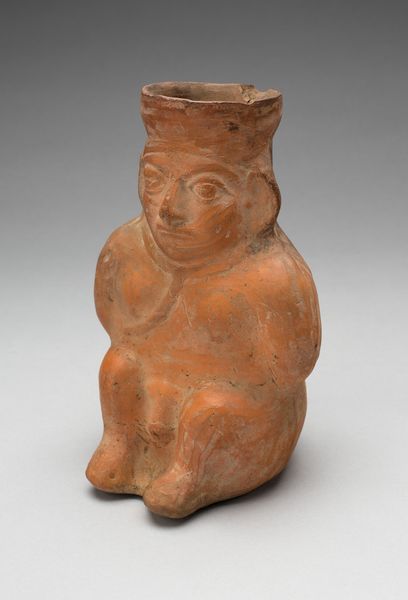
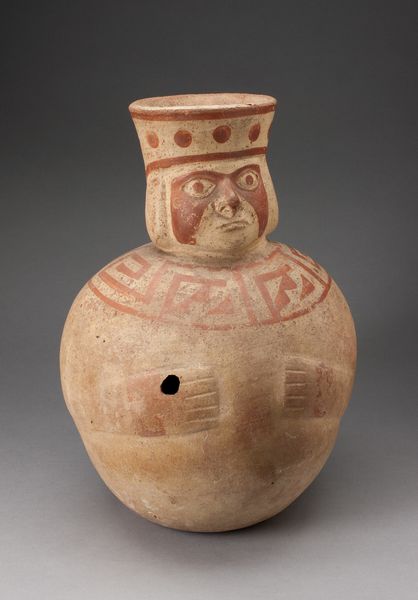
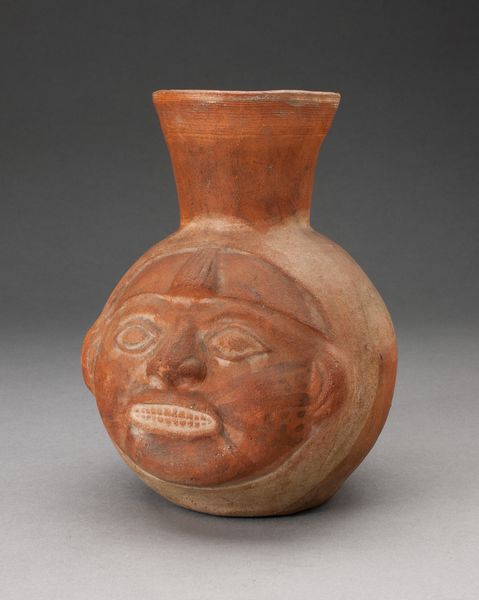
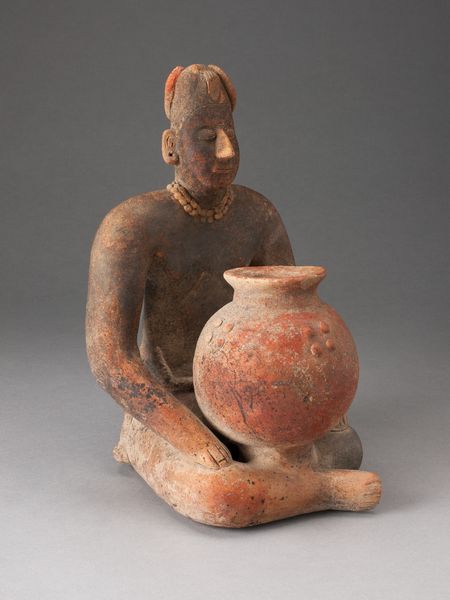
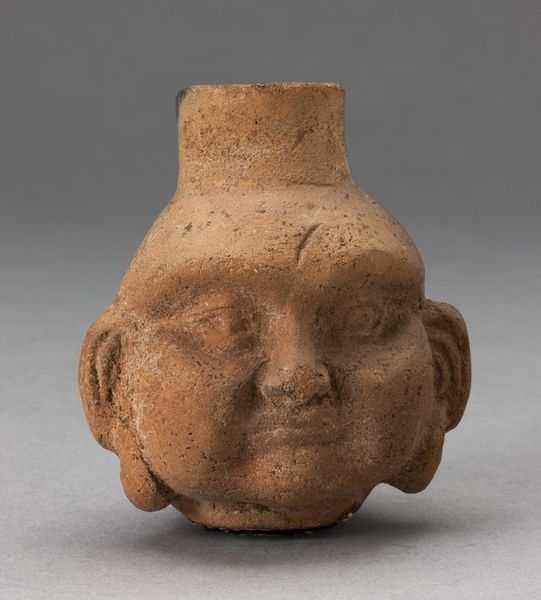
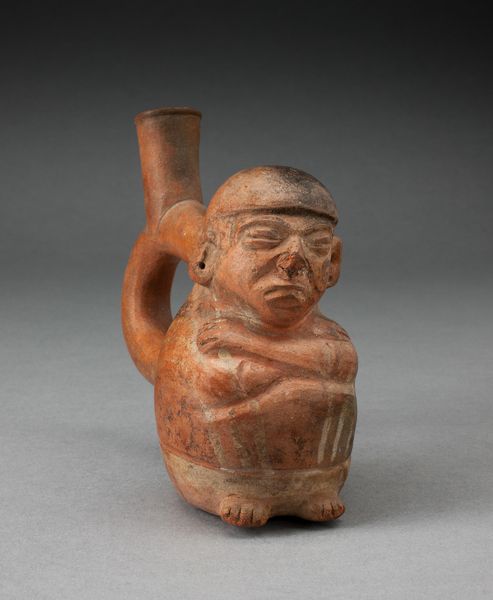
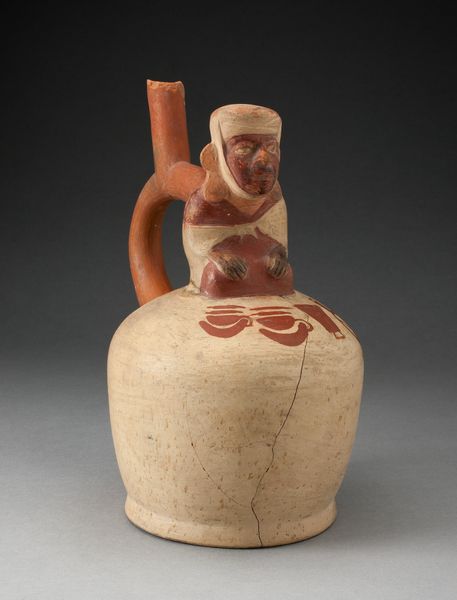
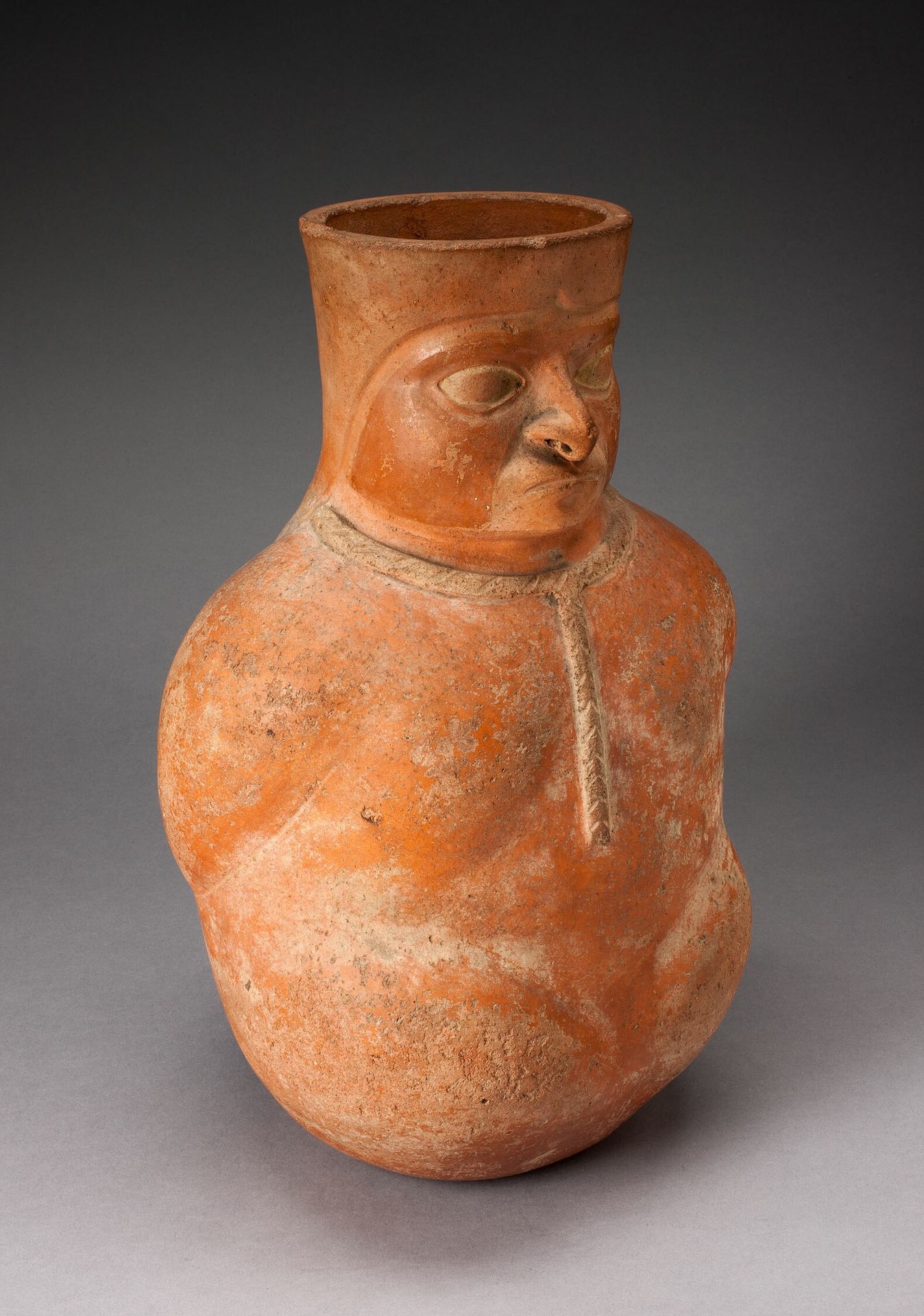
Jar in the Form of a Captive with Modeled Head, Rope Encircling Neck, and Tied Hands


Listen to curator's interpretation
Curatorial notes
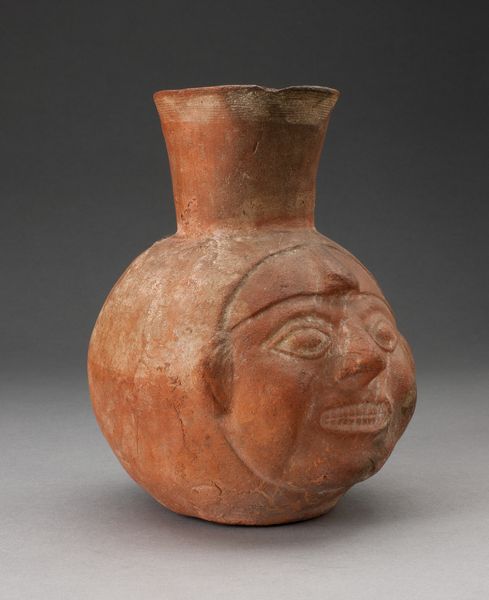
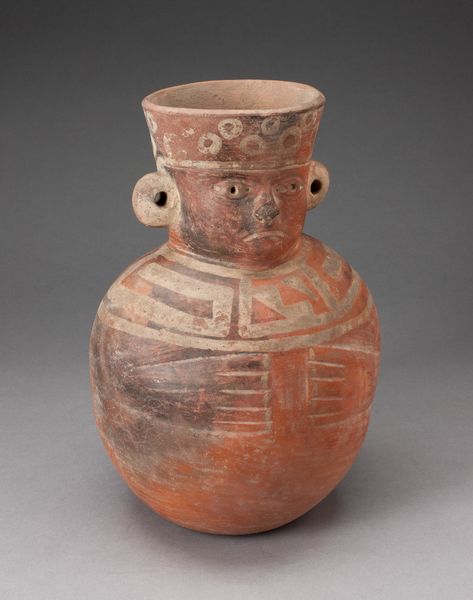
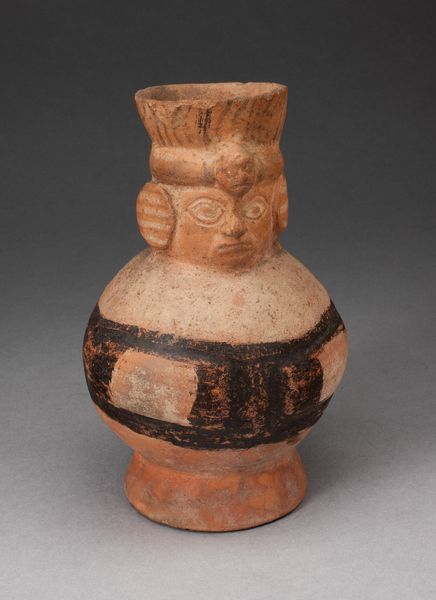
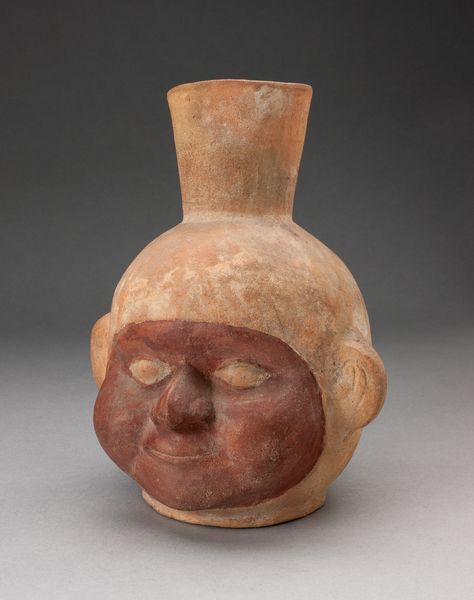
Editor: So, this is a Moche ceramic jar from around 100 to 500 AD, at the Art Institute of Chicago. The title is pretty descriptive: "Jar in the Form of a Captive with Modeled Head, Rope Encircling Neck, and Tied Hands." It’s a striking image, and feels... heavy, burdened. What do you see in it? Curator: The weight you perceive is quite palpable, isn't it? Consider the Moche culture. This isn't merely a jar; it’s a potent symbol. The rope, so carefully rendered, speaks to subjugation, to sacrifice perhaps. But it also speaks to power – the power dynamic between captor and captive. Look at the figure’s face – what emotions do you read there? Editor: There’s a sort of stoic resignation, maybe? He's not screaming, he's… there. Like he's accepted his fate. Curator: Exactly. And that acceptance carries its own weight, doesn't it? What about the choice to represent this figure as a vessel, an object to be filled? How does that impact your reading of his captivity? Editor: It dehumanizes him, makes him a thing. But at the same time, it preserves him. The vessel suggests a continued purpose, even in his subjugated state. Curator: Precisely! This tension is central. It explores how images are created and carry memory and psychological impact. Editor: It's so complex. A drinking vessel is simultaneously so functional and laden with meaning. I’ll never look at ancient pottery the same way again! Curator: And that's the power of symbols: to reveal how meaning can live for centuries. It's like looking at the collective cultural psyche through the artist's rendering.