drawing, paper, pencil
pencil drawn
drawing
amateur sketch
light pencil work
quirky sketch
pencil sketch
paper
personal sketchbook
idea generation sketch
geometric
pencil
sketchbook drawing
pencil work
sketchbook art
modernism
Copyright: Rijks Museum: Open Domain
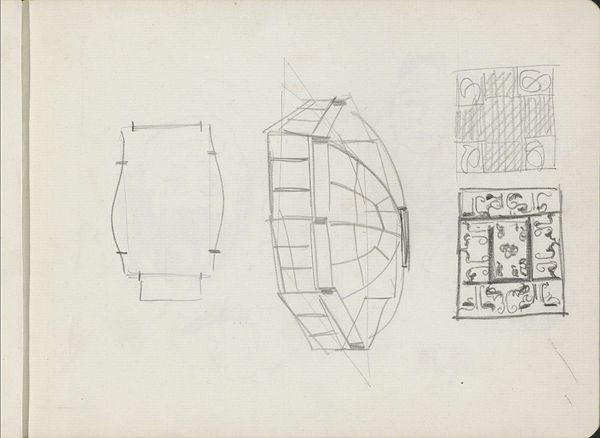
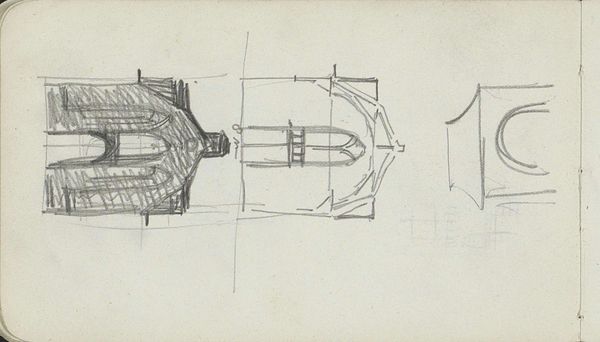
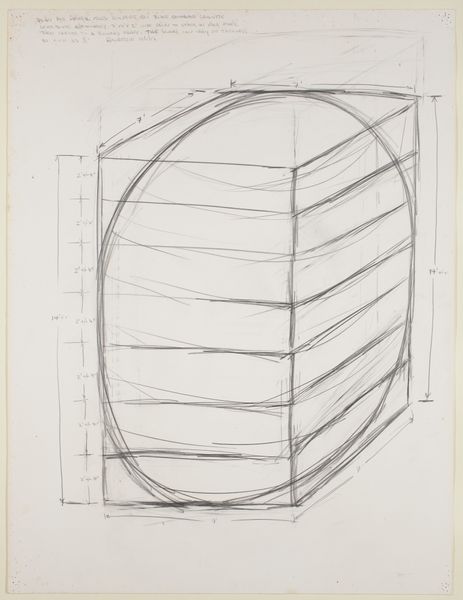
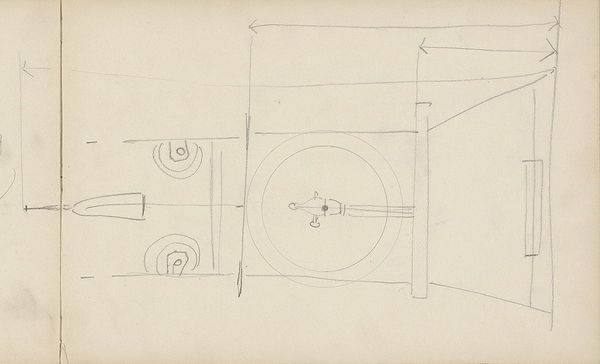
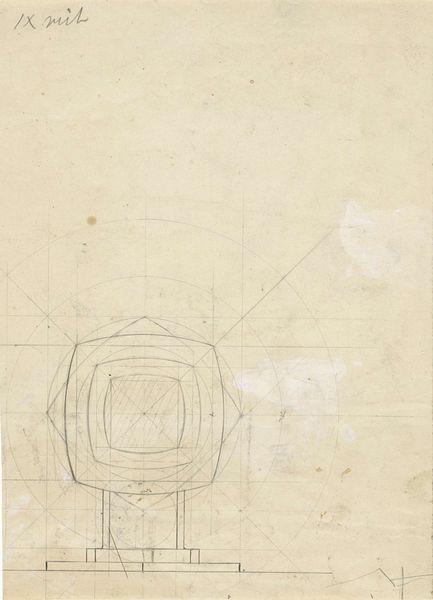
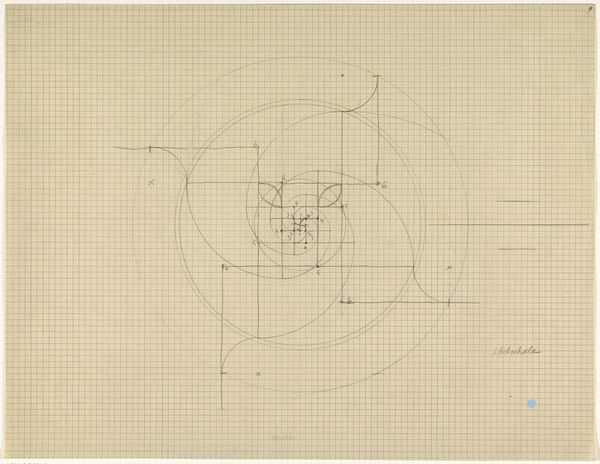
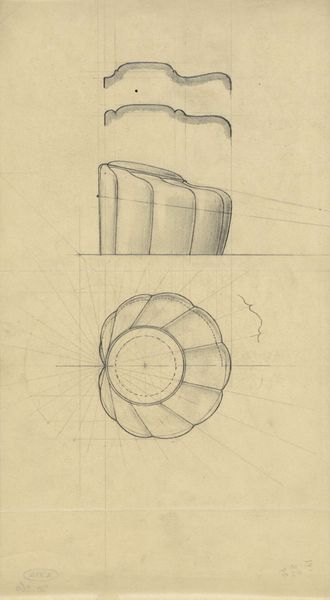
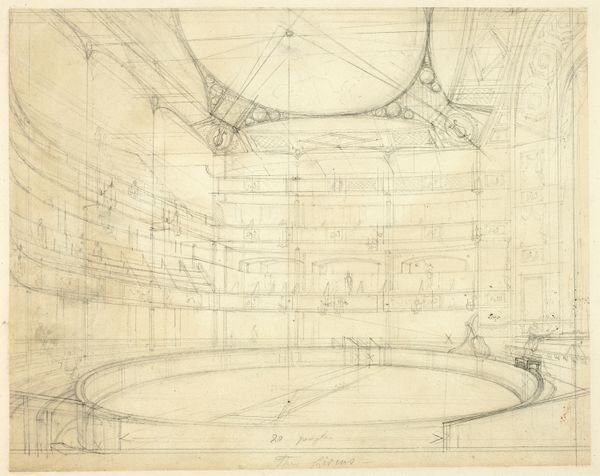
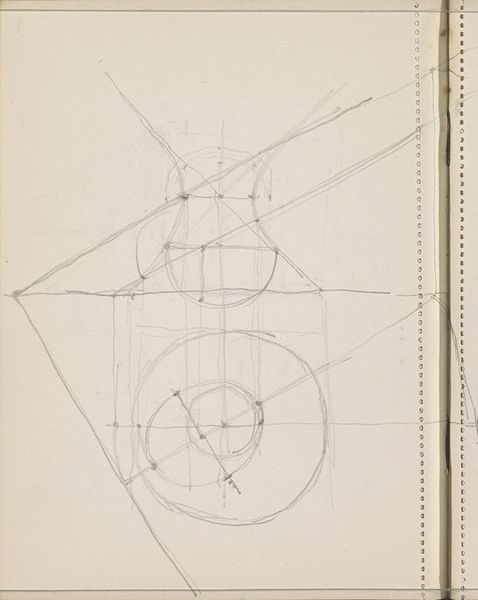
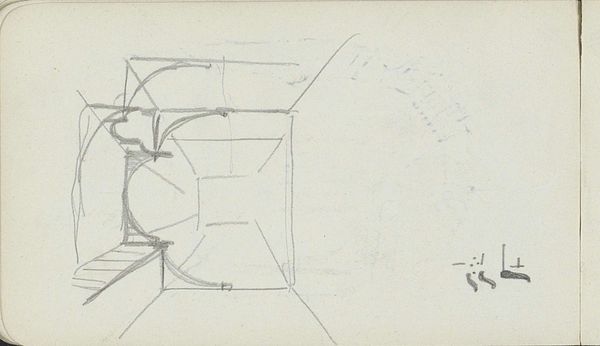
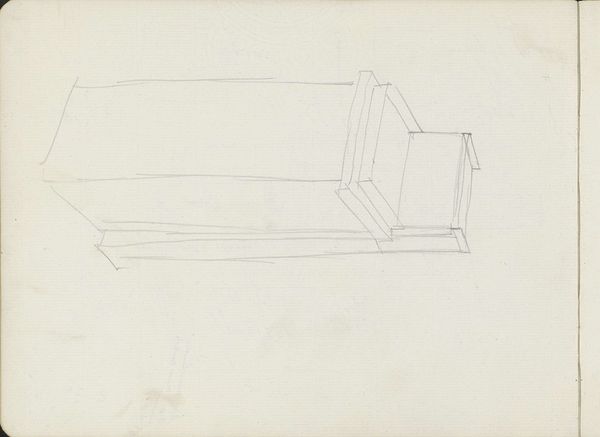
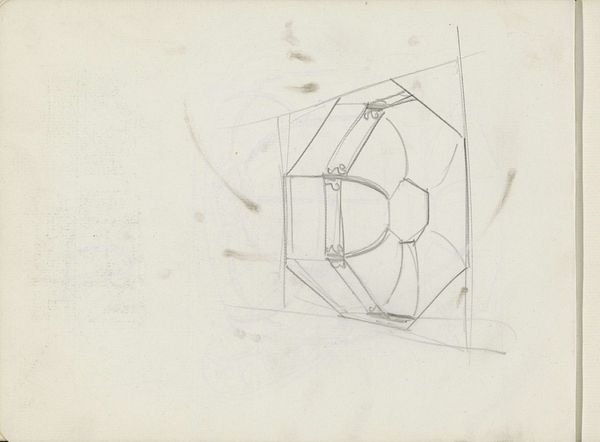
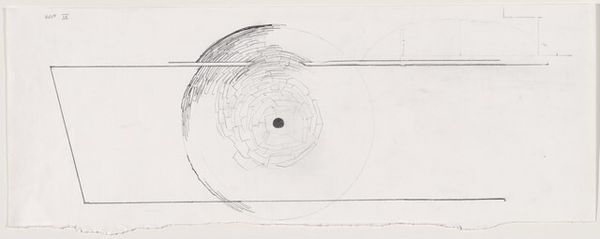
Curator: This is a pencil drawing entitled "Studie" by Carel Adolph Lion Cachet, created around 1905 to 1910. It resides here at the Rijksmuseum. Editor: It strikes me as quite architectural—linear, almost a blueprint, with its ethereal quality hinting at unseen structures. Curator: Indeed. Looking closely, we can observe the geometric forms dominating the composition. Cachet's light pencil work emphasizes shape and proportion, seemingly deconstructing a circular dome and rectangular framework. Editor: I see not only deconstruction but also an almost defiant reclamation of space by subverting the expected dominance of white colonial architecture prevalent during that time. Consider, perhaps, an intentional disruption of linear expectations tied to Dutch societal norms. Curator: Interesting. Focusing on form alone, the artist employs delicate lines to build the illusion of three-dimensionality on a two-dimensional surface. This emphasis draws attention to the power of the drawn line itself. Notice how variations in line weight suggest depth, space, and structural integrity. Editor: Right, but who controlled those building projects? Lion Cachet lived amidst enormous upheaval and colonialism; one needs to consider if these light lines, suggestive forms, are an attempt at architectural liberation from the colonial master's plan. The empty, unfilled domes and structures signal resistance. Curator: Your interpretation is stimulating, of course. However, I am inclined to see the visual dynamics present; the contrast between the rigid lines and fluid curves which create tension. Editor: That tension, I think, lies precisely in his experience, as an artist and craftsman living in the Dutch East Indies at a pivotal period. What do these abandoned plans truly represent beyond mere geometry? The visual, formal analysis lacks substance. Curator: Fair point. By the standards of today, we have to seek broader contexts to appreciate it. Thank you for helping our listeners discover just one avenue of approach! Editor: The pleasure was mine, especially when using context to enrich that interpretation!
Comments
No comments
Be the first to comment and join the conversation on the ultimate creative platform.
 React
React Comment