1938
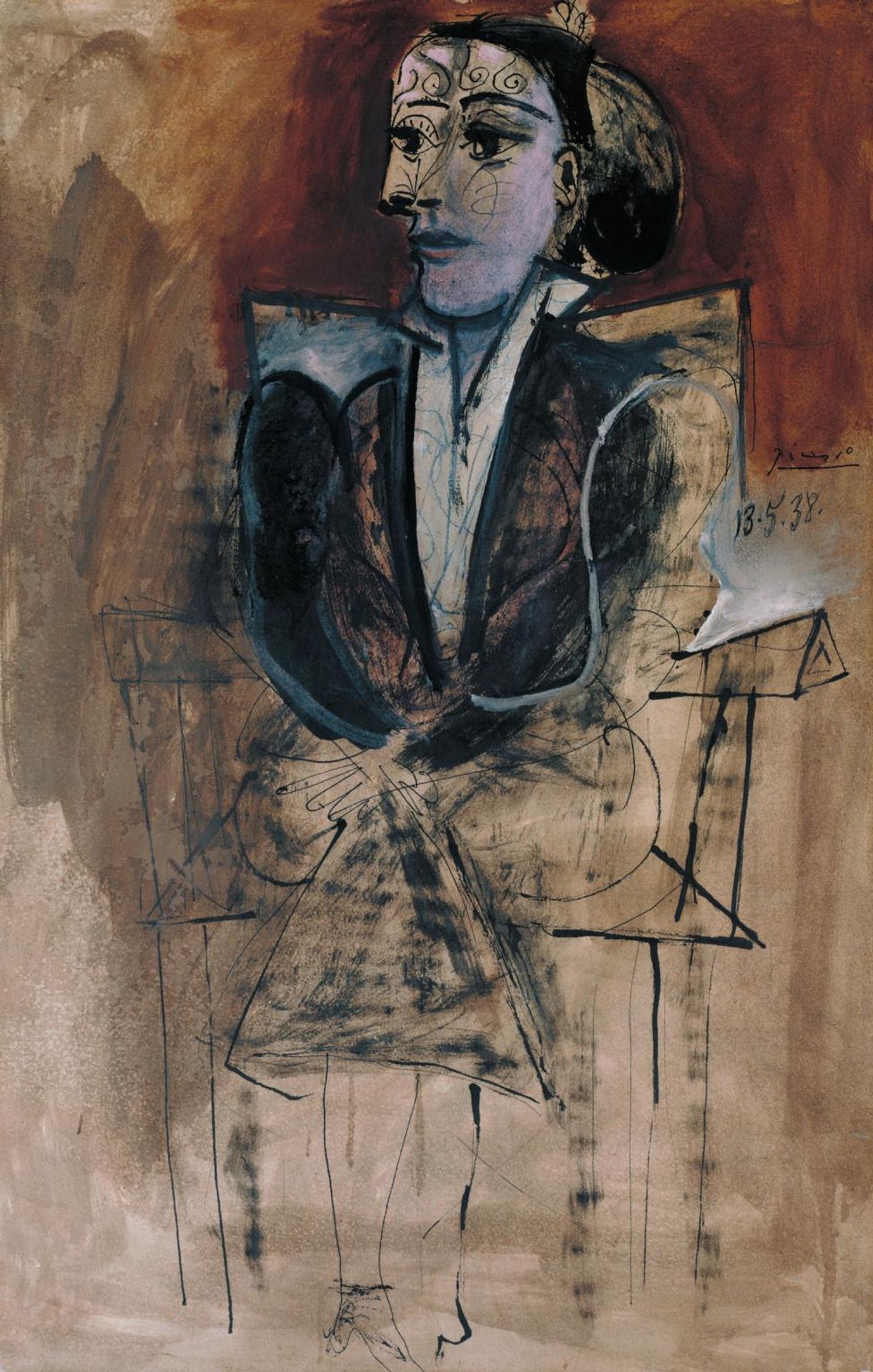
Dora Maar Seated


Listen to curator's interpretation
Curatorial notes
Curator: Here we have Picasso’s “Dora Maar Seated,” currently held at the Tate. He rendered this portrait, using oil on canvas, in 1938. Editor: It’s immediately striking—the muted palette and angular lines give it a sense of melancholy, even unease. What's your read? Curator: Well, Picasso's relationship with Dora Maar was complex, marked by both intellectual connection and emotional turmoil. The fractured composition could reflect the fractured nature of their relationship at the time. Editor: Exactly, her very identity seems disrupted, mirroring the societal disruptions of the era, like the rise of fascism. It makes you consider the female artist's position during wartime. Curator: Absolutely, and it shows how personal relationships intersect with broader socio-political currents. Editor: It's a potent reminder of how art can capture both individual experience and collective anxieties. Curator: Indeed, and it makes you appreciate the lasting power of Picasso's work to provoke thought and emotion.