

1845
Stad aan het water

Hendrik Abraham Klinkhamer
1810 - 1872Location
RijksmuseumListen to curator's interpretation
Curatorial notes
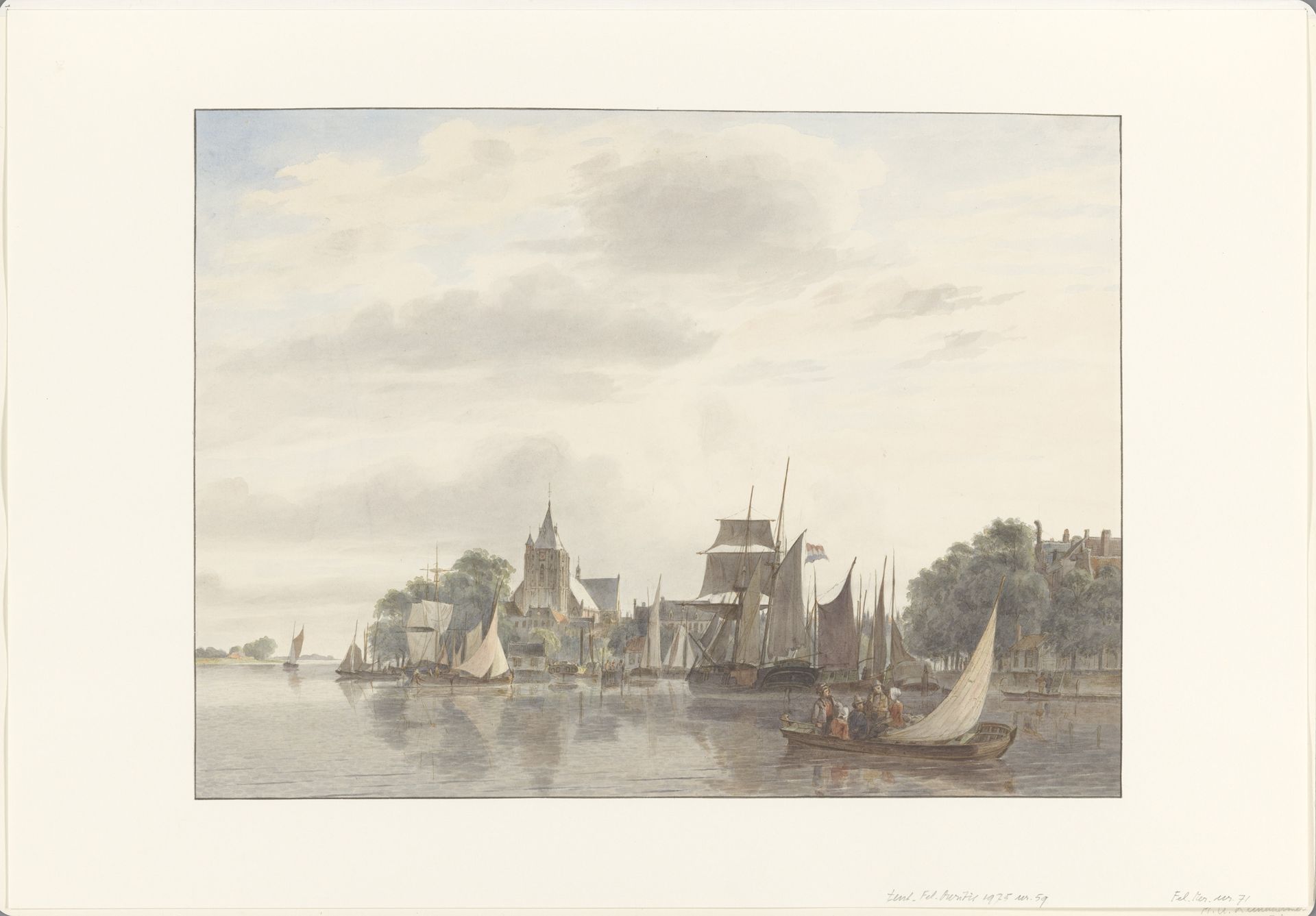
Curator: Let’s take a closer look at "Stad aan het water", or "City on the Water," a watercolor by Hendrik Abraham Klinkhamer, created around 1845. Editor: My first impression is serenity. It’s quite subdued; the color palette seems intentionally muted, creating a very tranquil and somewhat melancholic mood. Curator: Absolutely. The symbolism of water, as seen in much Dutch Golden Age painting, is multifaceted. It represents not only trade and prosperity, reflecting the Netherlands' maritime power, but also a potential for turbulence and the ever-present awareness of the nation's dependence on managing its relationship with the sea. Considering the socio-political climate of the mid-19th century, this placid surface might hint at underlying societal tensions as well. Editor: That’s interesting. I see the various boats, and I can’t help but consider them symbols of journeys, transitions, maybe even the passage of time. And a church steeple dominating the urban landscape serves as a beacon—a powerful and lasting symbol of spirituality and community stability. Notice the way the artist renders it, its light seems to radiate, commanding your attention and inspiring the soul. Curator: Yes, and situating that church within the broader political discourse of the time highlights the evolving relationship between religious institutions and shifting societal power structures. I think the use of watercolor adds an additional layer of commentary on fragility and ephemerality. Editor: It is delicate. There's a fleeting quality in the wash, almost as if Klinkhamer captured not just the city's form but its essence, like a memory fading with each passing wave. Perhaps he was reflecting upon the changing tides of his country. Curator: Exactly! It encourages us to investigate the broader themes of cultural identity, social memory, and national narratives in art of that era. Editor: I think what lingers with me is the soft luminosity. This artwork almost transcends its literal depiction to access some deeper truth, doesn't it? Curator: Precisely. The work prompts us to contemplate the relationship between the physical landscape, social history, and the evolving human experience.