About this artwork
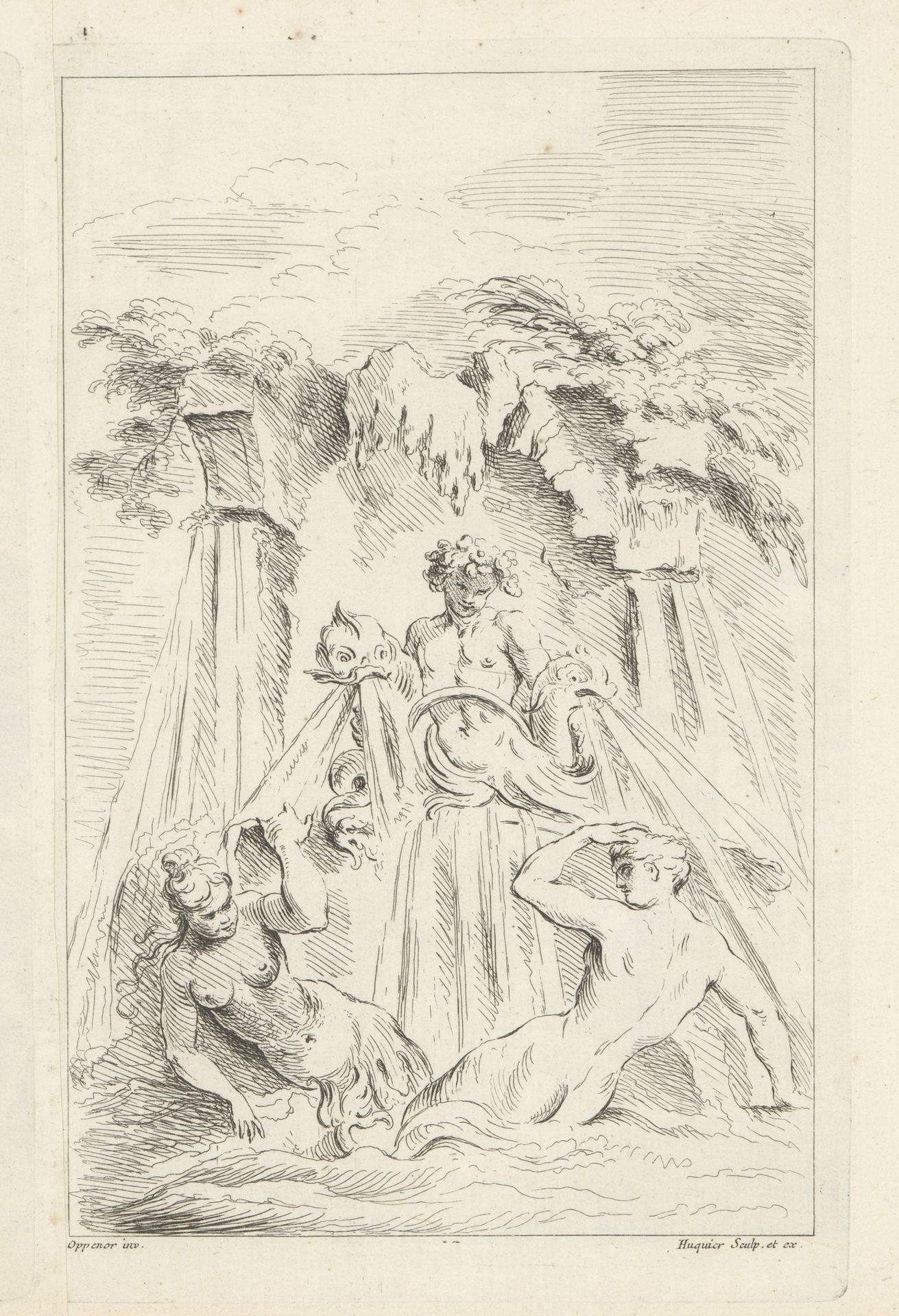
Gabriel Huquier created this fountain design with mermaids and dolphins as an etching sometime before his death in 1772. Water fountains like this one in France, where Huquier was active, were not merely decorative; they were statements of power. The design draws heavily from classical mythology, a visual language understood by the elite. Mermaids and dolphins evoke a sense of maritime dominance, reflecting France's colonial ambitions and naval power at the time. Notice how the figures are idealized, embodying classical notions of beauty and strength. This was a period when the French monarchy, under Louis XV, sought to legitimize its rule through grand displays of art and architecture. To truly understand this work, we can delve into the history of garden design and urban planning in 18th-century France. Exploring documents from the French Royal Academy of Painting and Sculpture and records of royal commissions will shed more light on the social context of this piece. We begin to see that the beauty of art is never separate from questions of power.
Ontwerp voor een fontein met meerminnen en dolfijnen
c. 1725 - 1750

Gabriel Huquier
1695 - 1772Location
RijksmuseumArtwork details
- Medium
- print, engraving
- Dimensions
- height 198 mm, width 128 mm
- Location
- Rijksmuseum
- Copyright
- Rijks Museum: Open Domain
Tags
Comments
Share your thoughts
About this artwork
Gabriel Huquier created this fountain design with mermaids and dolphins as an etching sometime before his death in 1772. Water fountains like this one in France, where Huquier was active, were not merely decorative; they were statements of power. The design draws heavily from classical mythology, a visual language understood by the elite. Mermaids and dolphins evoke a sense of maritime dominance, reflecting France's colonial ambitions and naval power at the time. Notice how the figures are idealized, embodying classical notions of beauty and strength. This was a period when the French monarchy, under Louis XV, sought to legitimize its rule through grand displays of art and architecture. To truly understand this work, we can delve into the history of garden design and urban planning in 18th-century France. Exploring documents from the French Royal Academy of Painting and Sculpture and records of royal commissions will shed more light on the social context of this piece. We begin to see that the beauty of art is never separate from questions of power.
Comments
Share your thoughts