
Curatorial notes
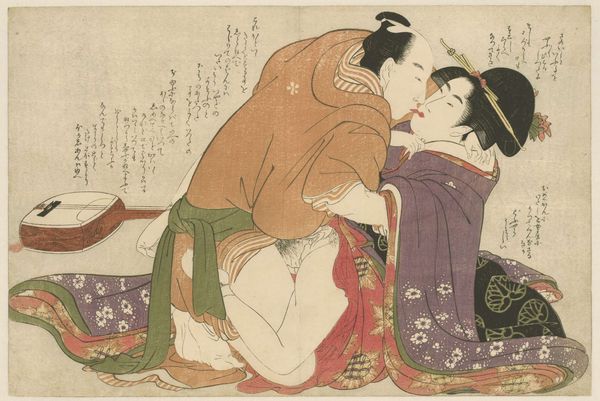
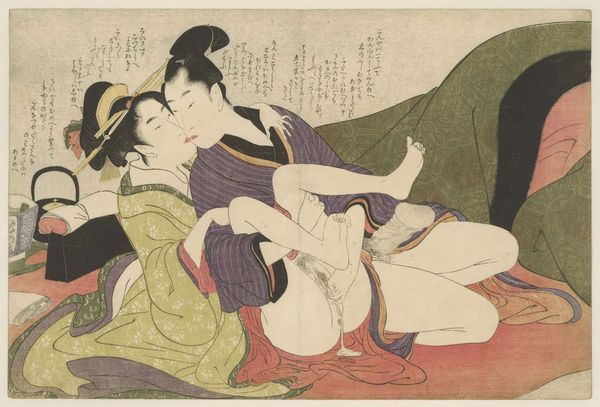
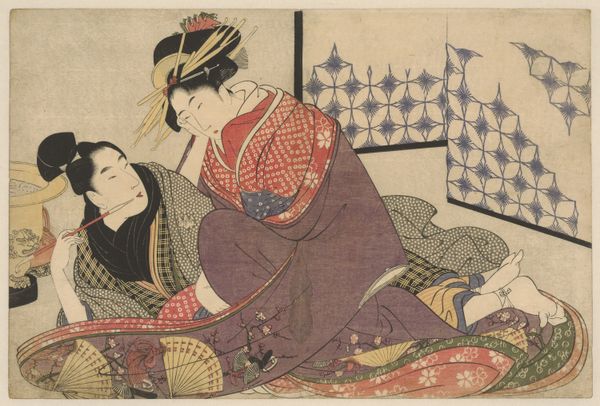
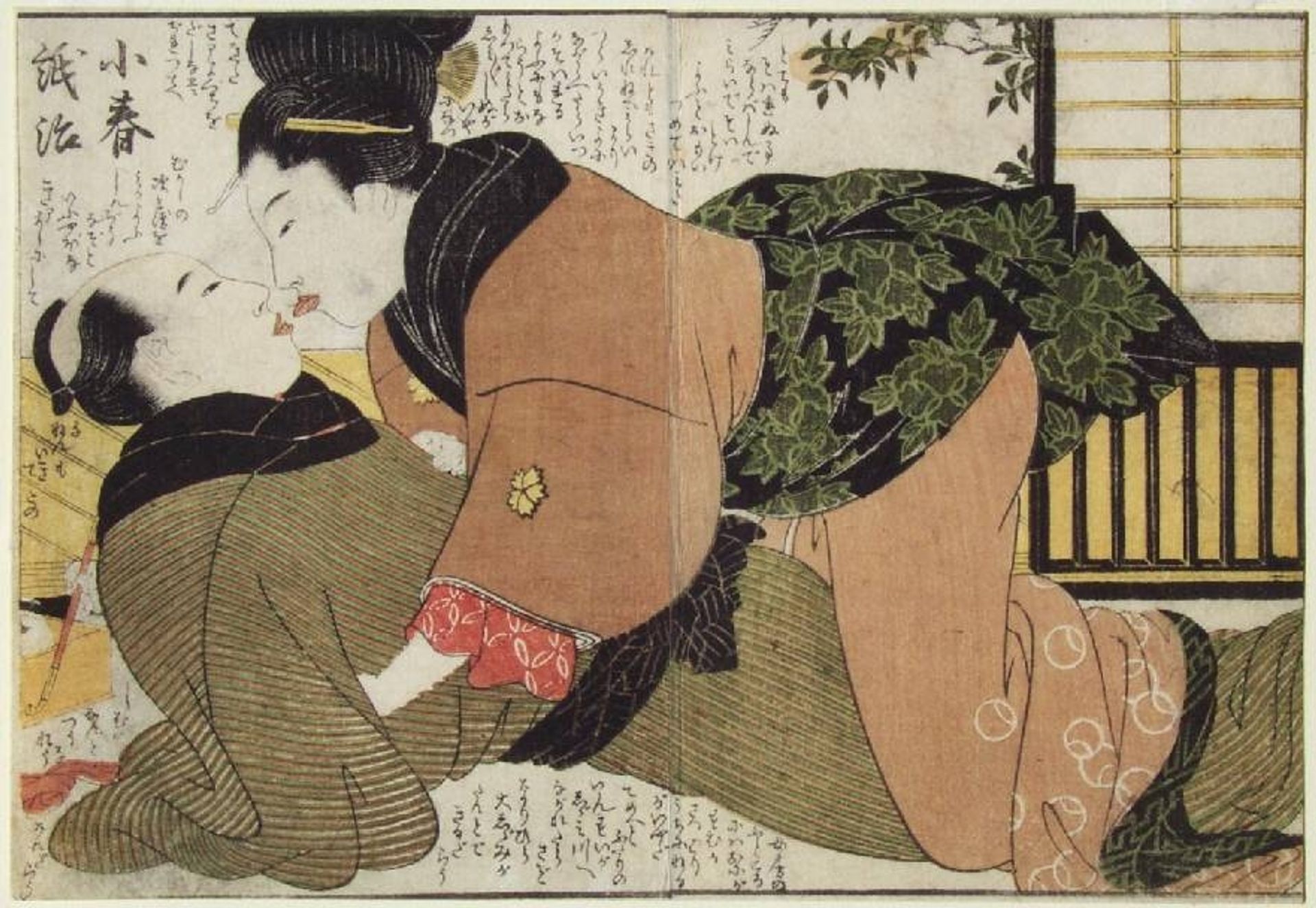
Kitagawa Utamaro produced this woodblock print called ‘The Kiss’ at the height of the Edo period in Japan. The print's frank depiction of sexual intimacy was created in a moment of relative permissiveness for the Japanese print industry. Known as *shunga*, these ‘spring pictures’ served as manuals for sexual pleasure and were popular across social classes. In this print, Utamaro depicts a couple locked in an embrace, rendered with striking realism and attention to detail. The composition and use of color create a sense of intimacy. But the context of production should caution us against seeing *shunga* simply as ‘pornography’. The prints often alluded to popular culture, referencing classical literature and theatre. The act of purchasing and viewing such images was itself a social practice and an exercise in the viewer's knowledge of cultural codes. Historians consult a range of sources to understand the social and cultural significance of *shunga*, including contemporary diaries, literary references, and censorship records, and the prints themselves can provide valuable insights into the pleasure and social customs of their time.