About this artwork
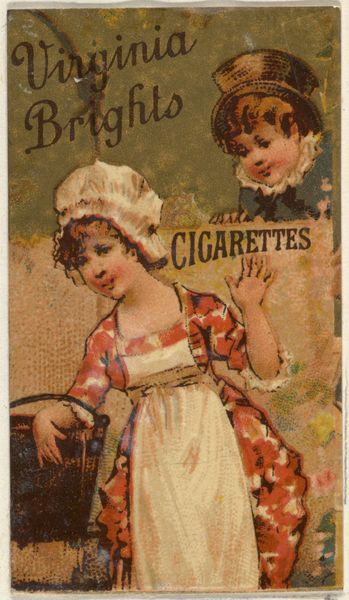
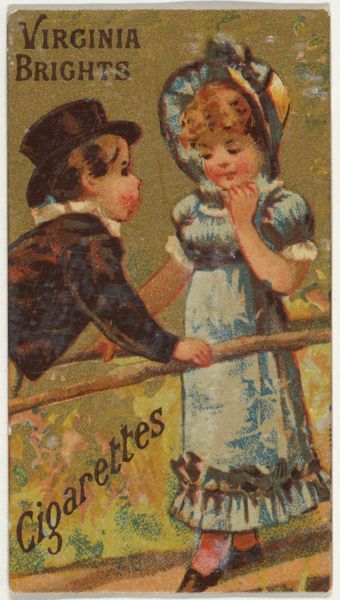
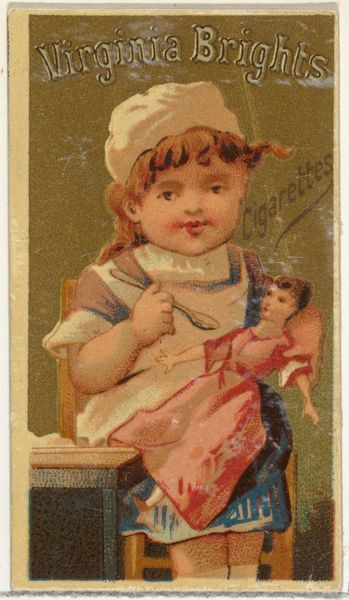
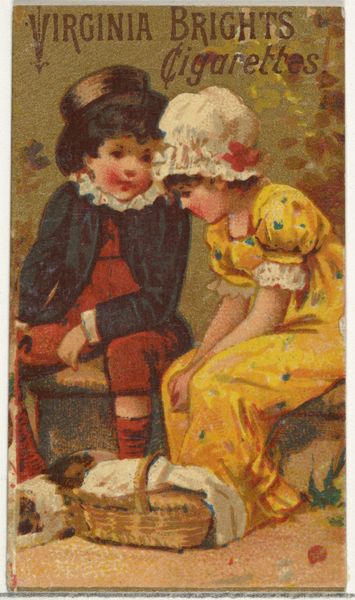
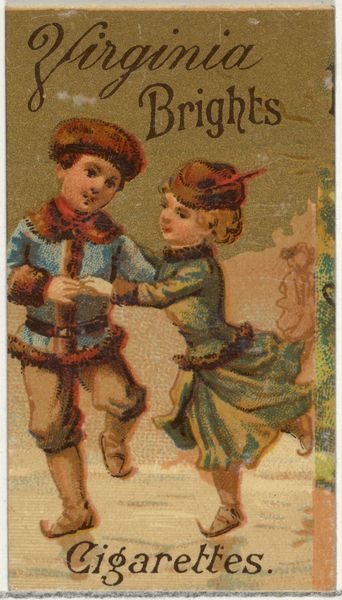
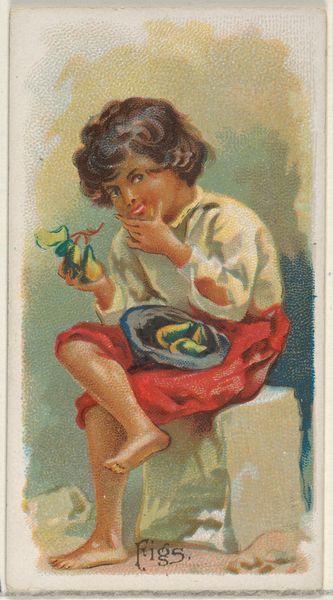
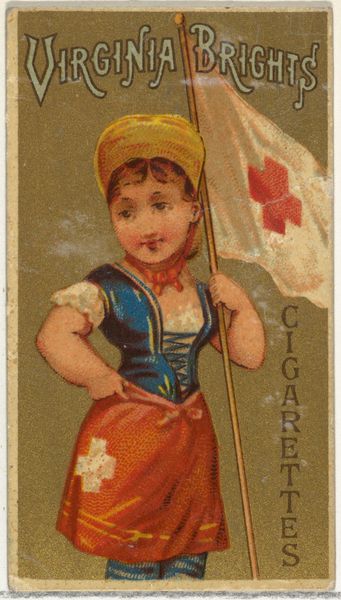
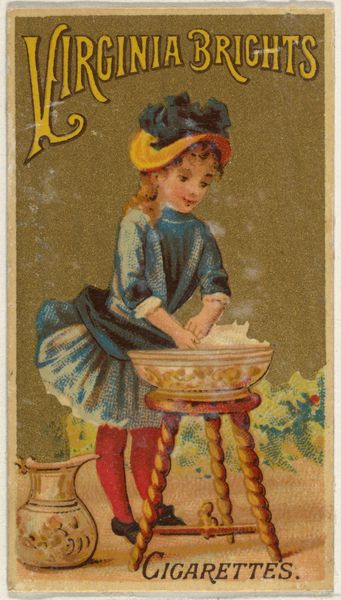
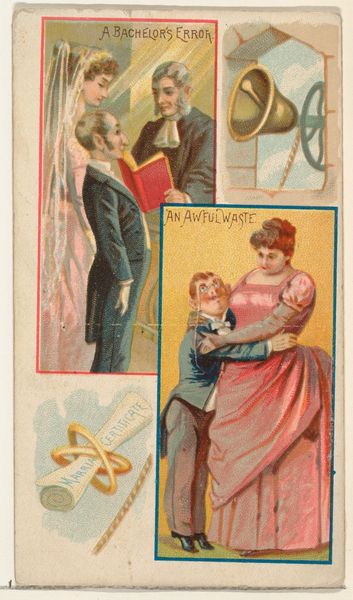
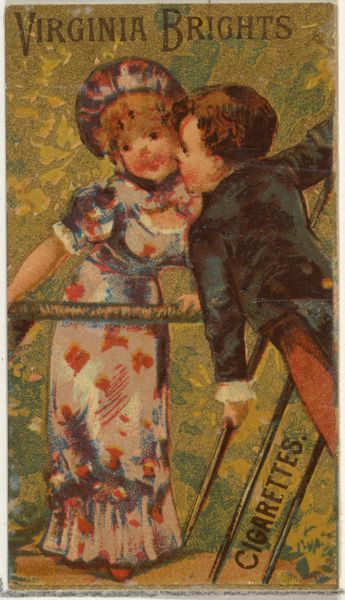
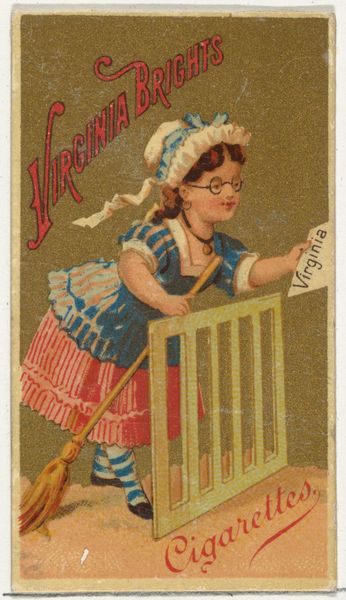
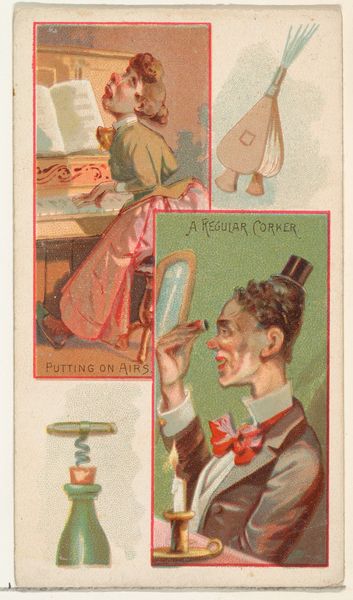
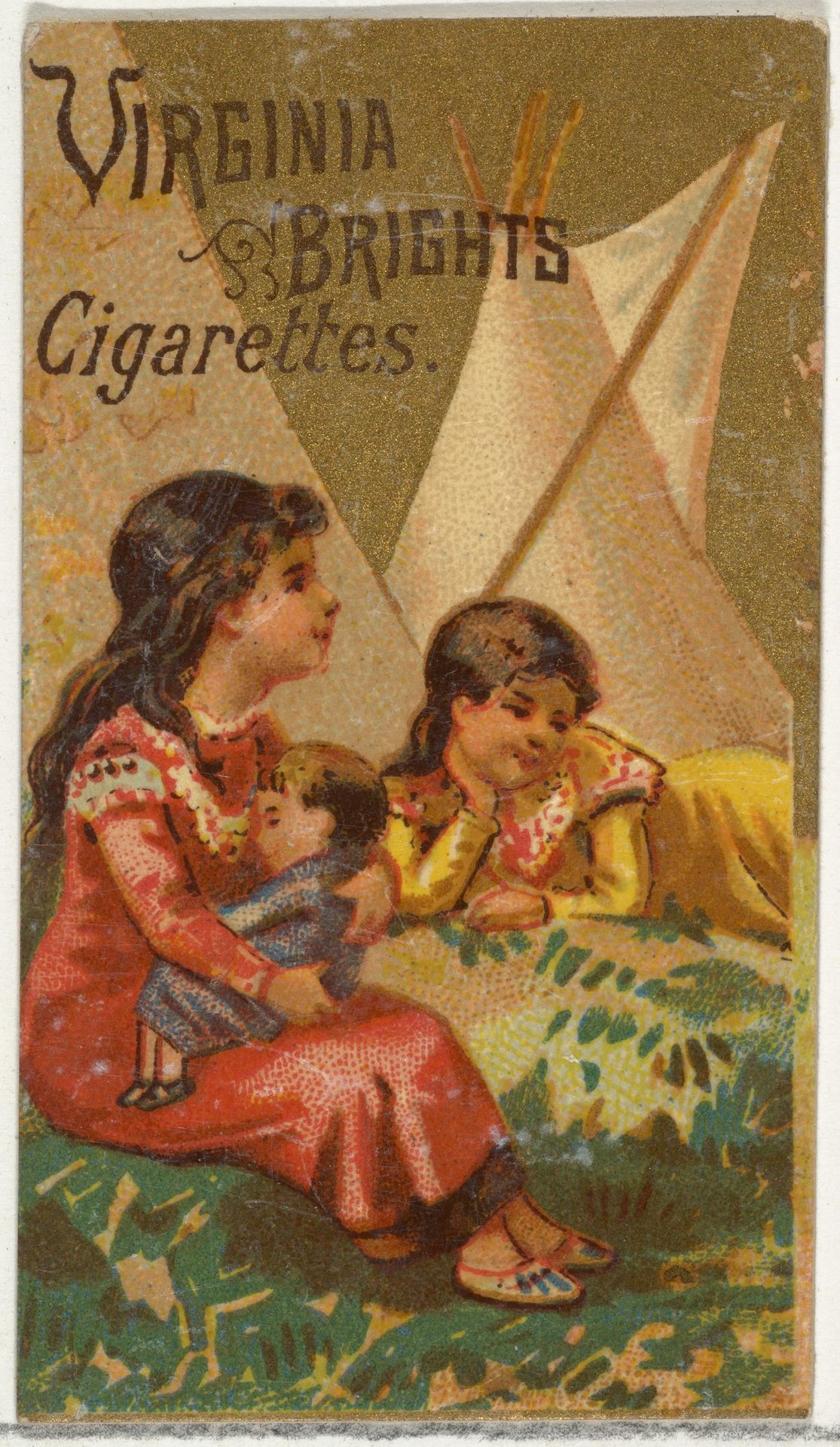
This small lithograph was created by Allen and Ginter in the late nineteenth century as a promotional item for Virginia Brights Cigarettes. Part of a larger series depicting "Girls and Children," this image reflects the cultural values and social norms of the time. Notice how the scene evokes an idealized vision of childhood, portraying young girls engaged in innocent play. The inclusion of a Native American-style teepee hints at the romanticized views of indigenous cultures prevalent in popular culture. Consider the underlying message conveyed by associating these images with a tobacco product. It suggests a connection between innocence, leisure, and the pleasures of smoking. To fully understand this artwork, we might consult marketing archives and social histories of advertising. These can tell us about the strategies employed to promote consumer goods. This will help reveal the complex interplay between commerce, representation, and cultural values in the late 19th century.
From the Girls and Children series (N64) promoting Virginia Brights Cigarettes for Allen & Ginter brand tobacco products
1886


Artwork details
- Medium
- drawing, print
- Dimensions
- Sheet: 2 5/8 × 1 1/2 in. (6.7 × 3.8 cm)
- Location
- Metropolitan Museum of Art, New York, NY
- Copyright
- Public Domain
Tags
Comments
Share your thoughts
About this artwork
This small lithograph was created by Allen and Ginter in the late nineteenth century as a promotional item for Virginia Brights Cigarettes. Part of a larger series depicting "Girls and Children," this image reflects the cultural values and social norms of the time. Notice how the scene evokes an idealized vision of childhood, portraying young girls engaged in innocent play. The inclusion of a Native American-style teepee hints at the romanticized views of indigenous cultures prevalent in popular culture. Consider the underlying message conveyed by associating these images with a tobacco product. It suggests a connection between innocence, leisure, and the pleasures of smoking. To fully understand this artwork, we might consult marketing archives and social histories of advertising. These can tell us about the strategies employed to promote consumer goods. This will help reveal the complex interplay between commerce, representation, and cultural values in the late 19th century.
Comments
Share your thoughts