drawing, pencil
#
portrait
#
drawing
#
comic strip sketch
#
quirky sketch
#
figuration
#
personal sketchbook
#
idea generation sketch
#
sketchwork
#
ink drawing experimentation
#
pencil
#
sketchbook drawing
#
storyboard and sketchbook work
#
sketchbook art
#
initial sketch
Copyright: Rijks Museum: Open Domain
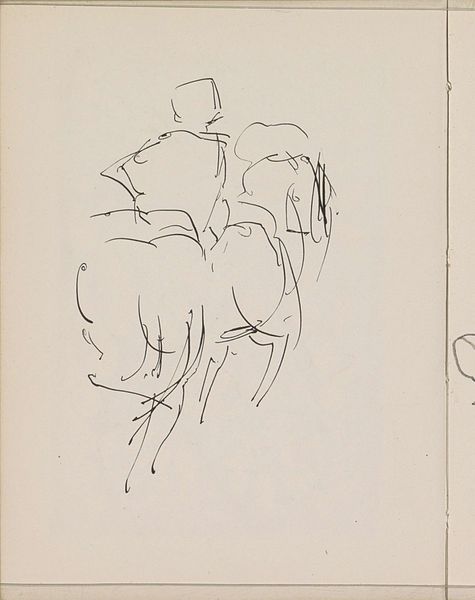
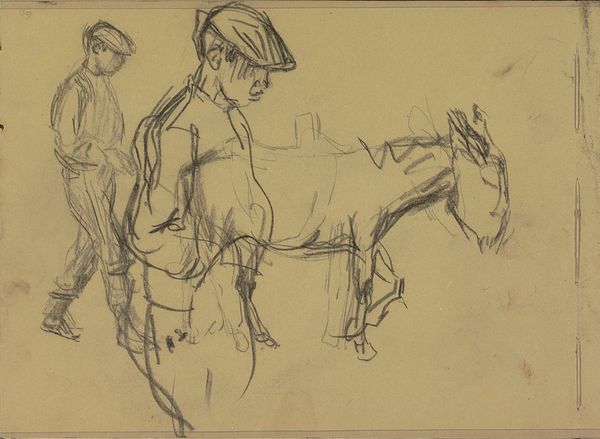
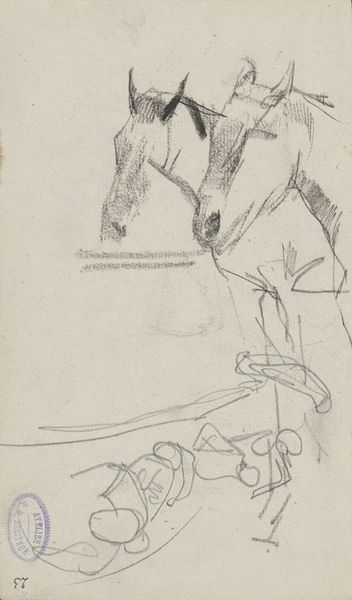
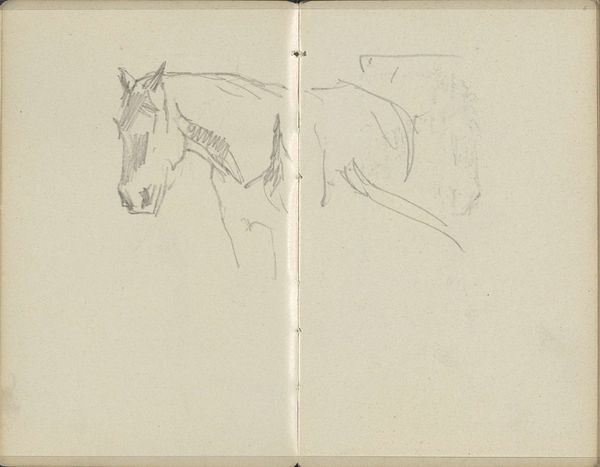
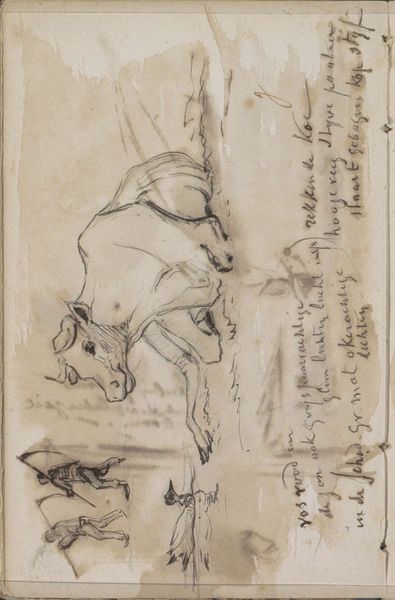
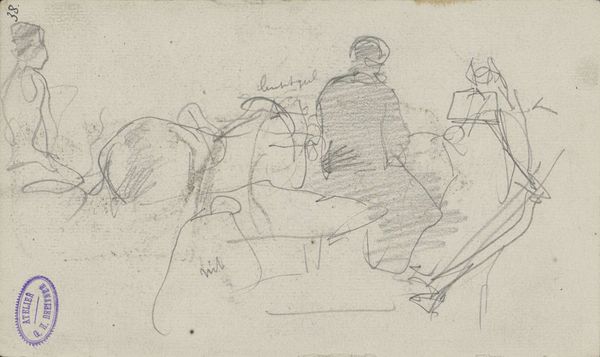
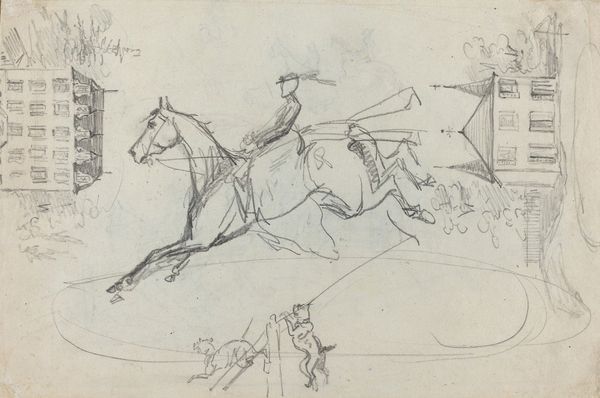
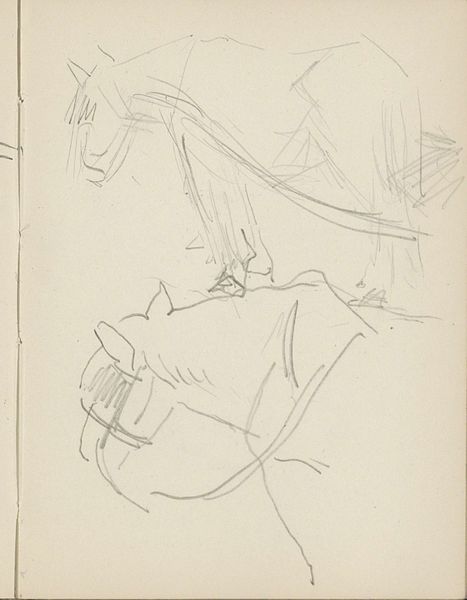
This sketch, made by Reijer Stolk, depicts a man riding a donkey, a humble motif rich with symbolic weight. The donkey, often associated with patience and humility, carries its rider, an archetypal image echoing through art history. Think of Christ's entry into Jerusalem, or the ass in Apuleius's "The Golden Ass," transformed into a beast of burden against his will. The donkey, in its docile nature, becomes a vessel—a bearer of burdens, both literal and symbolic. This act of riding itself is a powerful gesture. The rider asserts control, a mastery over the animal, yet the donkey's inherent stubbornness hints at a resistance, a subconscious tension between will and submission. This push and pull speaks to our internal struggles between control and the acceptance of fate. The image engages us on a deep, almost subconscious level. It speaks to our own burdens, our own struggles for control, and the quiet dignity found in the everyday. It is a symbol that resurfaces, carrying echoes of past meanings, while adapting to new emotional landscapes.
Comments
No comments
Be the first to comment and join the conversation on the ultimate creative platform.
 Collect
 React
React Comment
More like this