1900 - 1925
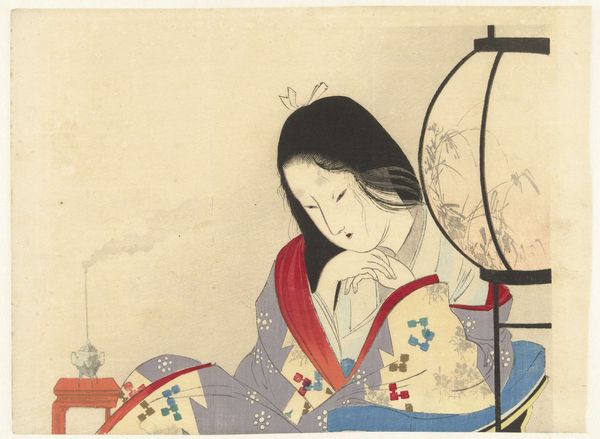
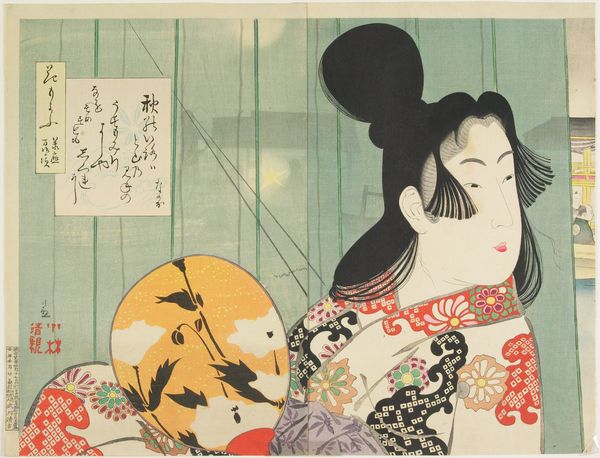
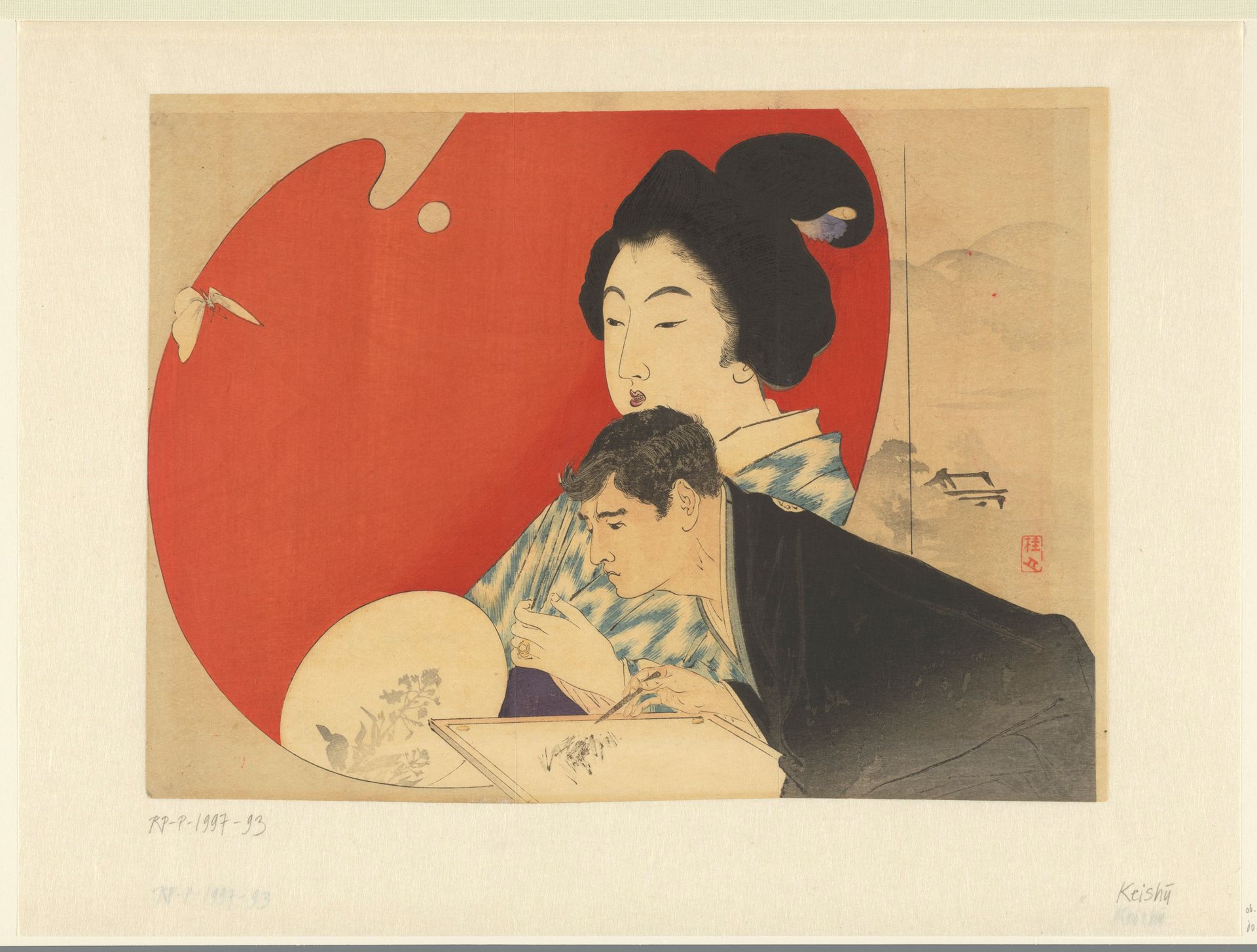
Schilder voor een beschilderd scherm

Listen to curator's interpretation
Curatorial notes
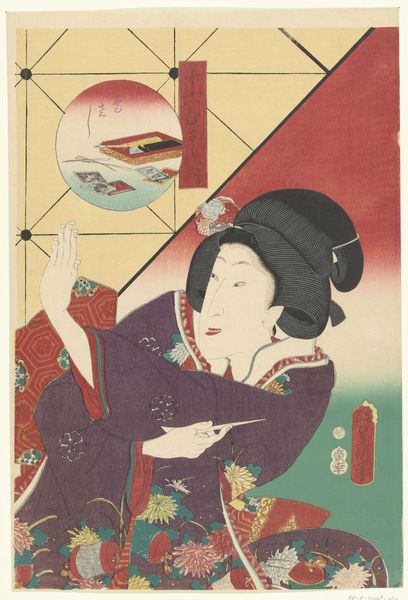
Curator: At first glance, the cool blues and striking reds of the print strike me, almost cinematic in its composition. Editor: Indeed! We're looking at Takeuchi Keishu’s “Painter before a Painted Screen,” a woodblock print dating roughly from 1900 to 1925. What strikes me immediately is the interplay between the artist, the model, and the unfolding scene; consider who has access and control. Curator: The execution itself is lovely, it showcases the artist’s facility with line and color—the subtle gradations, and layering one sees in the kimono, a testament to the labor involved in Ukiyo-e prints. The visible wood grain also really grounds us in its process of creation. Editor: Absolutely. The female figure is portrayed traditionally, almost stoically, reflecting gendered expectations for women as aesthetic objects to be looked at. What does it mean for an artist, presumedly male, to control both her image and labor in this way? I also see some level of performance of class here. Curator: I do appreciate your point about labor and image control. However, I read the setting—the beautiful patterned fabrics and detailed painted fan—less as symbols of outright subjugation and more as markers of status and taste; indicators of cultural and economic capital. The focus is on a certain type of idealized elegance. Editor: I wouldn't argue that beauty doesn't exist here! But in this construction of idealized elegance, what narratives might be suppressed, or erased entirely? The artist as a tradesman must appeal to wealthy tastes, producing pieces like this to please them. Curator: Yes! But aren't we also ascribing agency to the woman and the artist? This could be a critique on those dynamics. And while the system is built that way, he seems to capture something interesting and quite sensitive of both the people in this setting. I wonder, did they profit or not? Editor: That's it though; we will never know from this single depiction. What survives across time shows us not only individual actions, but also those actions that reinforce a society’s values and dominant hierarchies. The beauty and the material excellence invite these questions! Curator: So, in viewing this work, we're drawn to both its visual beauty and the potential for discussing socioeconomic realities, and these, perhaps, are the point and power of its image. Editor: Precisely. It’s not about simple answers but grappling with complexities that resonate across time and context. It has many doors.