

1855 - 1917
Jewelry Design

Listen to curator's interpretation
Curatorial notes
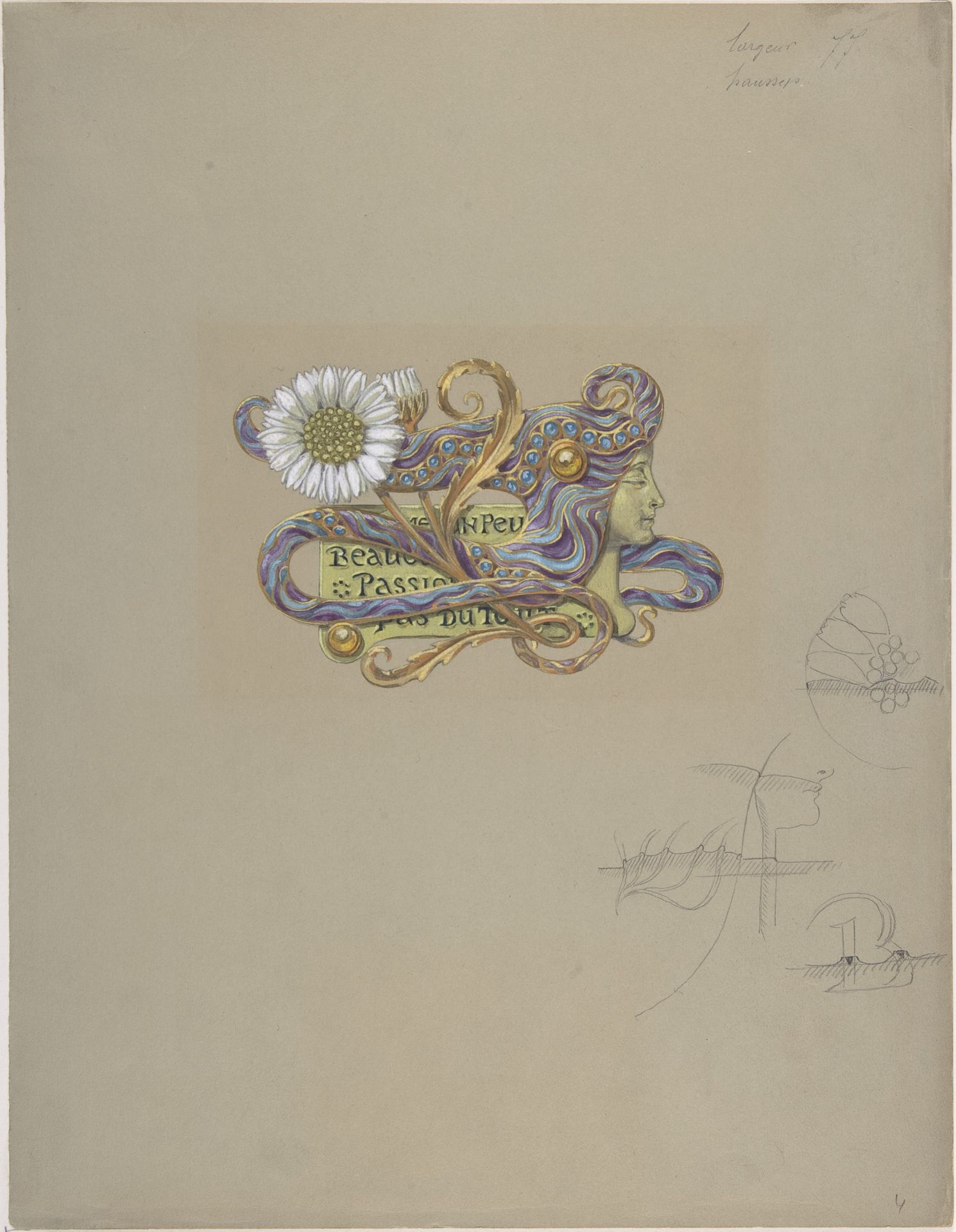
Editor: This is Eugène Grasset's "Jewelry Design," created sometime between 1855 and 1917. It’s a drawing, using watercolor and print, currently held at the Metropolitan Museum of Art. The intricate details and the blend of organic and geometric shapes give it a delicate, almost dreamlike quality. What stands out to you about this piece? Curator: I see a fascinating interplay between materiality and representation. Grasset's choice of media - watercolor and print - speaks volumes. It's not just about depicting jewelry, but about exploring how these materials contribute to its perceived value. Consider how watercolor evokes a sense of fragility, while print, traditionally associated with mass production, hints at the democratization of luxury. How might this tension reflect broader social anxieties about consumerism and the changing landscape of class during the Art Nouveau period? Editor: That's interesting. So, you’re saying the materials themselves contribute to the meaning of the piece beyond just aesthetics? Curator: Exactly. And it’s worth considering the labour involved in creating this design, versus the implied ease of acquiring a mass-produced jewel. The delicate hand of the watercolor clashes beautifully with the repeatable nature of print. Doesn't it invite a commentary on the social status conferred by handcrafted objects compared to industrially manufactured ones? Editor: I never considered it that way. I was focused on the design itself, but thinking about the labor and production methods… it opens up a whole new understanding of what Grasset might have been trying to say about beauty, value, and accessibility in his time. Curator: Precisely. And by thinking about materials first, we can really unravel how class structures have shaped art throughout time. It allows us to rethink hierarchies separating "high" art and crafts. Editor: I’ve definitely learned to see beyond the surface of this design. Thanks for your insights!