metal, sculpture
#
metal
#
sculpture
#
sculpture
#
decorative-art
Dimensions: H. 5 5/8 in. (14.3 cm)
Copyright: Public Domain
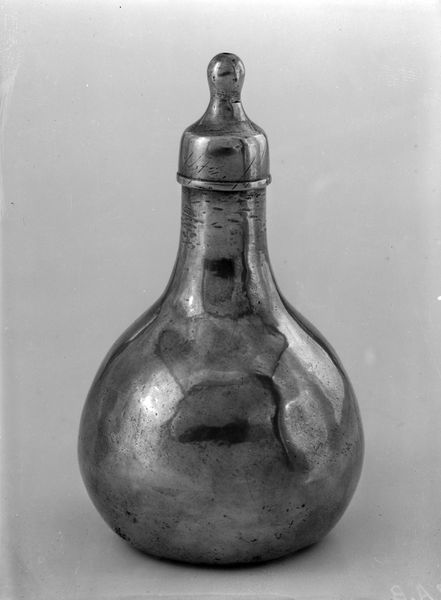
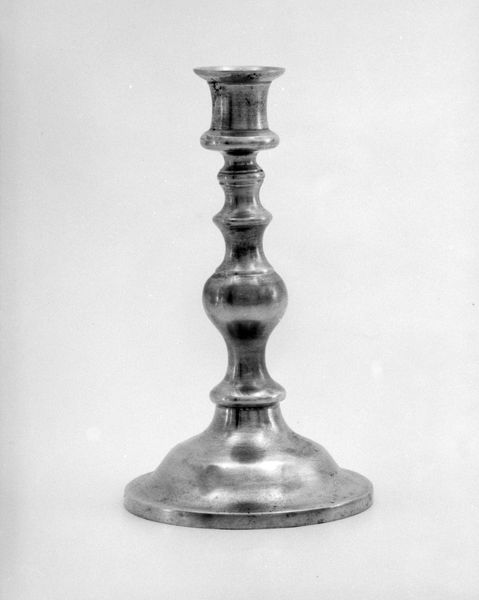
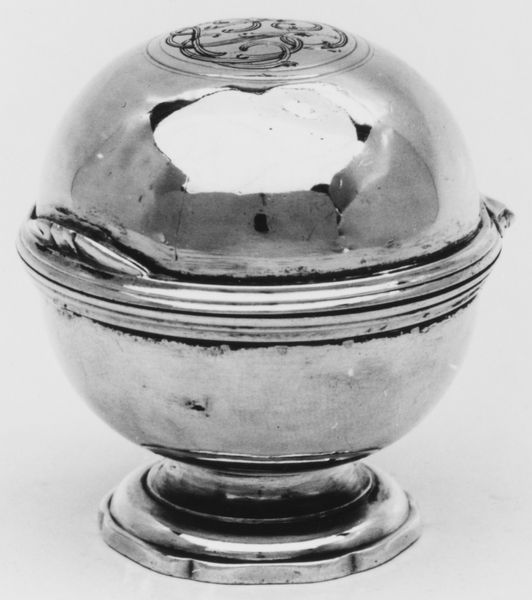
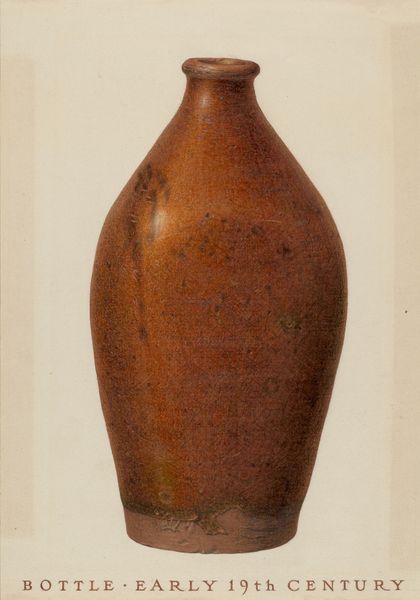
Curator: Before us, we have a metal shaker crafted by Thomas Danforth III between 1797 and 1813, part of the Metropolitan Museum of Art’s collection. What are your immediate thoughts? Editor: It’s unexpectedly imposing for a shaker. The metal finish and its scale create a serious mood, almost like a miniature monument. It's as if something functional has been elevated to the level of art. Curator: Precisely, and the historical context amplifies this. Danforth was working within a society with strict class divisions. Tableware like this becomes symbolic of status. Editor: It's interesting to consider it within a society grappling with new ideas of equality even while adhering to class structures. A handcrafted piece like this certainly carries signifiers of exclusivity, yet within the Shaker community ideals about craft and access may have disrupted old social structures. Curator: Shifting our focus slightly, the use of metal offers us insights. How does this medium interact with the decorative art style so prominent in this piece? Editor: It subverts it, perhaps. We expect fragility from decorative arts, maybe glass or porcelain. The metal gives it a permanence and heft, contrasting with the delicate piercing in the top that facilitates sprinkling the spices. Curator: Thinking more broadly, we might examine how museums frame decorative objects as culturally important artifacts versus simply household goods. What meaning accrues through this shift in setting? Editor: Putting it into a museum, its accessibility expands, but also its meaning changes. It goes from being a simple, domestic item to part of the collective identity of that moment in history. This object suddenly starts to speak for an era and its societal expectations. Curator: Absolutely. Considering this shaker invites questions about our perception of historical value, access to material culture, and the dialogue between artistic intent and cultural reception. Editor: Indeed. The piece reminds me to question easy labels and to look for complex reflections on identity in seemingly ordinary things.
Comments
No comments
Be the first to comment and join the conversation on the ultimate creative platform.
 Collect
 React
React Comment
More like this