

1773 - 1783
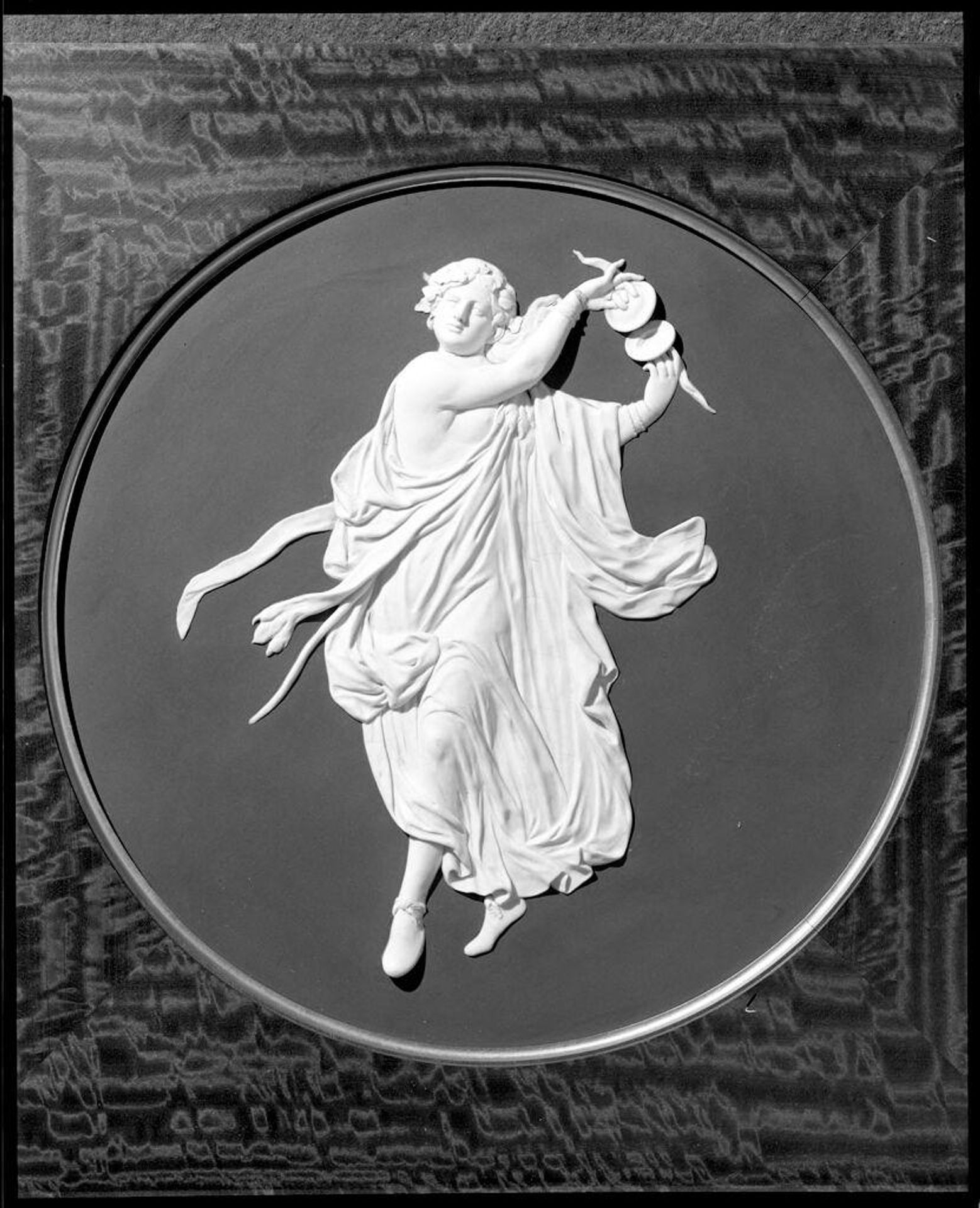
Nymph with Cymbals, after frescoes at Pompeii


Listen to curator's interpretation
Curatorial notes
Curator: This circular plaque, "Nymph with Cymbals, after frescoes at Pompeii," was crafted by Wedgwood. The piece captures a figure in motion. What strikes you first? Editor: The stark contrast between the white figure and the dark background creates a dramatic tension. It's almost theatrical. Curator: Wedgwood's work speaks to the 18th-century fascination with classical antiquity. This nymph, derived from Pompeian frescoes, reflects ideas about femininity in both eras. Her dance, her exposed limbs, her cymbals: these could be read as expressions of freedom and sexuality. Editor: The lines of the drapery, though, and her contained gesture, introduce a sense of order, a deliberate aesthetic choice to frame the wilder implications of the nymph. Curator: Yes, a tension between order and liberation. Wedgwood’s piece invites us to consider how notions of freedom can be both celebrated and contained within societal structures. Editor: Indeed, and that tension is visually compelling. The composition holds both energy and restraint. Curator: Precisely, seeing this piece through both lenses adds layers of understanding. Editor: It certainly does.