c. 1875 - 1900
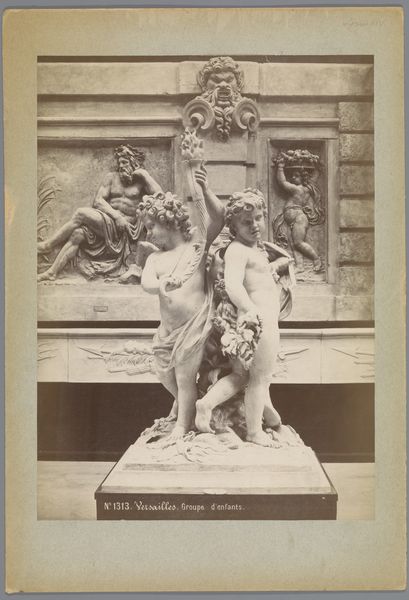
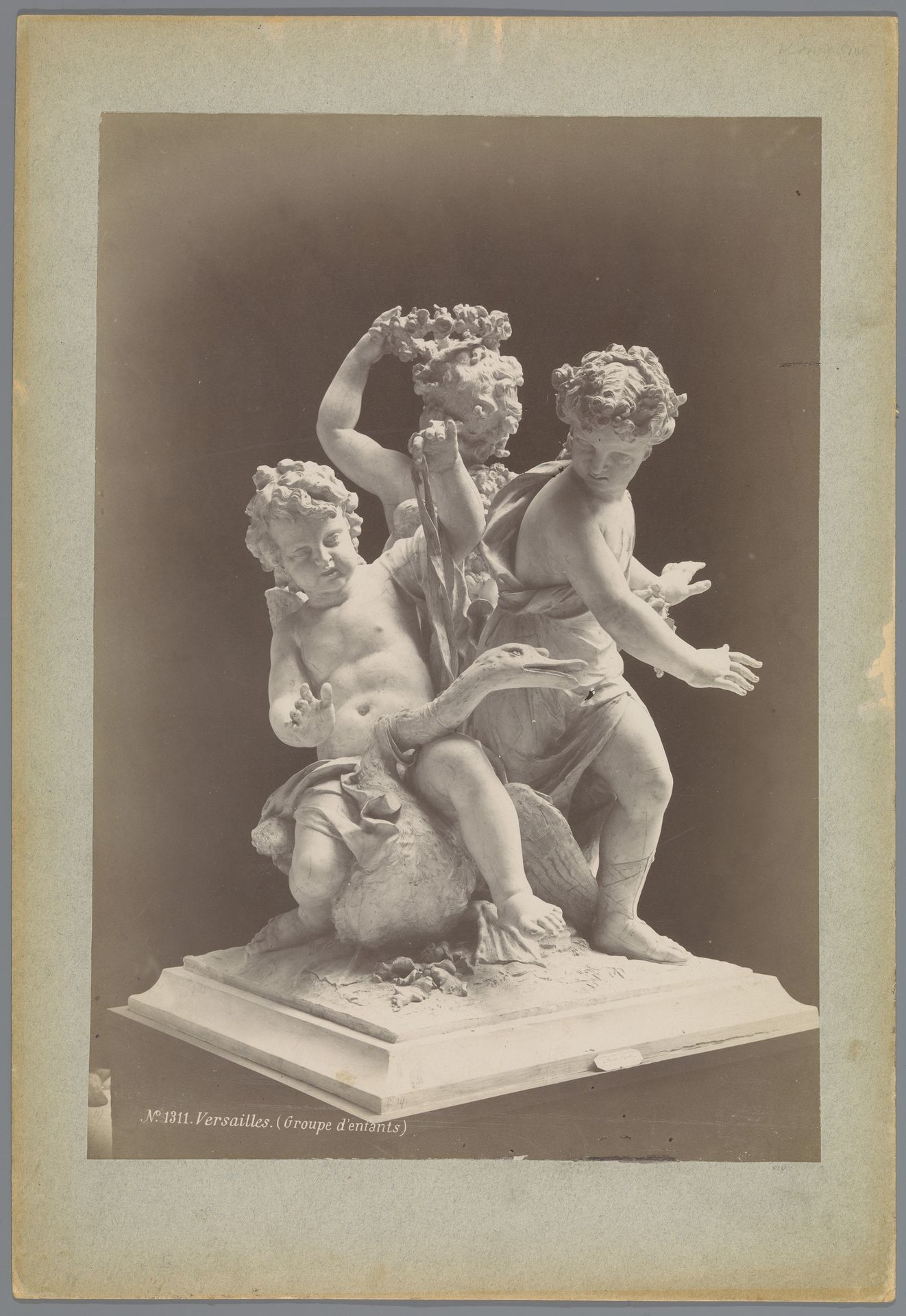
Gipsafgietsel van een beeldengroep, voorstellende drie jongens met een zwaan, afkomstig uit Versailles

Médéric Mieusement
1840 - 1905Location
RijksmuseumListen to curator's interpretation
Curatorial notes
Editor: Here we have an old photograph – probably from between 1875 and 1900 – by Médéric Mieusement. It's a photo *of* a sculpture; specifically, it's of a plaster cast of a sculpture depicting three boys and a swan, which originated in Versailles. The monochrome tones give it an air of faded grandeur... Almost like a memory. What do *you* make of it? Curator: Ah, yes! This image whispers of fleeting beauty. The choice to photograph a plaster cast, itself a copy, introduces layers of removal, like echoes fading in time. Look at the poses—that sense of exuberant, almost clumsy playfulness. The children aren’t posed in some grand, heroic stance; there’s a delightful awkwardness, wouldn’t you say? Editor: Yes! It's like they're caught in a real moment, not just pretending. Curator: Exactly! It speaks to a longing for simpler pleasures, for an idealised past – maybe even the mythical Arcadia? Think about what *isn't* here: colour, the actual tactile experience of the stone itself. We’re left with shadows and light, inviting our own nostalgia. What feelings come up for *you* when you view it? Editor: Hmmm, the monochrome does make me feel nostalgic... It gives an 'aged' perspective. But in truth, the lack of information makes the statue seem universal - that is, the interaction between the three children and the swan remains timeless. Curator: Beautifully said. Universality emerges precisely through that deliberate stripping away of specificity. The picture asks more than it answers, wouldn't you say? Editor: Definitely. I came in thinking it was just a simple photo of a statue, but now it feels more like a poem about time and memory. Curator: Indeed. And isn't it wonderful how art can unfold like that, layer by layer, revealing itself anew with each encounter?