Dimensions: Sheet: 8 3/4 × 6 9/16 in. (22.2 × 16.7 cm) Plate: 7 5/8 × 5 7/16 in. (19.4 × 13.8 cm)
Copyright: Public Domain
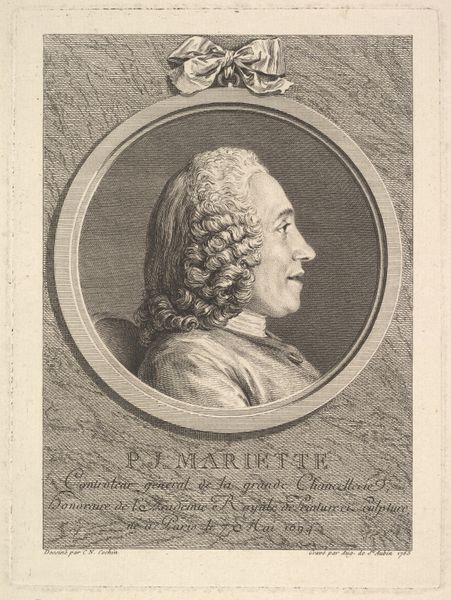
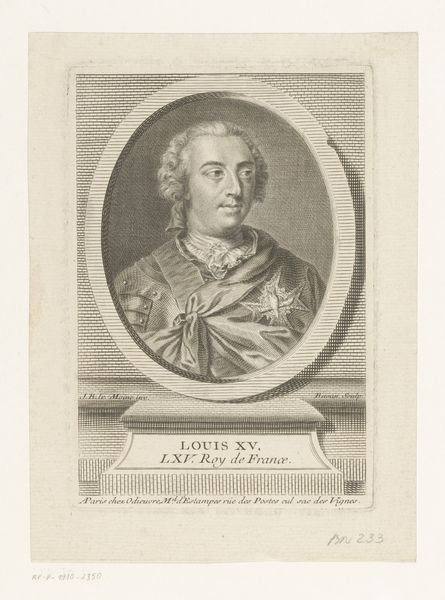
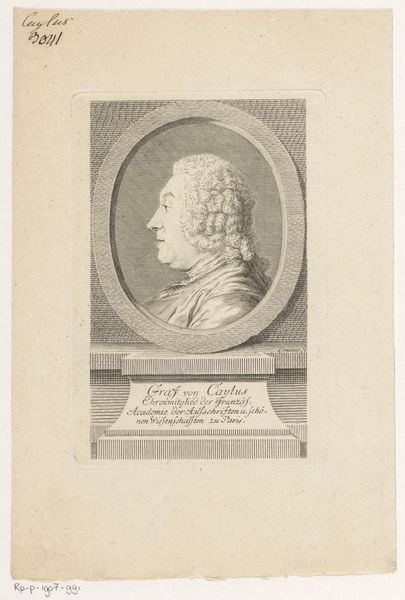
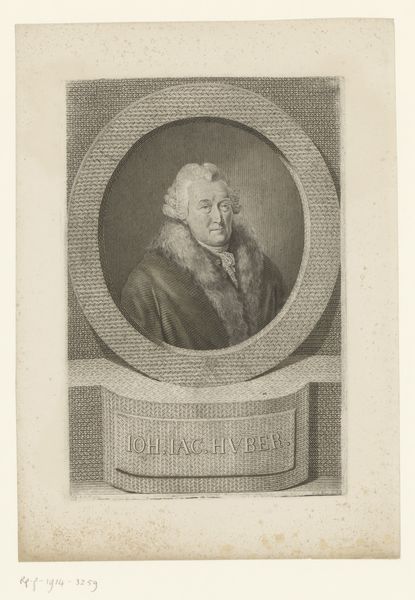
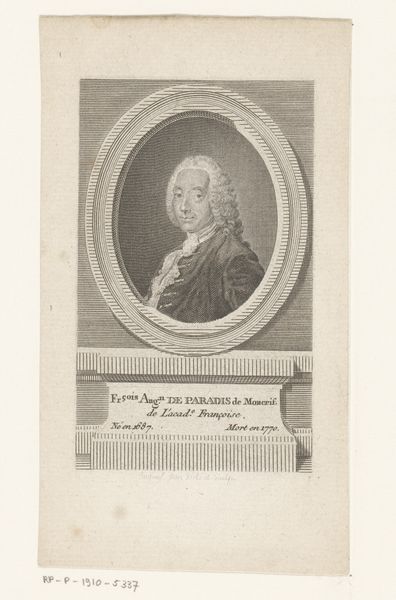
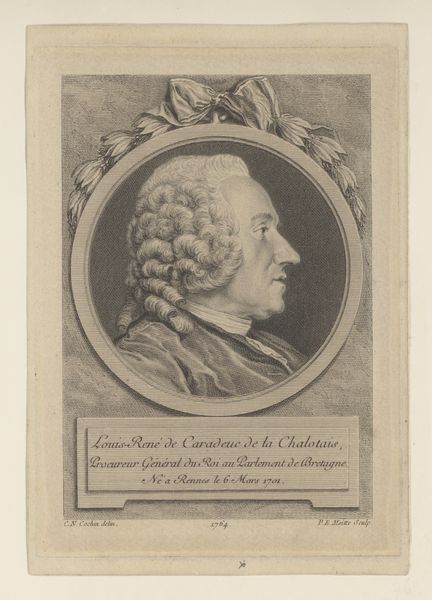
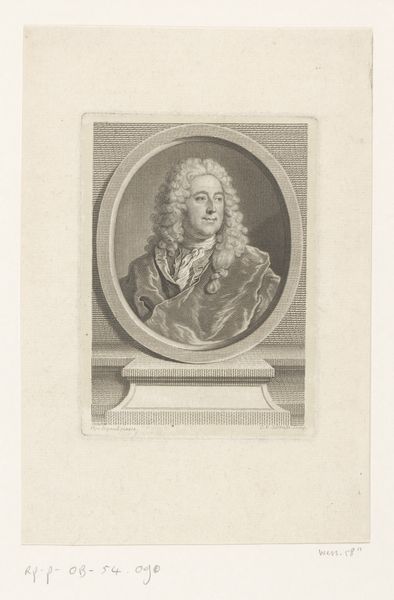
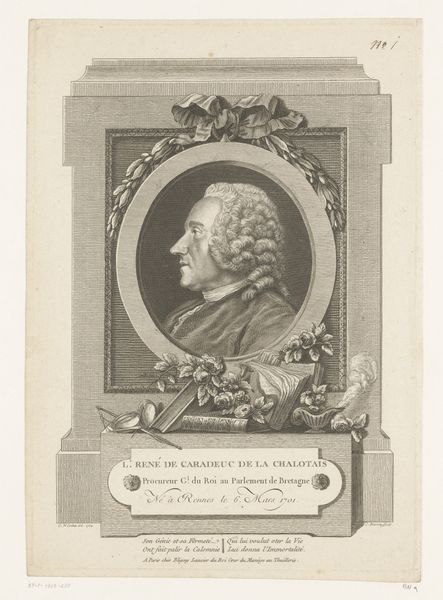
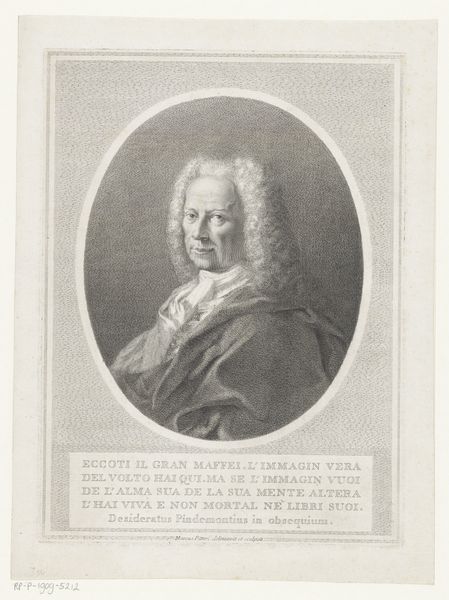
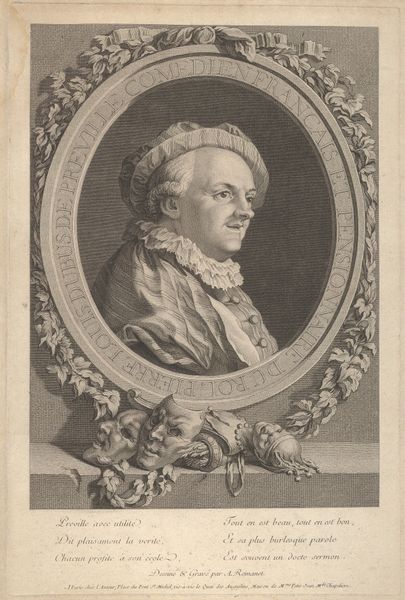
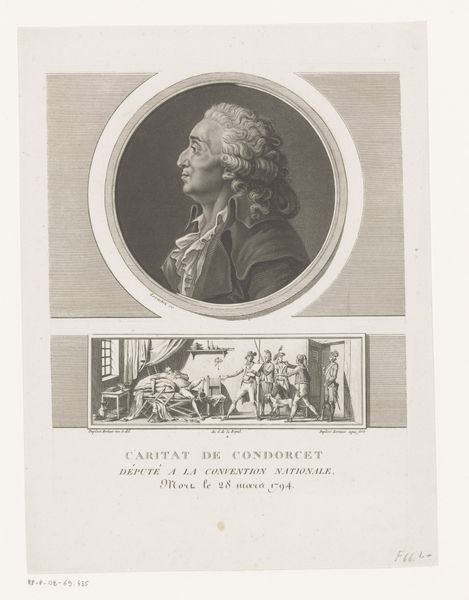
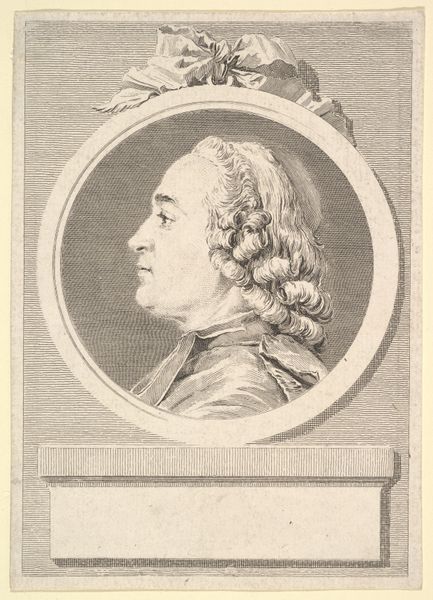
Editor: So, here we have Augustin de Saint-Aubin's "Portrait of Alexis Piron" from 1776. It looks like a print or drawing of some kind. The details are incredible! What do you make of it? Curator: This piece speaks volumes about the societal structures inherent in art production during that era. Consider the engraving process itself: it involved skilled labor, transforming raw materials into a commodity that could circulate widely. The print becomes a tangible manifestation of class and privilege. Editor: How so? Curator: Well, the very act of creating and distributing this image implicates networks of patronage, artisanal workshops, and markets. Piron’s image becomes a valuable asset, consumed and traded. How do you view the material constraints impacting this representation? Editor: I hadn't considered that...it seems less about Saint-Aubin expressing himself and more about producing a likeness for distribution. Does the relatively cheap medium, a print, influence how we interpret it, versus if it were painted? Curator: Precisely. It points to a different intention, where reproduction and dissemination trumped the singularity of the original artistic act. The subject, Piron, isn't just being memorialized; his likeness is being turned into a collectible object. It underscores art’s inherent link with consumer culture. Editor: That makes perfect sense! Looking at it now, the level of detail, the printing itself – it all feels like part of a production line in a way. Curator: Indeed. Thinking materially can unlock powerful insights, don’t you think? Editor: Definitely. I see now how thinking about the materials and how this print was produced can change how you view this portrait completely. Thanks!
Comments
No comments
Be the first to comment and join the conversation on the ultimate creative platform.
 Collect
 React
React Comment
More like this