1898
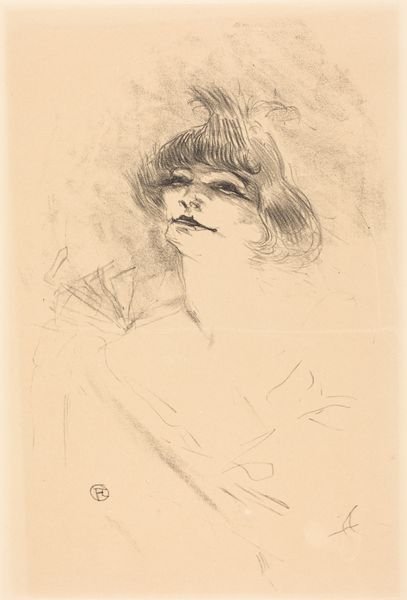
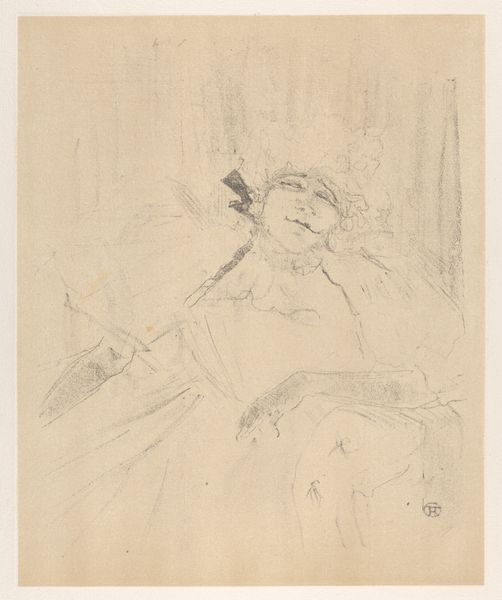
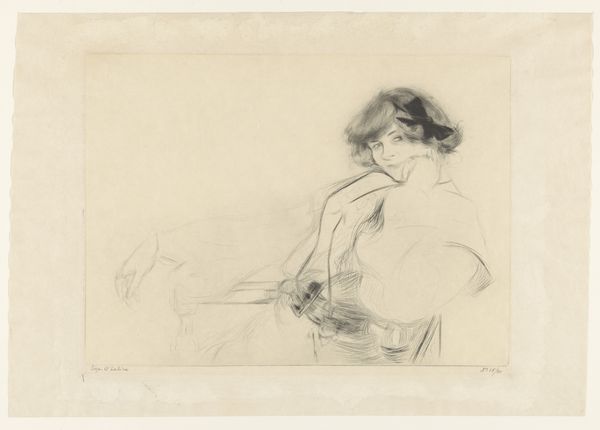
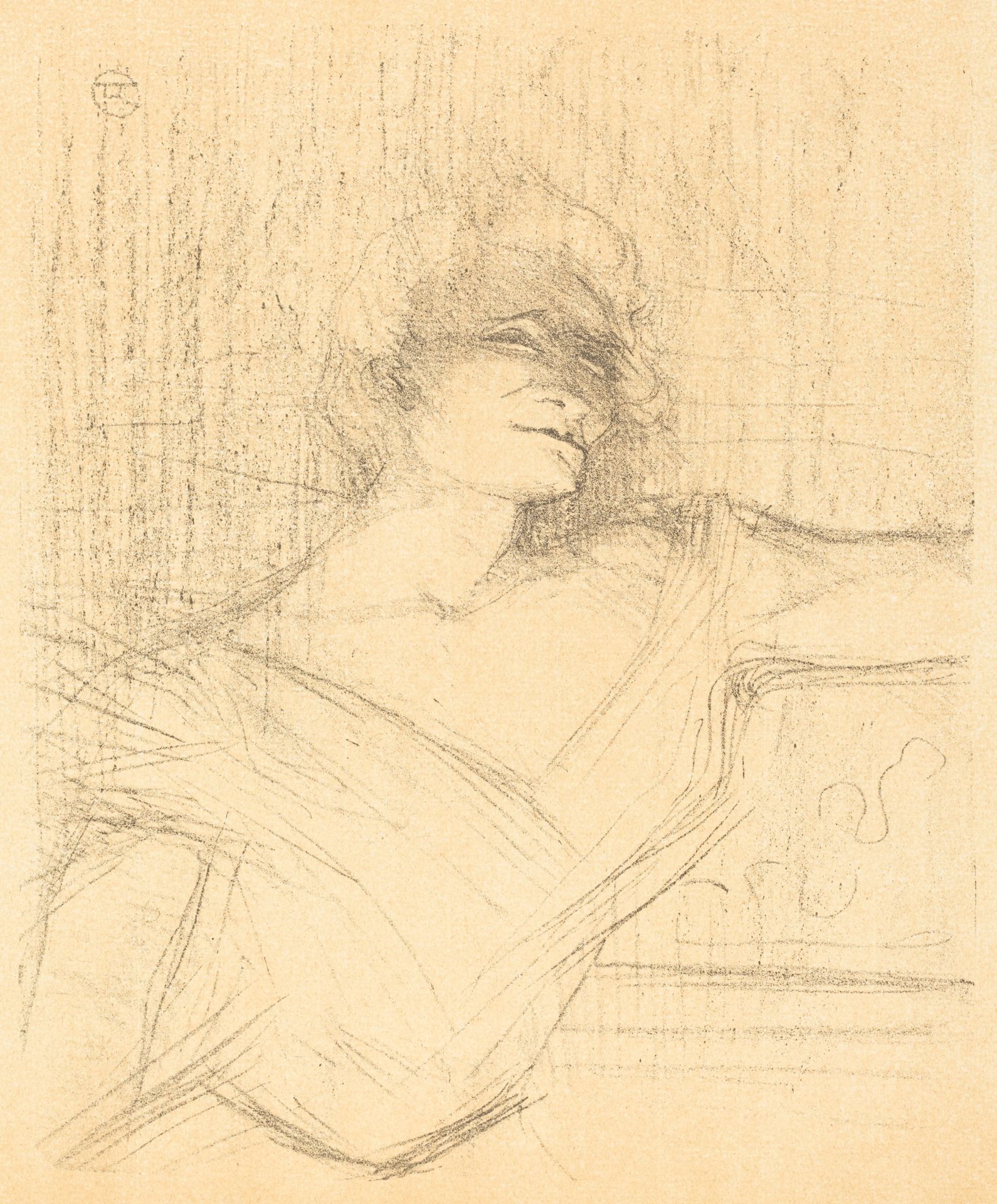
In "La glu" (Dans "La glu")


Listen to curator's interpretation
Curatorial notes
Curator: Let's take a closer look at Toulouse-Lautrec's "In 'La glu'," created in 1898. It’s a drawing, a print made with pencil. Editor: It feels like a whisper, doesn't it? So delicate and fleeting. The face is shadowed, almost hidden, but there’s something undeniably captivating in that obscurity. I'm instantly curious about who this is and what's going on. Curator: Shadow can indicate not only that something is hidden from our view, but also what is protected and in need of protection. Think about the era – fin de siècle Paris. Lautrec frequented cabarets, brothels, the demimonde. "La Glu" itself refers to a popular song, “The Glue”, about a woman stuck in a bad relationship. Editor: Ah, "The Glue," like she's stuck, trapped...you can almost see it in the lines, they feel hesitant, unsure. The unfinished quality contributes, doesn't it? Like a secret, partly revealed, partly kept. It reminds me of sifting through half-forgotten memories; everything’s indistinct. Curator: Exactly! The unfinished aspect speaks to the vulnerability. The shadowed eyes aren't merely a formal technique. Lautrec deliberately obscures them, forcing us to interpret emotion through posture and implication. Look at the slump of her shoulders. Editor: You're right, there's a heaviness there, a real weight. I also notice how the rough, almost frantic marks contrast so sharply with the softness around her neck and shoulders. It gives a push and pull effect, a very active surface which keeps me on the edge of my seat when it comes to feeling sympathy for the character. It's a powerful statement. Curator: Yes, these lines also speak to this duality within, to a society that both celebrated and shunned these women. They were muses, yes, but they also occupied a precarious social position. The artist makes that paradox clear, that in-between space. Editor: It’s truly evocative; I’m left contemplating all the untold stories she’s taking with her. I feel gratitude toward Lautrec. The sense of fragility leaves such an imprint on the mind’s eye. Curator: Absolutely, I think that the impact lies in its capacity to resonate through shared visual languages of memory and experience, across generations.