About this artwork
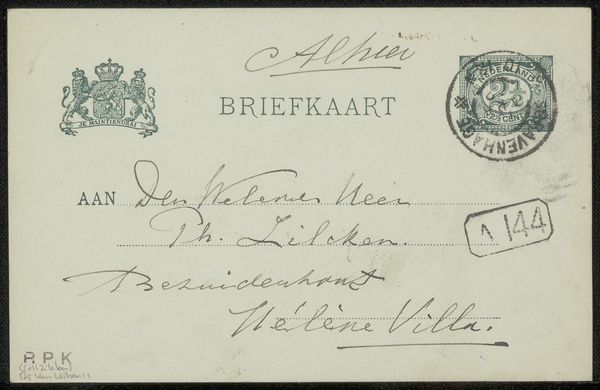
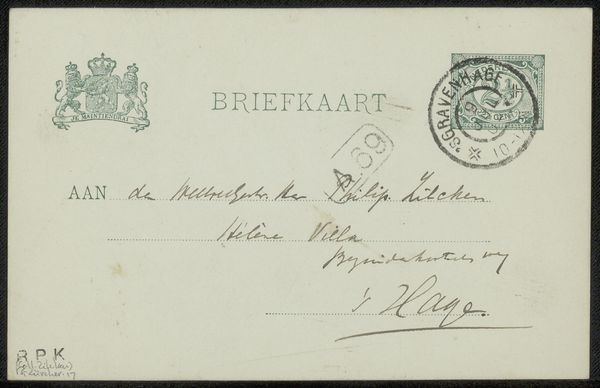
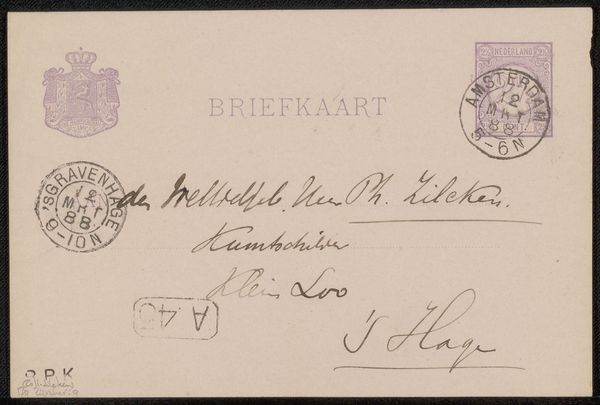
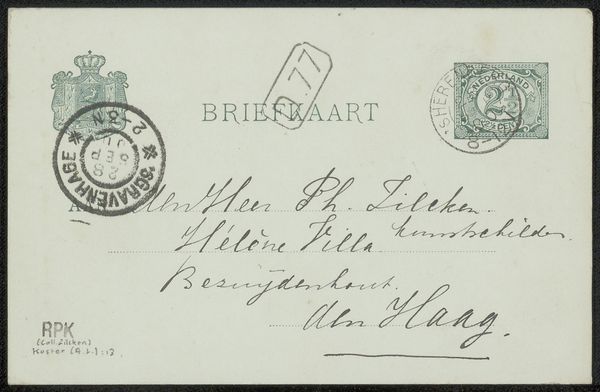
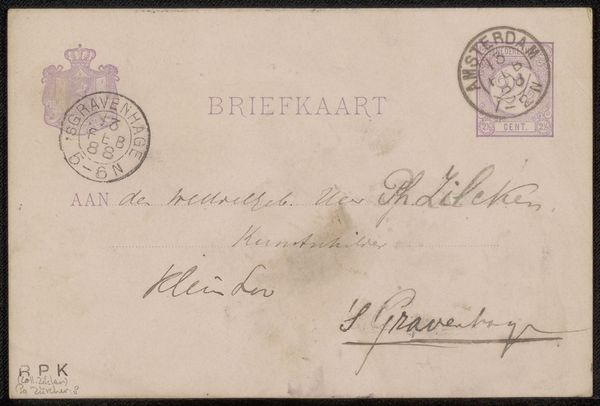
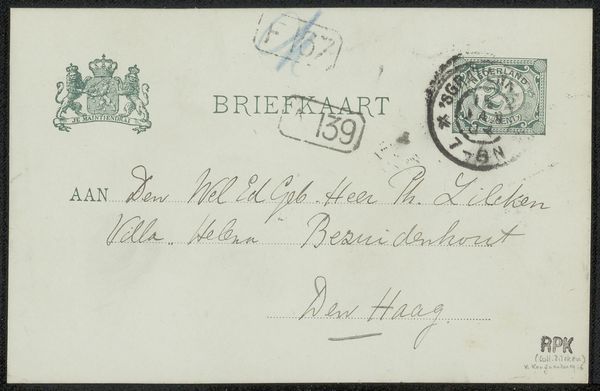
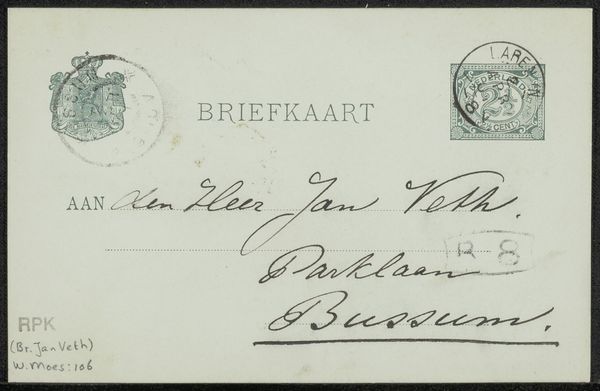
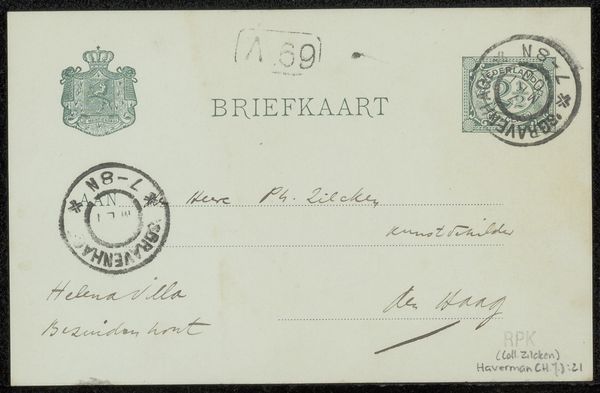
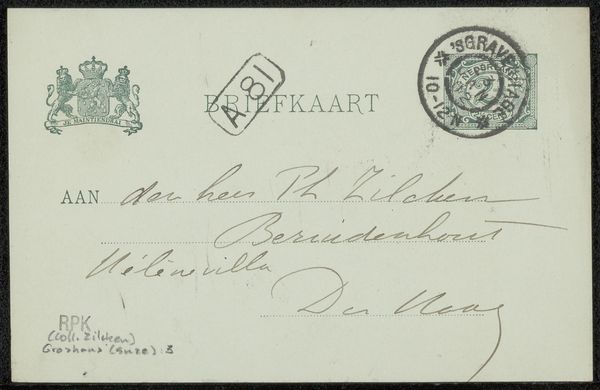
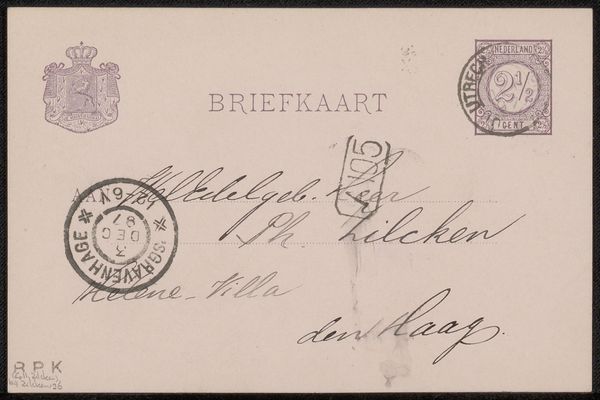
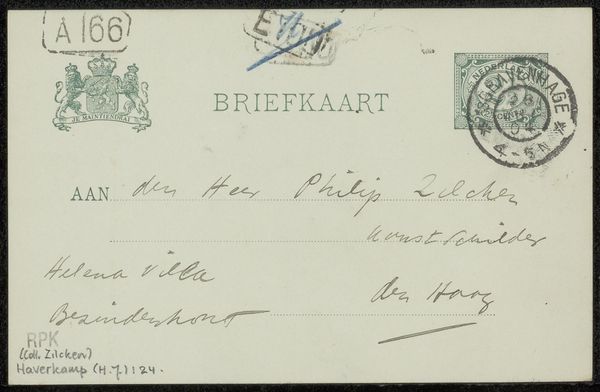
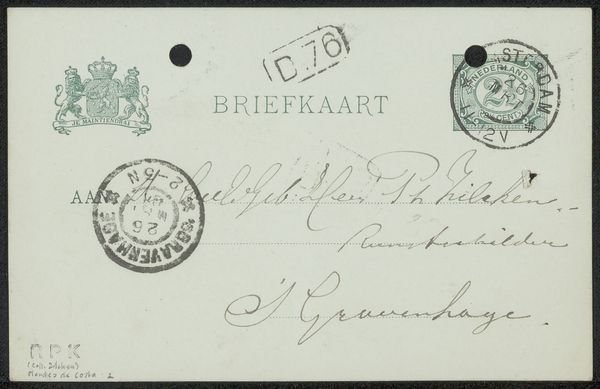
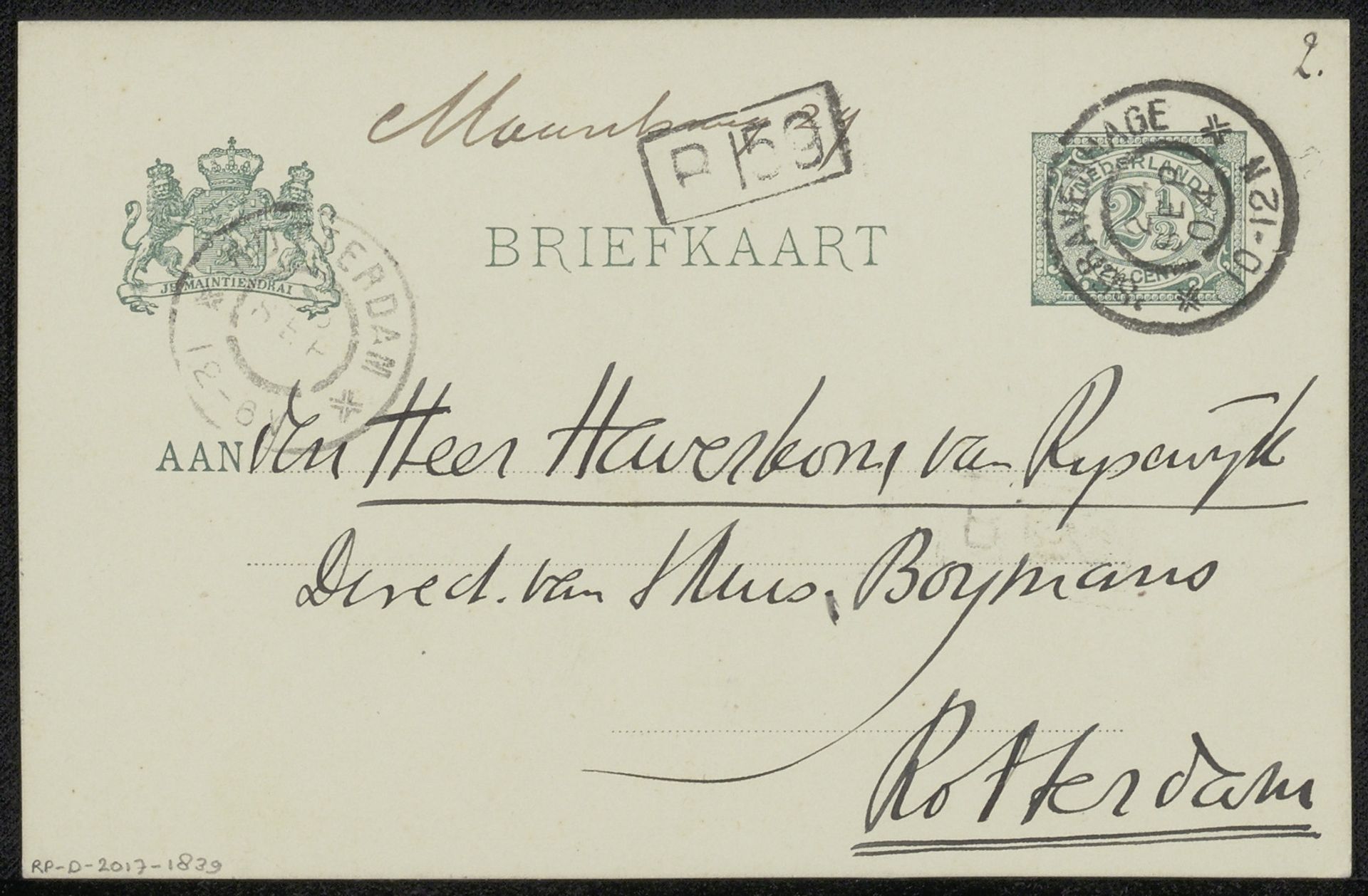
This briefkaart, or postcard, was sent by Albert Charles Auguste Plasschaert to Pieter Haverkorn van Rijsewijk. It’s all about mark-making here, a dance between officialdom and the personal. The printed elements, like the postage and seals, have this precise, almost rigid quality, while the handwriting is fluid, with these beautiful, looping flourishes. Look at how Plasschaert’s ink soaks into the paper, creating subtle variations in tone and texture. There’s a real physicality to it, a sense of pressure and release as the pen moves across the surface. And the way he underlines “Rotterdam” – it’s not just emphasis; it's a little performance, a sign that the gesture is as important as the message. It reminds me a little of Cy Twombly, but in miniature, maybe? Both artists embrace the messiness and spontaneity of the hand, transforming everyday materials into something poetic and profound. Ultimately, it’s a reminder that art is everywhere, even in the simplest of exchanges.
Briefkaart aan Pieter Haverkorn van Rijsewijk
before 1924

Artwork details
- Medium
- drawing, graphic-art, paper, ink
- Copyright
- Rijks Museum: Open Domain
Tags
Comments
Share your thoughts
About this artwork
This briefkaart, or postcard, was sent by Albert Charles Auguste Plasschaert to Pieter Haverkorn van Rijsewijk. It’s all about mark-making here, a dance between officialdom and the personal. The printed elements, like the postage and seals, have this precise, almost rigid quality, while the handwriting is fluid, with these beautiful, looping flourishes. Look at how Plasschaert’s ink soaks into the paper, creating subtle variations in tone and texture. There’s a real physicality to it, a sense of pressure and release as the pen moves across the surface. And the way he underlines “Rotterdam” – it’s not just emphasis; it's a little performance, a sign that the gesture is as important as the message. It reminds me a little of Cy Twombly, but in miniature, maybe? Both artists embrace the messiness and spontaneity of the hand, transforming everyday materials into something poetic and profound. Ultimately, it’s a reminder that art is everywhere, even in the simplest of exchanges.
Comments
Share your thoughts