

1896
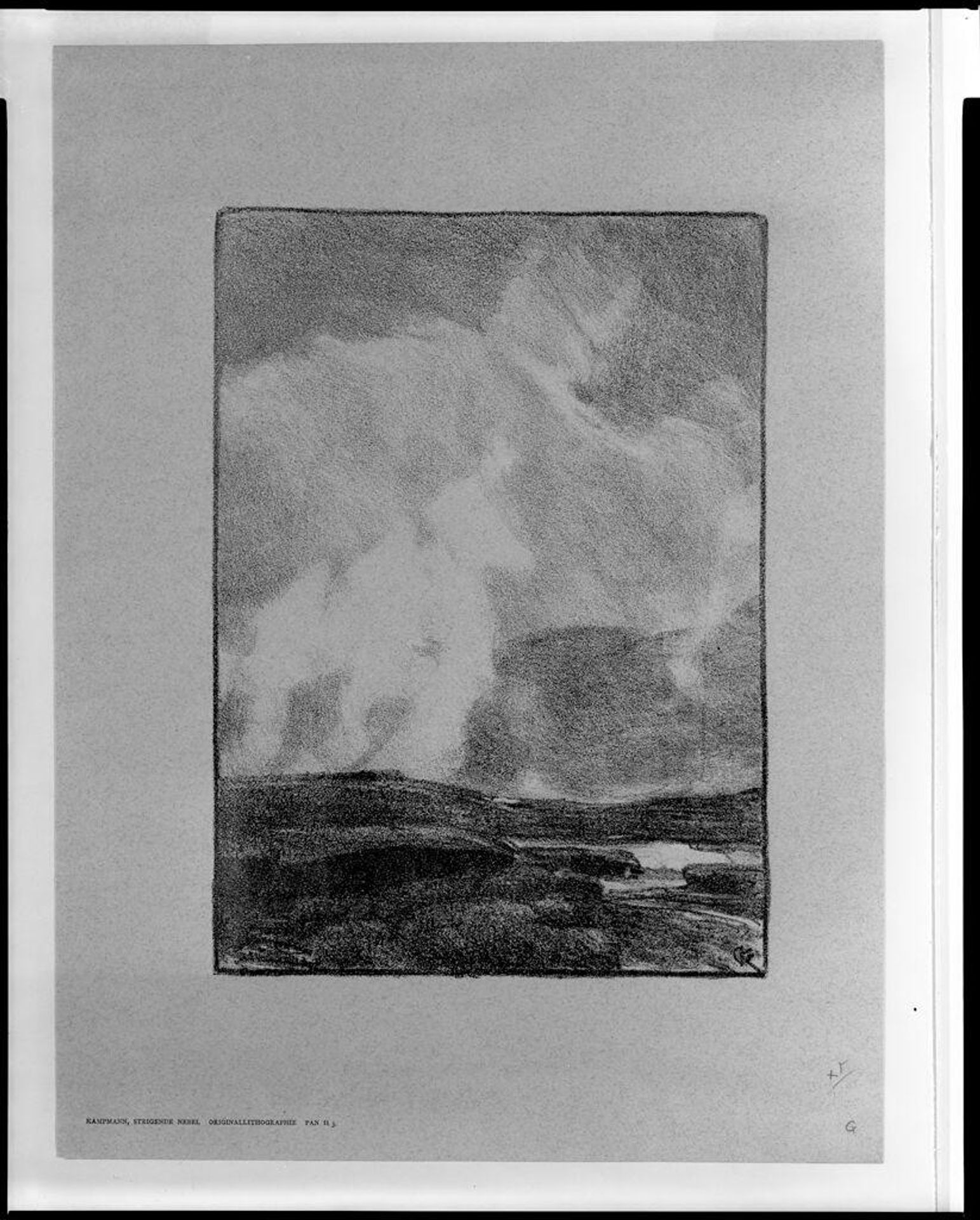
Rising Fog, from "Pan" II (3)

Listen to curator's interpretation
Curatorial notes
Curator: Here we have Gustav Kampmann's "Rising Fog, from 'Pan' II (3)," part of the holdings at the Harvard Art Museums. Editor: It feels so elemental, like a primordial landscape rendered in shades of gray. The dense, dark foreground is heavy, almost oppressive. Curator: Kampmann, a turn-of-the-century artist, likely saw this scene through the lens of burgeoning environmental consciousness. The fog could symbolize the encroachment of industrialization on nature. Editor: The "rising" aspect is key, I think. There’s something deeply symbolic about vaporous forms ascending. In alchemical traditions, rising smoke often represents purification, transformation. Curator: Indeed. And the "Pan" reference in the title? Certainly connects to the romantic ideal of nature as a site of untamed power, a sanctuary threatened by human progress. Editor: A powerful, if somber, reflection. It makes you wonder what Kampmann hoped to communicate about our place in the natural world. Curator: Yes, a poignant reminder of a tension that persists today.