About this artwork
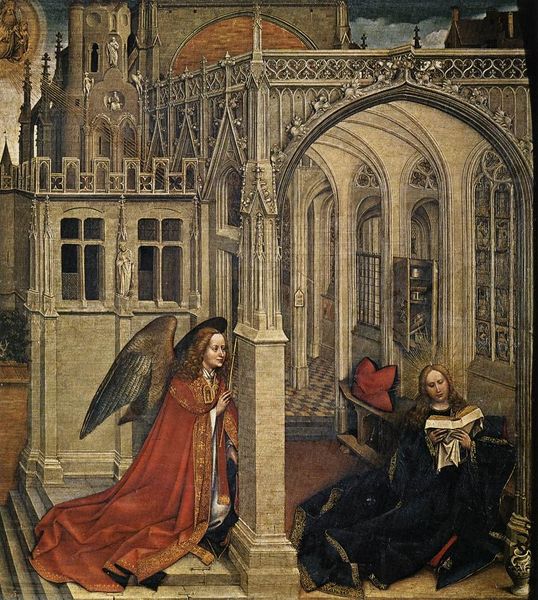
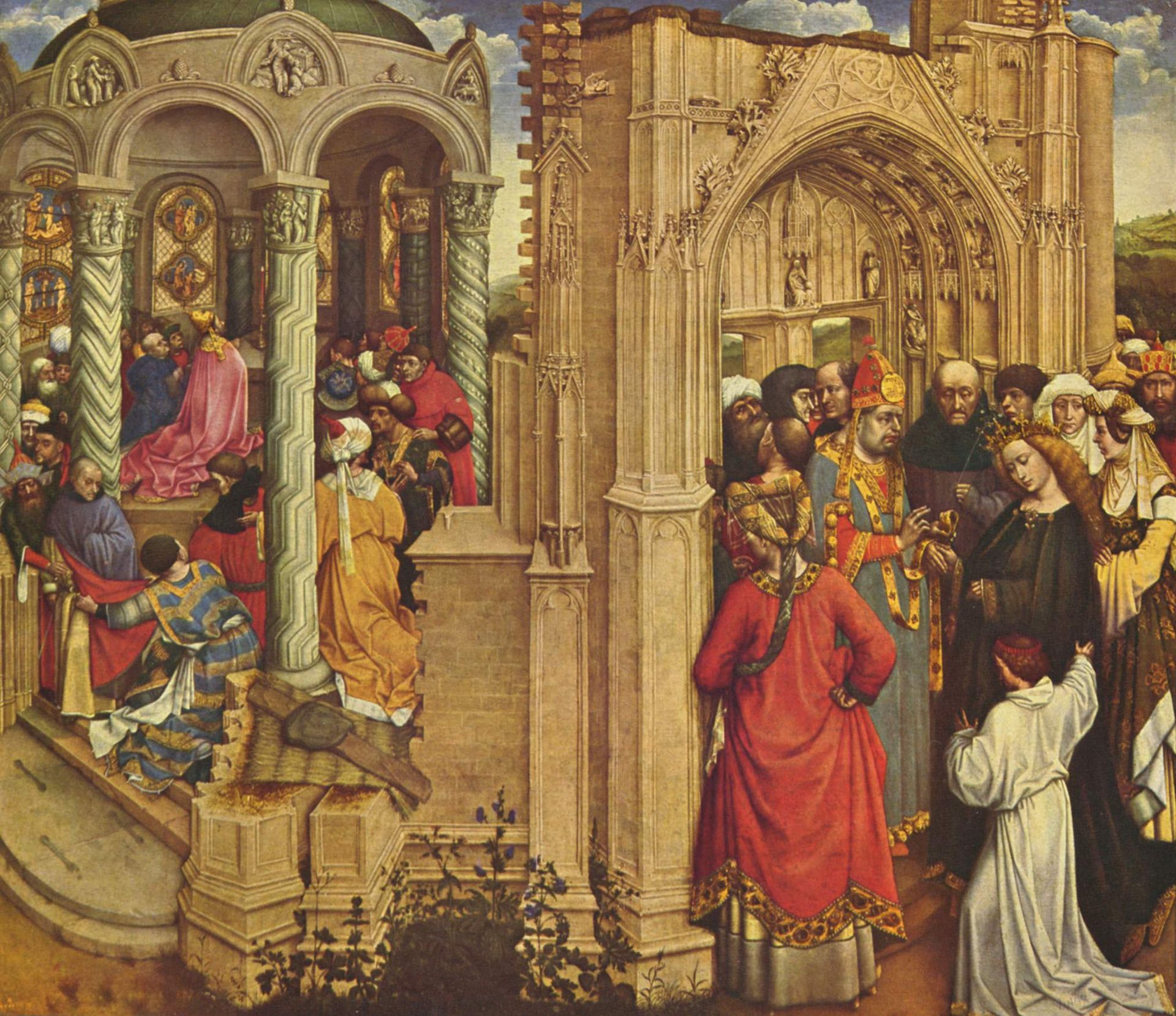
Robert Campin made "The Nuptials of the Virgin" using oil paint on wood panel. Oil allowed Campin to build up layers of detail with incredible precision. Look closely, and you'll see the level of labor involved is quite high, but it’s easy to overlook that detail because it's integrated with a strong, coherent composition. Each figure is rendered with clear attention to their texture and weight. The clothing, with its dense folds, signifies wealth and status but also the social roles of those depicted. Even the architecture is meticulously painted, contrasting the solidity of the stone with the delicate tracery of Gothic arches. Campin's painting isn’t just a depiction of a religious event, but a record of social and material culture. Consider the materials used, the techniques employed, and the world that Campin inhabited. Understanding these aspects allows us to appreciate the painting in its full richness. It challenges the artificial divide between fine art and craft.
The Nuptials of the Virgin
1420

Robert Campin
1375 - 1444Location
Museo del Prado, Madrid, SpainArtwork details
- Medium
- painting, oil-paint, fresco
- Dimensions
- 88 x 77 cm
- Location
- Museo del Prado, Madrid, Spain
- Copyright
- Public domain
Tags
Comments
Share your thoughts
About this artwork
Robert Campin made "The Nuptials of the Virgin" using oil paint on wood panel. Oil allowed Campin to build up layers of detail with incredible precision. Look closely, and you'll see the level of labor involved is quite high, but it’s easy to overlook that detail because it's integrated with a strong, coherent composition. Each figure is rendered with clear attention to their texture and weight. The clothing, with its dense folds, signifies wealth and status but also the social roles of those depicted. Even the architecture is meticulously painted, contrasting the solidity of the stone with the delicate tracery of Gothic arches. Campin's painting isn’t just a depiction of a religious event, but a record of social and material culture. Consider the materials used, the techniques employed, and the world that Campin inhabited. Understanding these aspects allows us to appreciate the painting in its full richness. It challenges the artificial divide between fine art and craft.
Comments
Share your thoughts