drawing, ink, pencil
#
portrait
#
drawing
#
self-portrait
#
painted
#
oil painting
#
ink
#
intimism
#
underpainting
#
pencil
#
symbolism
#
monochrome
Copyright: Public domain
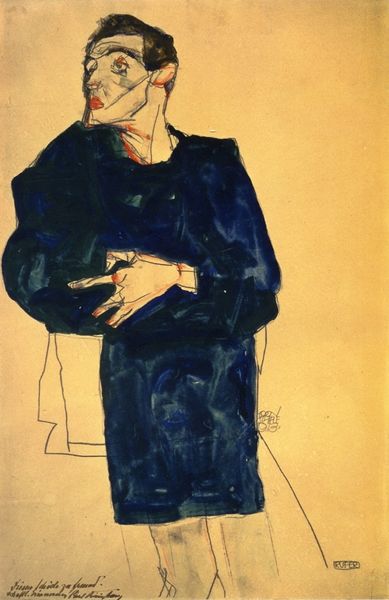
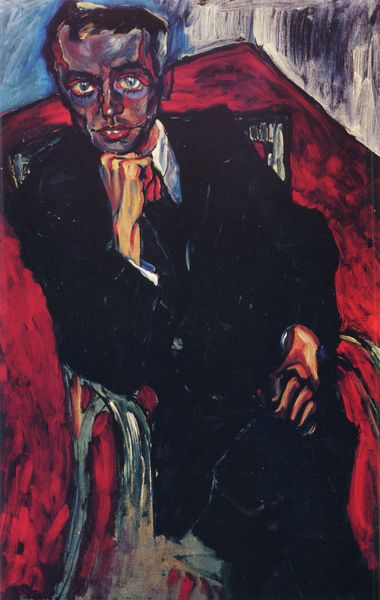
Curator: Let's turn our attention to "Self-Portrait" by Léon Spilliaert, executed in 1907. A rather intriguing piece, wouldn't you agree? Editor: Intensely so. It’s got this profoundly unsettling air about it, almost spectral. The stark contrast, the haunted gaze... I immediately feel like I'm peering into someone's private melancholy. Curator: The composition certainly contributes to that feeling. Spilliaert has masterfully employed a limited palette, predominantly monochrome, with subtle infusions of color to create a somber, introspective mood. Notice how the geometric arrangement, particularly the verticality of the doorway and window, frames the figure, adding a sense of confinement. Editor: Yes, there's a visual austerity that almost traps the subject. And then the face itself, half in shadow... It's as if he’s wrestling with two selves, a visible and an invisible one. The style flirts with Symbolism, almost like a waking nightmare. Did he often explore this shadowy psyche within his works? Curator: Indeed. Spilliaert frequently delved into themes of isolation and existential angst. He was influenced by Symbolist and Intimist movements, both evident here. You see this intimate portrayal but with elements of heightened, subjective reality. Consider the very deliberate use of line and the almost ghostly rendering of the figure in relation to the architectural space. It's all quite purposeful in conveying that mood. Editor: The emptiness around him seems to suffocate. Even the hanging coats feel like ominous figures lurking in the background. He wasn't simply painting a portrait, was he? He was dissecting a feeling, an internal state laid bare on the canvas, quite unnerving. Curator: Precisely. The very materiality supports your impression. Predominantly executed in ink, pencil and employing drawing techniques, this choice adds to the image’s ephemeral and haunting quality. It’s less about depicting outward reality and more about exposing inner turmoil through the artistic expression. Editor: Looking at it now, I almost feel complicit, as if I’ve inadvertently stumbled into a very private, very still moment of someone else's soul-searching. What an evocative and frankly courageous act of self-revelation. Curator: A testament to the potency of art to externalize the internal, indeed. This self-portrait, both stark and subtly rendered, serves as a compelling example of Spilliaert's exploration of the human condition.
Comments
No comments
Be the first to comment and join the conversation on the ultimate creative platform.
 Collect
 React
React Comment
More like this