# print
#
asian-art
#
genre-painting
Dimensions: height 377 mm, width 460 mm
Copyright: Rijks Museum: Open Domain
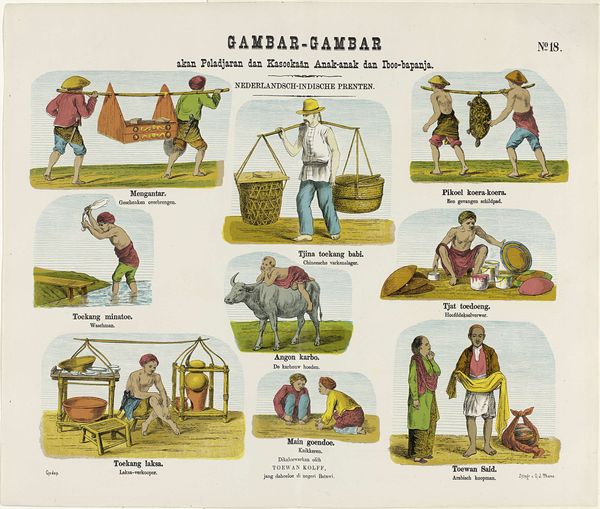
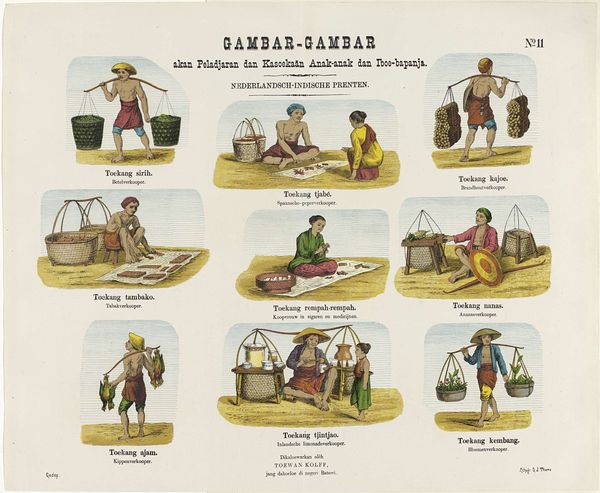
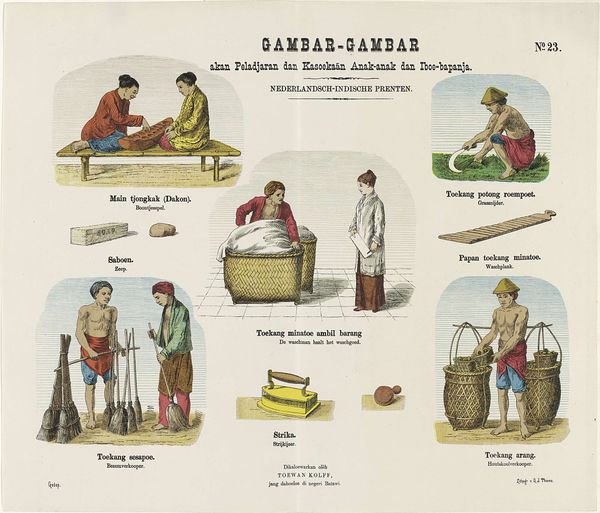
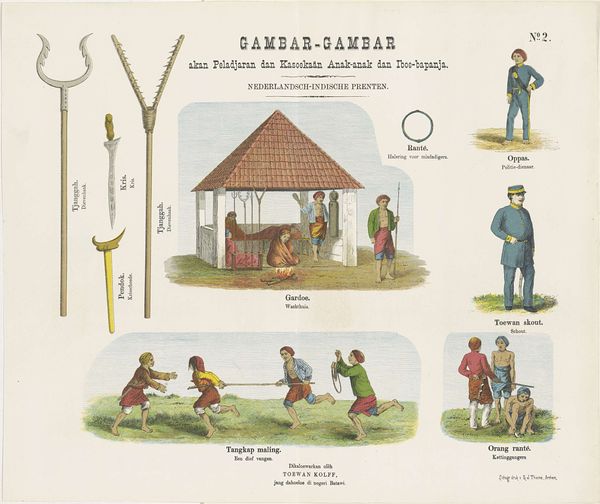
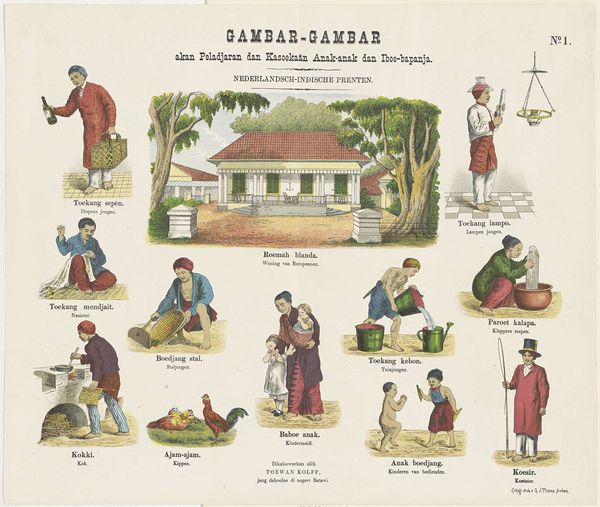
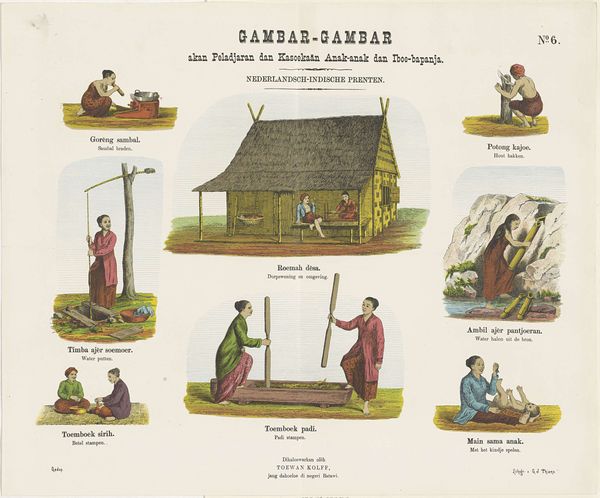
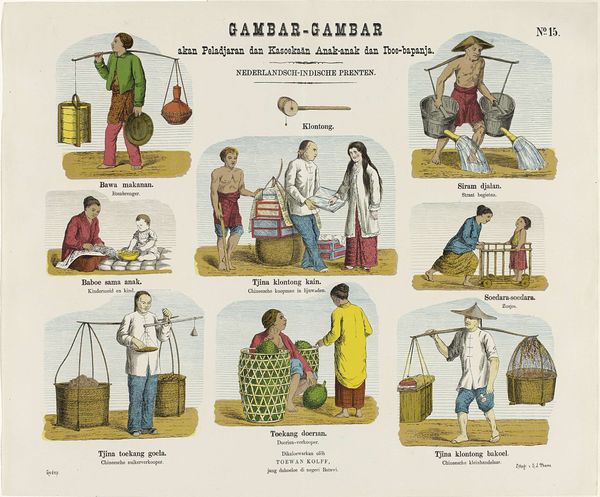
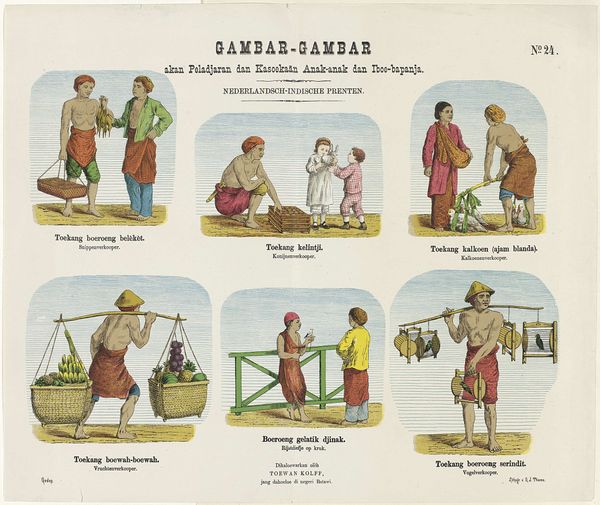
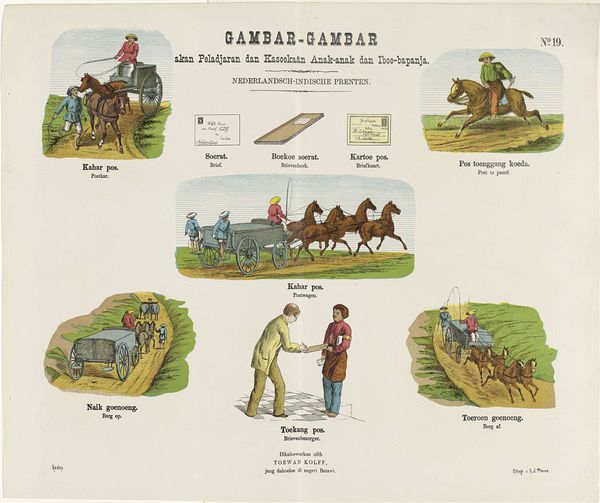
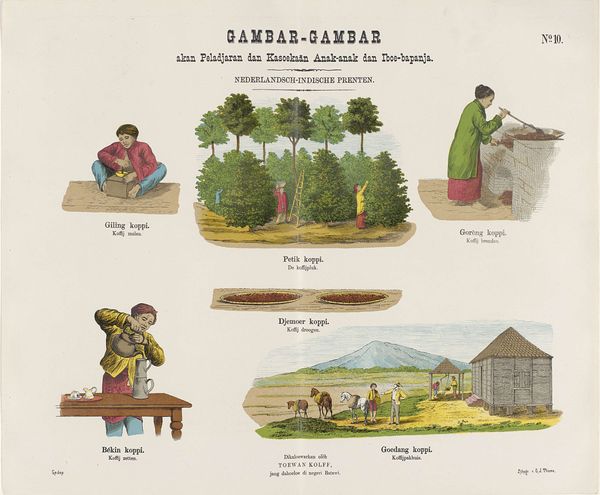
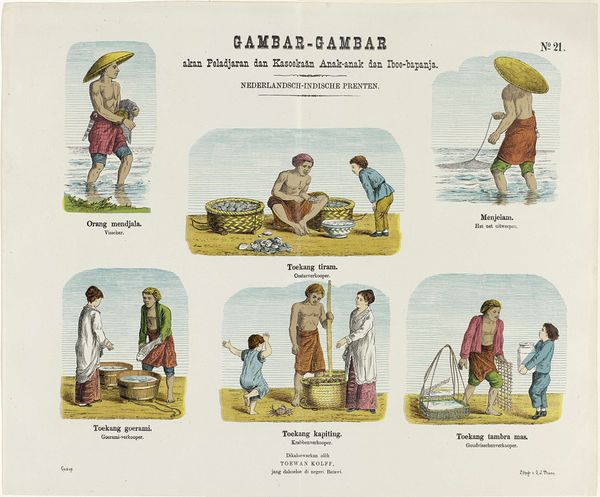
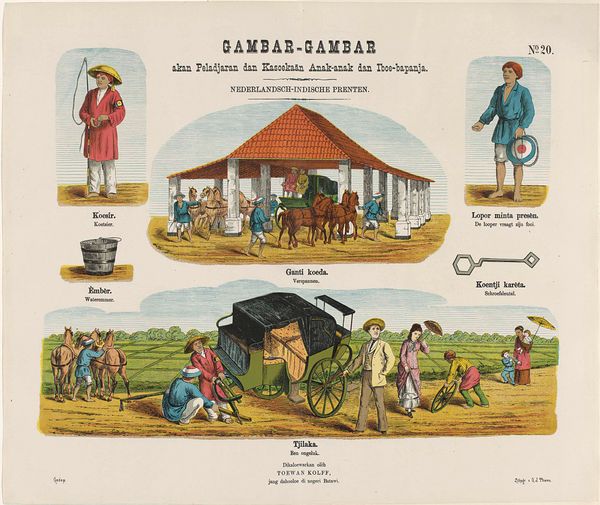
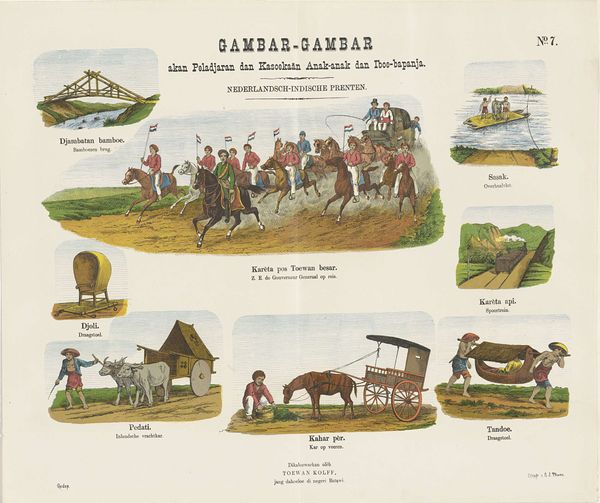
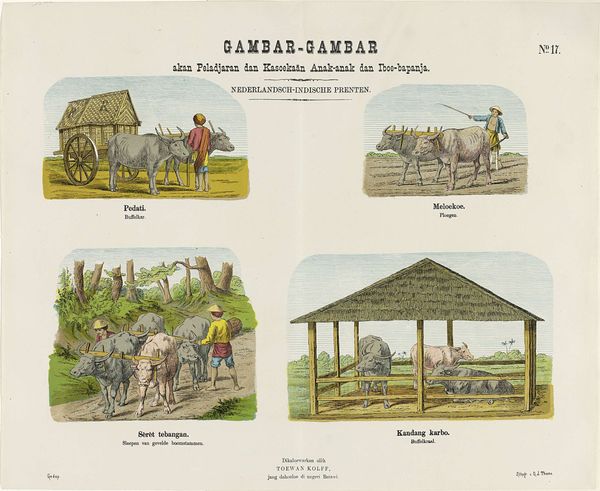
Curator: Here we have "Beroepen en ambachten" - "Occupations and Crafts" - a print made between 1868 and 1881 by Gualtherus Kolff, featuring scenes of daily life in the Dutch East Indies. Editor: It strikes me as a sort of instructional sampler, almost a visual encyclopedia of daily trades and tasks. It has a quiet dignity, doesn’t it? Like an attempt to respectfully catalog a way of life. Curator: Precisely. The organization itself—the grid-like composition—suggests an effort at systematic representation. Observe how each scene is meticulously framed, each figure carefully delineated. The light washes of color emphasize the clarity of form. Editor: Yes, there's something almost photographic about it, even though it's a print. Each scene feels like a little portrait. But it's not cold, is it? I like how the artist included the captions or descriptions underneath each image, giving context. It softens that didactic impulse, that educational function. Curator: It bridges representation and function; you're right. Consider the figure "Tjina toekang koeweh," the Chinese cook/merchant with a precarious stack balanced on their head. This compositional choice isn’t accidental, rather, Kolff underscores this occupation in both form and description, thereby affirming social hierarchy. Editor: I see that, but I also appreciate the quiet intimacy of “Baboe”, the nursemaid tending to a child. Even in a colonial context, that universal image of care still resonates, doesn’t it? It humanizes the print, giving access points of relatability. Curator: Absolutely. The emotional landscape is as significant as the formal elements. That's also supported through visual rhetoric. Observe how color isolates figures within its arrangement. We see “Belah-belah bamboe” given life in yellow against a relatively neutral space. Color here defines occupation. Editor: It is quite complex: at once a colonial document and yet also strangely familiar and deeply humane. There's a sense of observation, perhaps detached but also respectfully curious, and this artwork captures not only images, but, through composition, attempts to give structure to how an entire culture and its laborers are framed for posterity. Curator: A considered observation, quite poignant. The dialectic within representation underscores the visual rhetoric of the print, enabling interpretation that reaches both back into history, and points towards considerations within our time.
Comments
No comments
Be the first to comment and join the conversation on the ultimate creative platform.
 Collect
 React
React Comment
More like this