Copyright: © Albrecht Behmel - The Magic of the Swarms The displayed work of art is protected under the copyright law. In particular, it is not permitted to reproduce, to alter, to print or to publish these works of art. Violations will be prosecuted according to civil and criminal law.
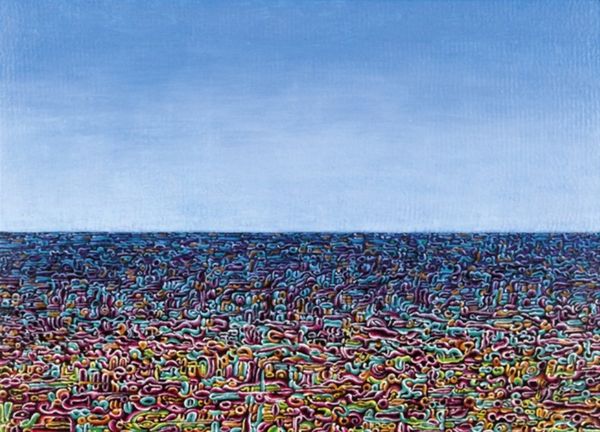
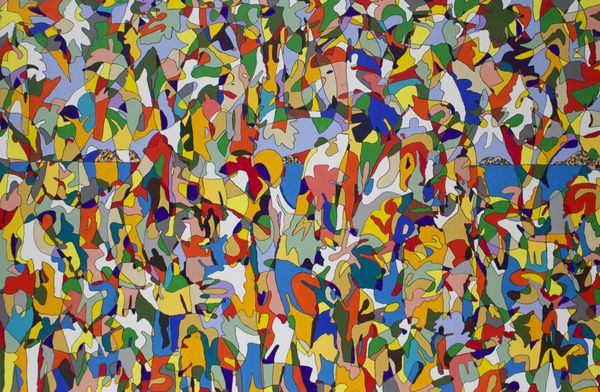
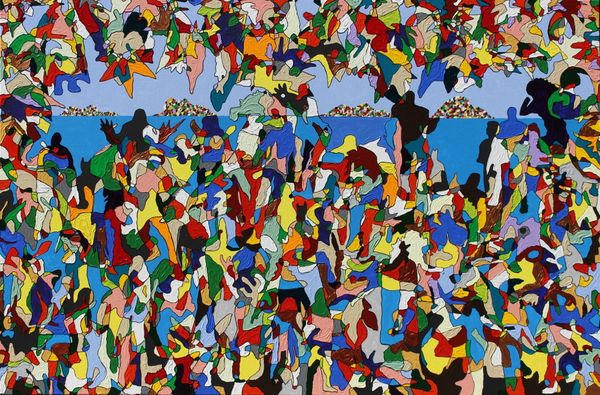
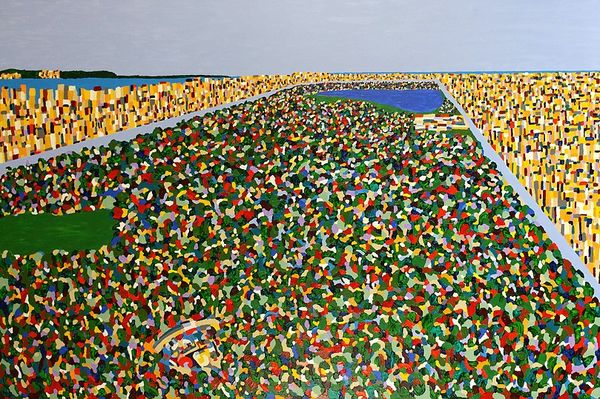
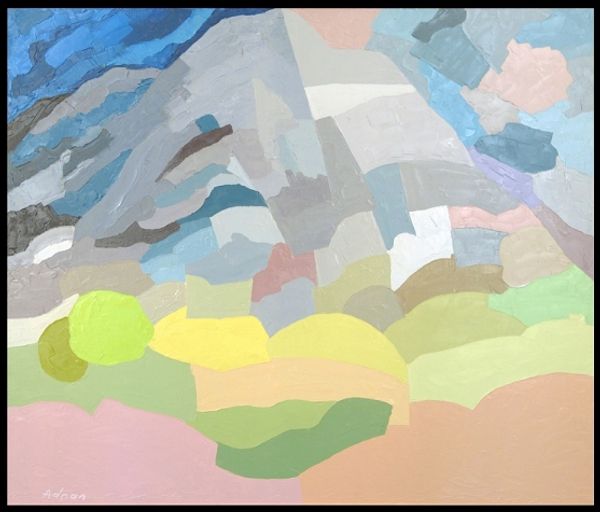
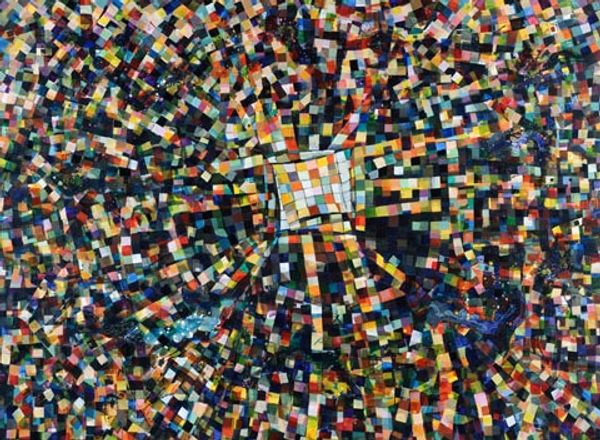
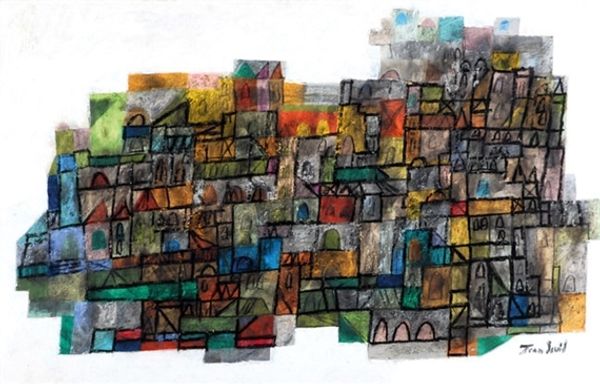
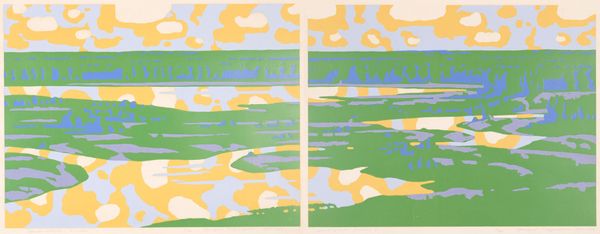
Curator: Albrecht Behmel's "A Tale of Two Cities," completed in 2016, presents a compelling vision. It's an acrylic on canvas diptych, striking for its seemingly endless field of small colorful rectangles. Editor: It’s instantly captivating. I’m drawn in by the sheer density and visual weight. There’s an overwhelming sense of accumulated materials that makes me think of production and construction. Curator: Absolutely. There's a landscape suggested, a horizon line and sky, but the main focus rests upon the geometric aggregation that resembles urban sprawl or a dense network of buildings. The palette, however, remains almost dreamlike, contrasting with the hard-edged shapes. Consider how those pastel blues juxtapose against the built form, imbuing it with a surreal, almost melancholic aura. It prompts you to imagine narratives and layers hidden within each discrete block. Editor: That use of material is fascinating to me. He is making the means of construction so blatantly visible – and I mean that both literally within the landscape of the painting itself, but also in the physical process, using such painstaking, repetitive strokes. The social context of such repetitive action – like labor in factories – makes me question if Behmel is trying to comment on post-industrial society. Curator: That's a very insightful observation. This can be considered within the lens of cultural memory too. Post-industrial architecture frequently mimics organic and vernacular designs, which are imbued into cultural continuity of “home”. Editor: Yes! You can see those tensions and dualities when considering scale. I wonder if his mark-making strategy could be translated into building at an architectural level; can you create monumental buildings from the process of iterative mark making? Or create small modules through design? How can small individual units – those strokes of paint, those workers in the labor force – become monumental when joined as a whole? Curator: A resonant question! What remains significant is that these dualities - geometric yet evocative, vast yet somehow contained, resonate deeply with the complexity of modern existence, of the interplay of tradition and change. Editor: It’s certainly successful at capturing this inherent tension through artistic execution. It’s rewarding when one medium can become both object and statement in such a thoughtful execution.
Comments
No comments
Be the first to comment and join the conversation on the ultimate creative platform.
 Collect
 React
React Comment
More like this