
Curatorial notes
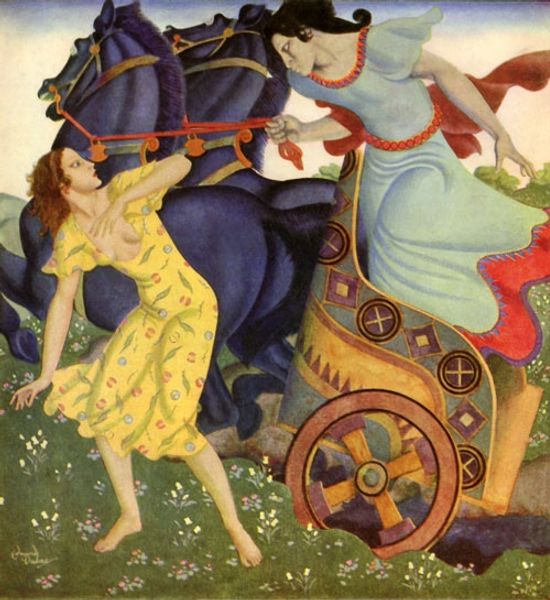
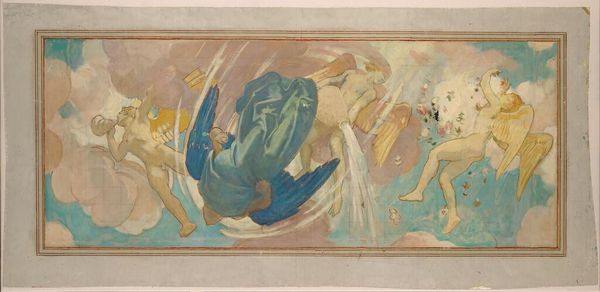
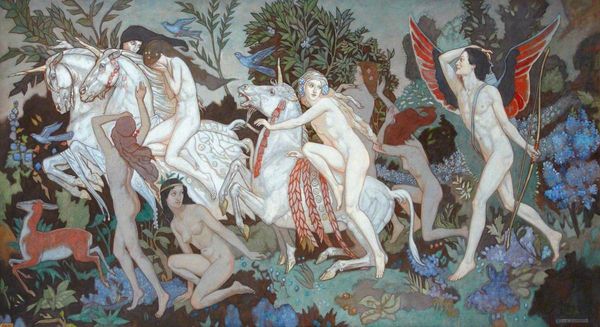
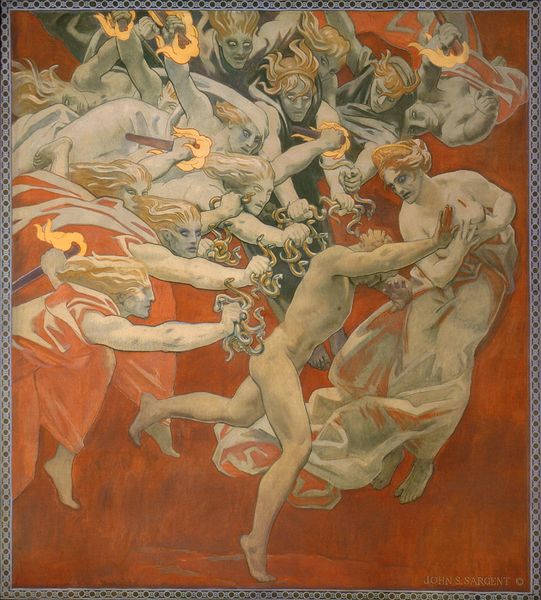
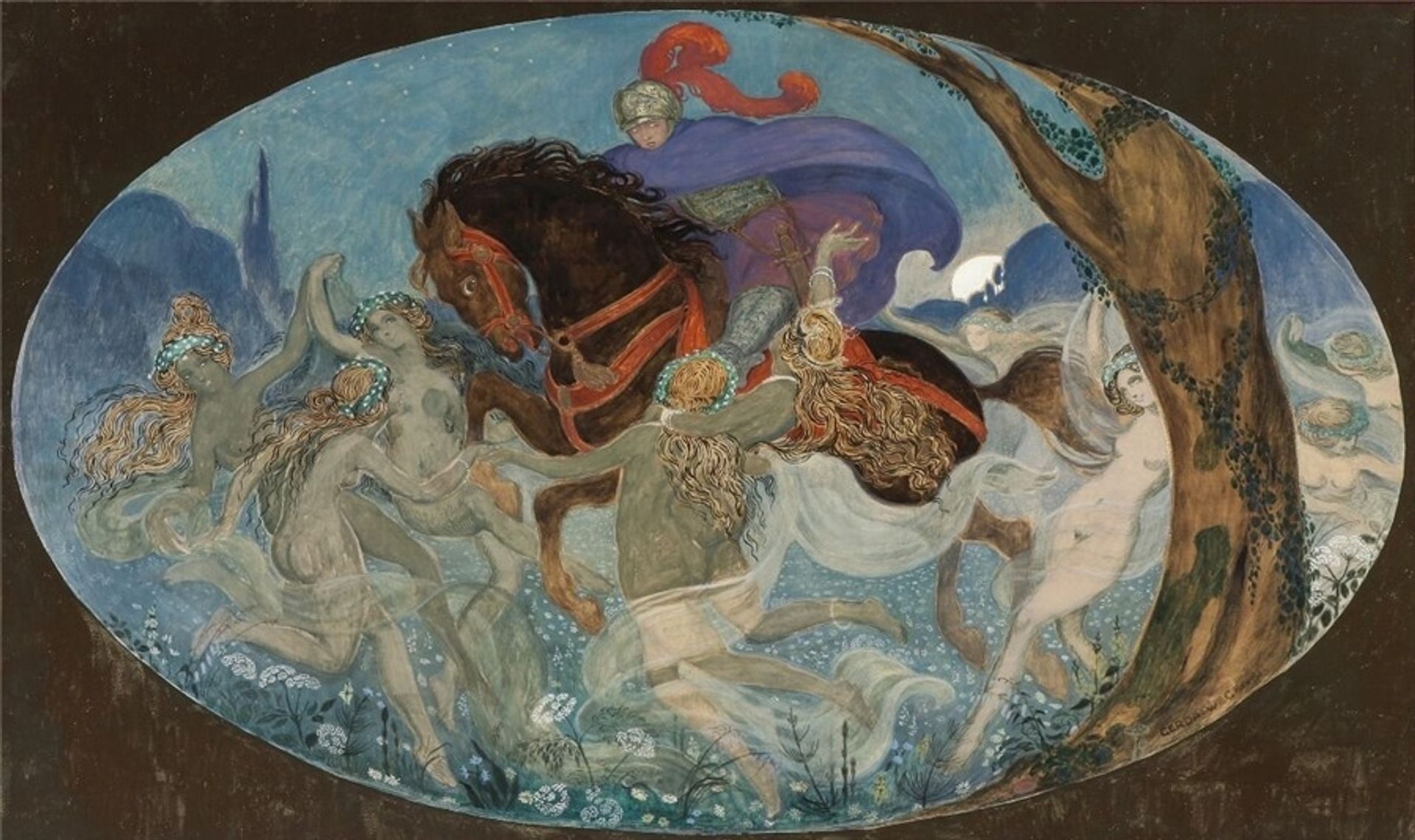
Curator: This is Gerda Wegener's work, possibly titled "Knight Oluf and the Elves," though the precise date is unknown. It seems to employ both oil painting and watercolor techniques. Editor: There's a strange dreaminess to it. It’s mostly blues and whites, quite muted. The composition feels almost circular, a dizzying swirl around the central figures. Curator: Wegener, of course, operated within specific social and material constraints. Consider the availability of pigments, the patronage system, and her own position as a woman artist navigating the early 20th-century art world. The medium itself speaks to certain production methods prevalent at the time. Editor: Let's consider those circular shapes and swirling lines again, those contribute heavily to this sense of movement and unrest. It draws the eye, preventing it from settling. I feel the figures in their elongation and color saturation give the impression of unease with what might happen next. Curator: Indeed. The portrayal of female figures here invites interpretation as reflecting shifting social norms and female empowerment during that period. The narrative, probably a myth or folklore illustration, likely reveals more about Wegener’s cultural influences. Editor: I can’t shake the effect of light playing out, there’s moon in the scene. Wegener's technique with washes of color creates a ethereal and symbolic look, as though they exist outside our physical rules, inviting viewers to be consumed by what could lie between realities. Curator: Absolutely. The symbolism layered with gender dynamics gives us a fascinating insight of Wegener’s artistic commentary, influenced by material circumstances like market demands and studio practices. Editor: It all goes hand in hand: the symbolic elements amplify what could come of it if we understood the nature of these circumstances in both artwork and the artist who crafted them.