About this artwork
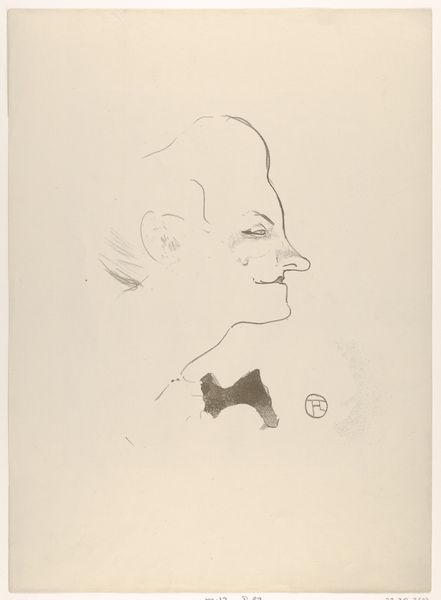
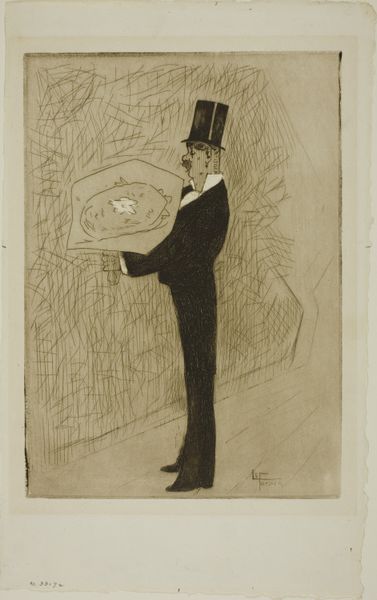
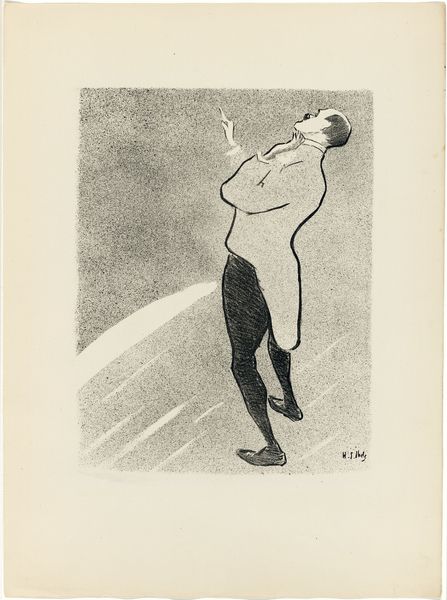
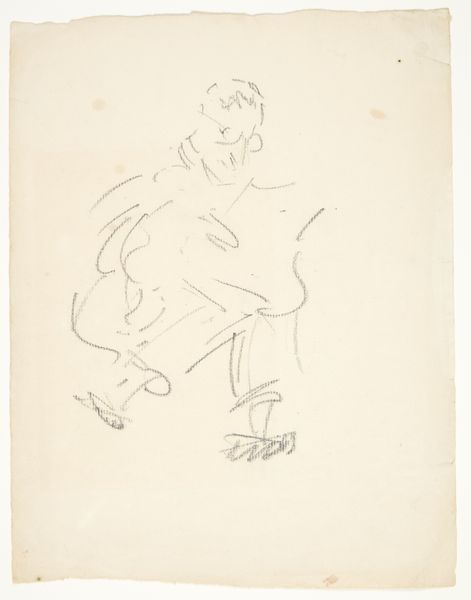
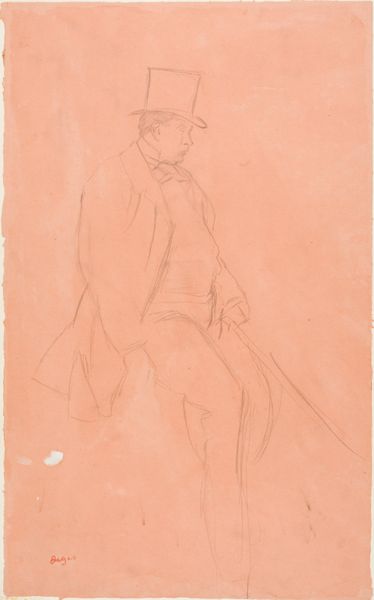
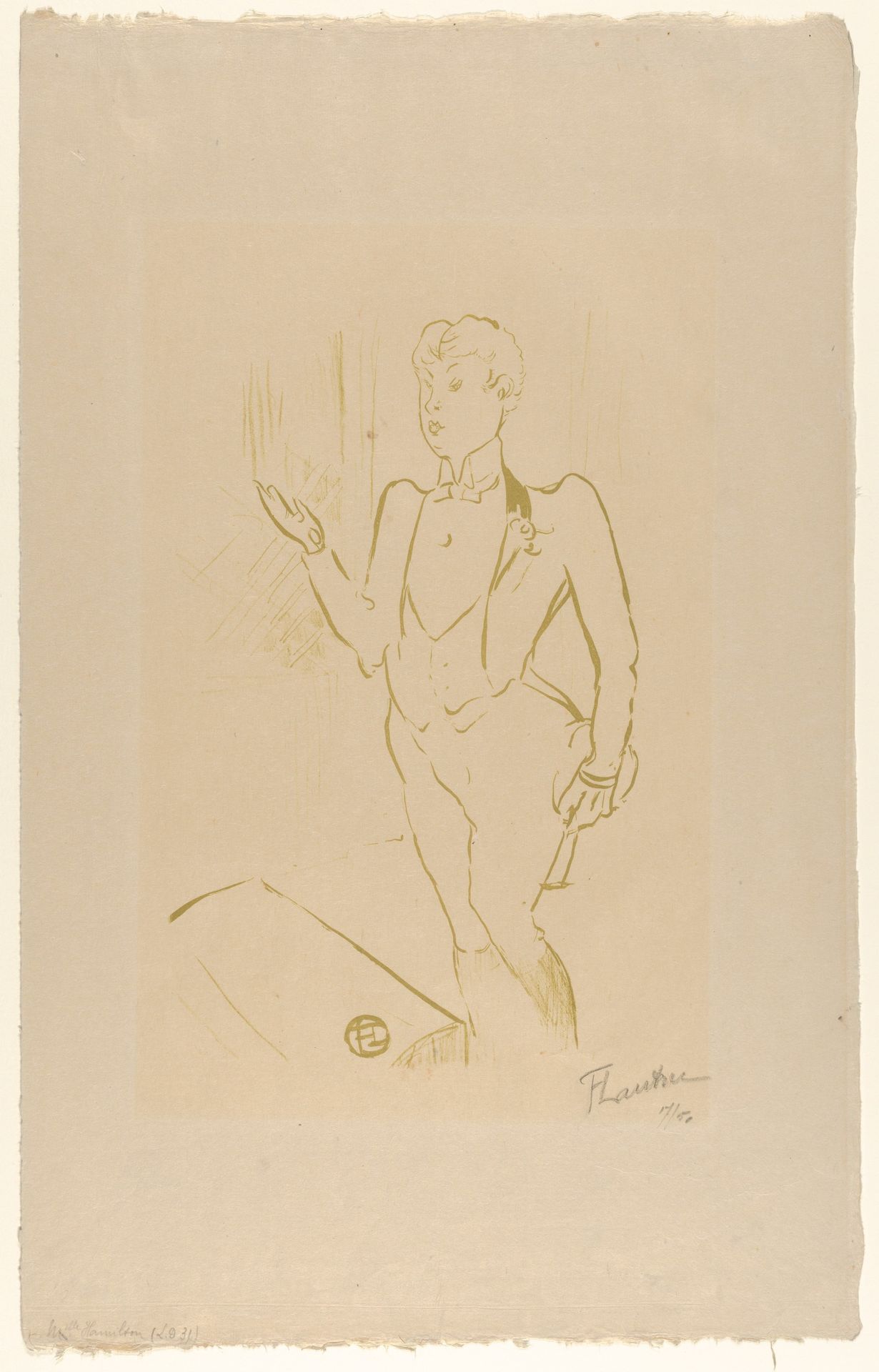
This image of Mary Hamilton was made by Henri de Toulouse-Lautrec, using a lithographic crayon on transfer paper. This was then printed onto paper, giving it a distinctive look. Lautrec was fascinated by the entertainment industry and the demimonde of late 19th century Paris. Lithography, unlike painting or sculpture, allowed for the easy and economical reproduction of images. Lautrec embraced this medium because it allowed him to create posters and prints that could be widely distributed, thus connecting his art to a broader public and, of course, to popular commerce. The immediacy of the lithographic crayon captures the fleeting moments of the café concert, the weight and texture of the line conveying the energy of the performance. The artist uses the qualities of the medium to suggest the atmosphere of a social space fueled by capital. The image, therefore, becomes a document of its time, intertwined with issues of labor, entertainment, and consumption. By considering these aspects, we can appreciate how it challenges traditional distinctions between fine art and craft.
Mary Hamilton (from Le Café Concert)
1893

Henri de Toulouse-Lautrec
1864 - 1901
The Metropolitan Museum of Art
Metropolitan Museum of Art, New York, NYArtwork details
- Dimensions
- Image: 10 9/16 × 6 7/16 in. (26.8 × 16.3 cm) Sheet: 18 in. × 11 7/16 in. (45.7 × 29 cm)
- Location
- Metropolitan Museum of Art, New York, NY
- Copyright
- Public Domain
Comments
Share your thoughts
About this artwork
This image of Mary Hamilton was made by Henri de Toulouse-Lautrec, using a lithographic crayon on transfer paper. This was then printed onto paper, giving it a distinctive look. Lautrec was fascinated by the entertainment industry and the demimonde of late 19th century Paris. Lithography, unlike painting or sculpture, allowed for the easy and economical reproduction of images. Lautrec embraced this medium because it allowed him to create posters and prints that could be widely distributed, thus connecting his art to a broader public and, of course, to popular commerce. The immediacy of the lithographic crayon captures the fleeting moments of the café concert, the weight and texture of the line conveying the energy of the performance. The artist uses the qualities of the medium to suggest the atmosphere of a social space fueled by capital. The image, therefore, becomes a document of its time, intertwined with issues of labor, entertainment, and consumption. By considering these aspects, we can appreciate how it challenges traditional distinctions between fine art and craft.
Comments
Share your thoughts