
Curatorial notes
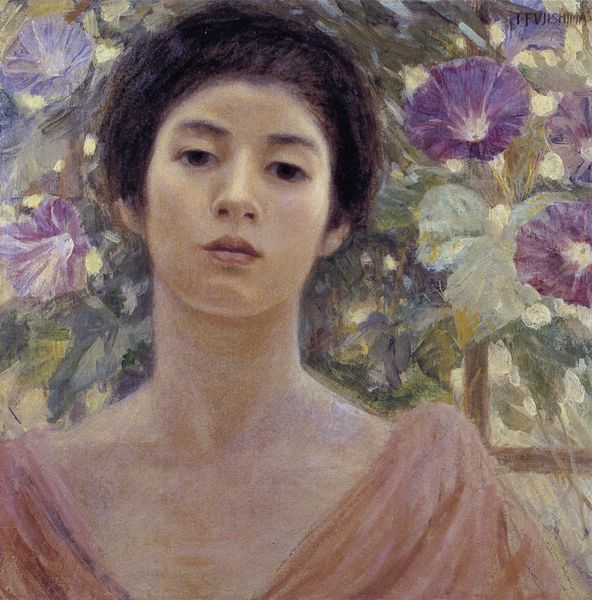
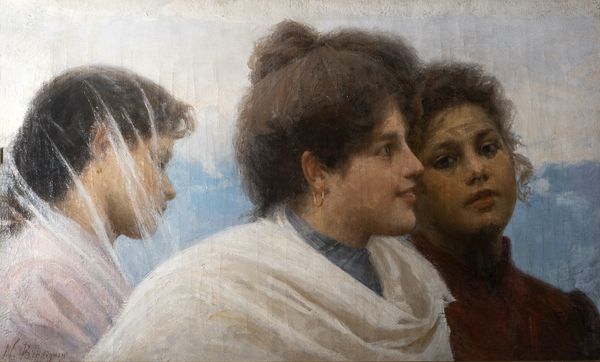
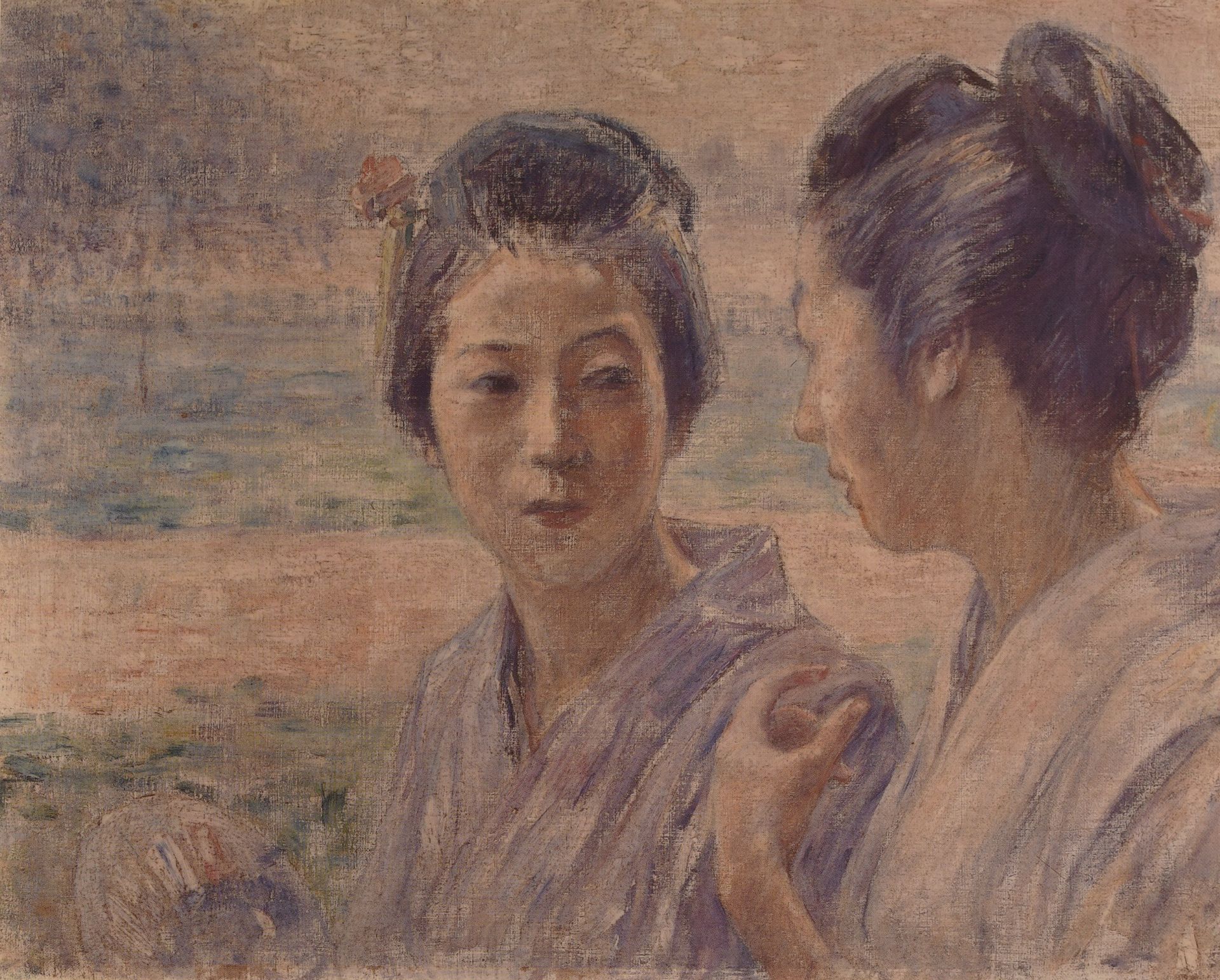
Editor: We’re looking at "A Stroll" by Fujishima Takeji, an oil painting. It's lovely. The soft colors create a calm, intimate mood. How do you interpret this work, especially considering its historical context? Curator: It’s tempting to simply see beauty, but we must look deeper. This painting, created during the Japonisme movement, isn't just a benign depiction of women. It's situated within a complex power dynamic. How might we unpack the male gaze inherent in its creation? Editor: That’s interesting, I hadn’t thought about it that way. Is it problematic for a male artist to paint women in traditional clothing? Curator: It's not inherently problematic, but it's crucial to analyze *how* he's representing them. Is he exoticizing them? Is he granting them agency or reducing them to objects of aesthetic fascination for a Western or Western-influenced audience? Editor: So, we have to think about how this work participates in a larger conversation about cultural representation and gender. What details in the painting specifically point us toward this interpretation? Curator: Consider the averted gazes, the subtle power dynamics suggested in their positioning. The soft focus can also be interpreted as a way of romanticizing the figures and distancing them from real experience. Do you notice that? Editor: I see what you mean. So it’s not enough to appreciate the Impressionistic style; we also have to examine how it contributes to a potential misrepresentation of these women and their culture. Curator: Exactly. By understanding the intersection of art history, gender, and cultural exchange, we can foster a more critical dialogue around works like these. Editor: I will never look at art the same way again! Thanks for making me think more critically about this lovely painting.