Possibly 1865
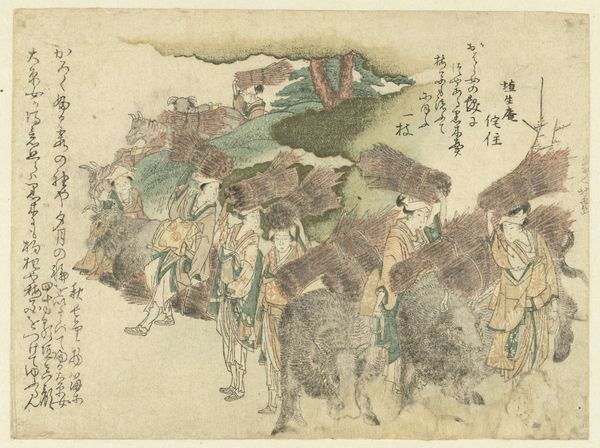
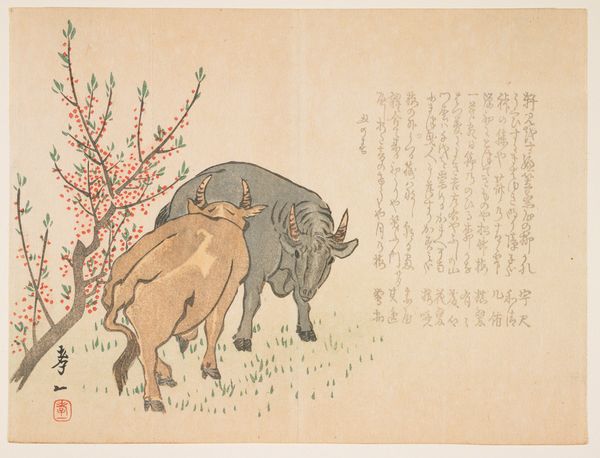
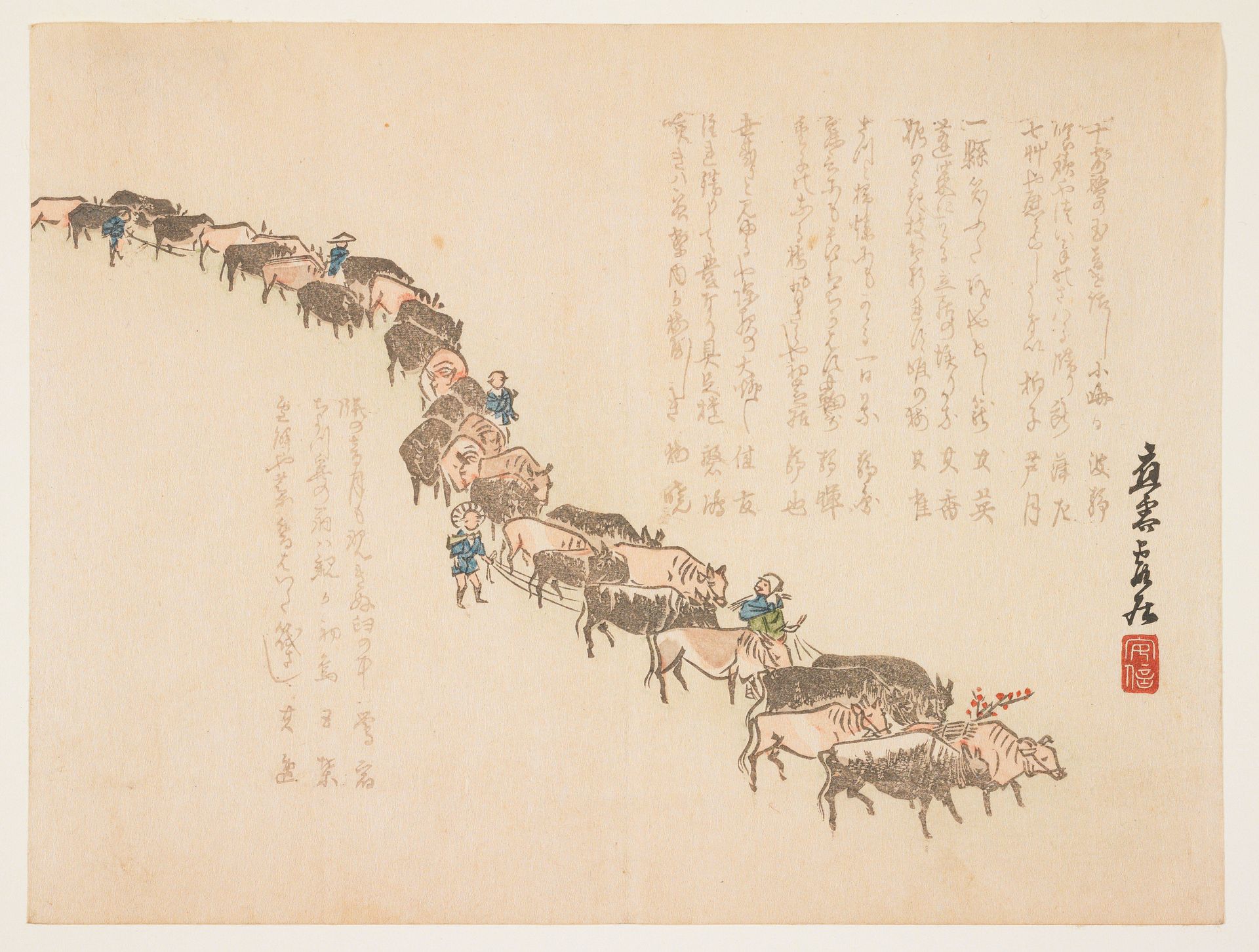
(Procession of oxen)


Listen to curator's interpretation
Curatorial notes
Hanzan Matsukawa made this woodblock print, titled "Procession of Oxen," in Japan sometime between 1820 and 1882. As a historian of art, I'm drawn to how this image speaks to its cultural context. During this period, Japan was undergoing significant social and economic changes, transitioning from a feudal society to a more modern, industrialized nation. Oxen, as draft animals, were vital to agriculture and transportation. This image can be seen as a celebration of the rural economy. The oxen are carefully rendered, each with its unique markings and posture, suggesting an intimate knowledge of these animals. The laborers, too, are depicted with a degree of individuality. This attention to detail elevates the working class, a progressive statement for its time. To fully understand this print, we might consult agricultural records, economic surveys, and social commentaries from the period. Art is never created in a vacuum, and its meaning is always contingent on the specific social and institutional conditions of its production and reception.