About this artwork
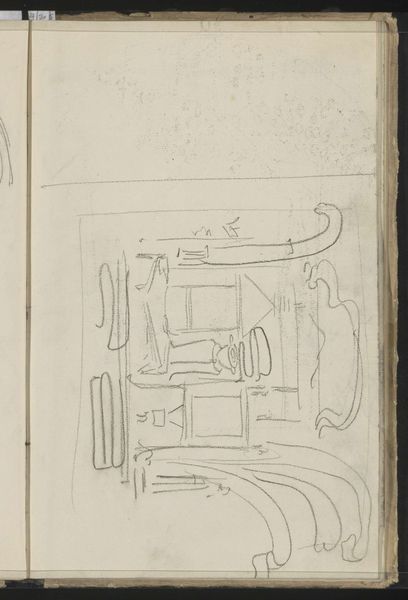
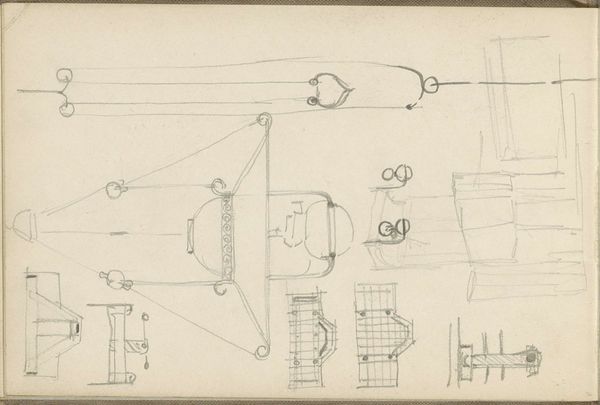
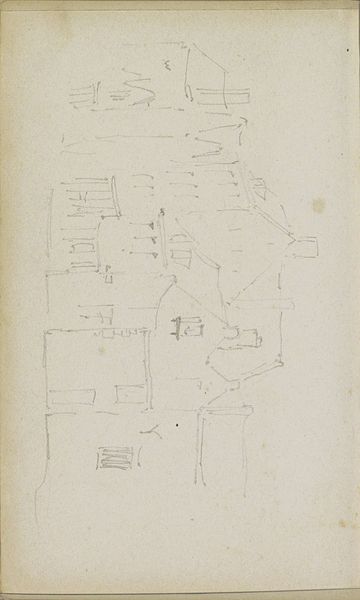
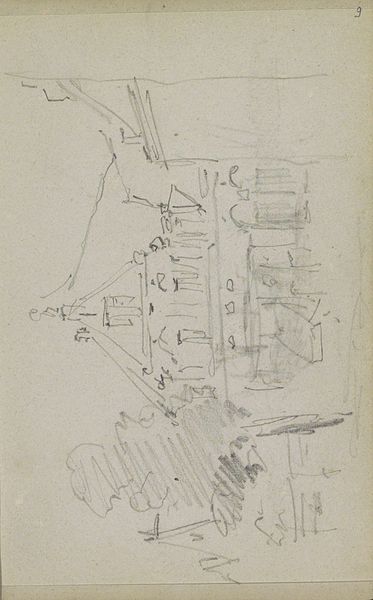
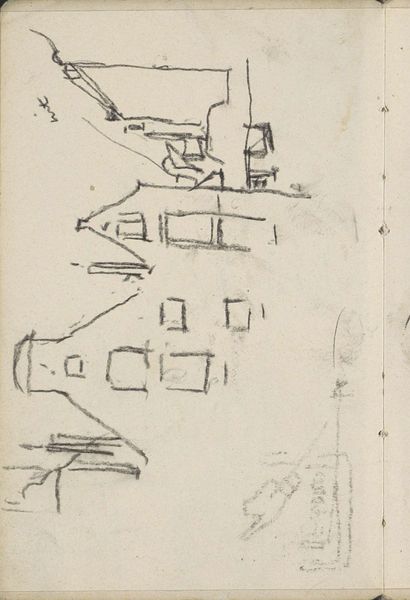
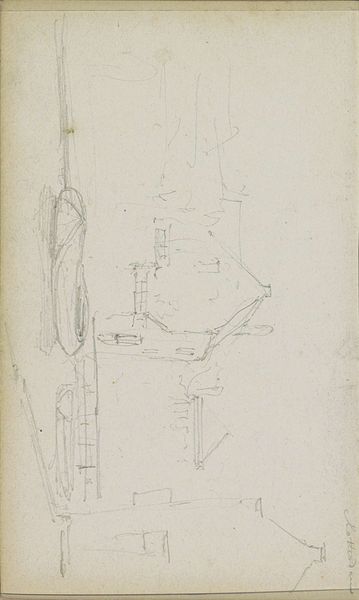
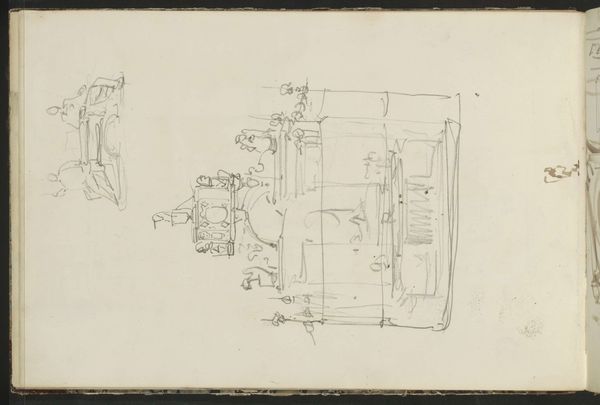
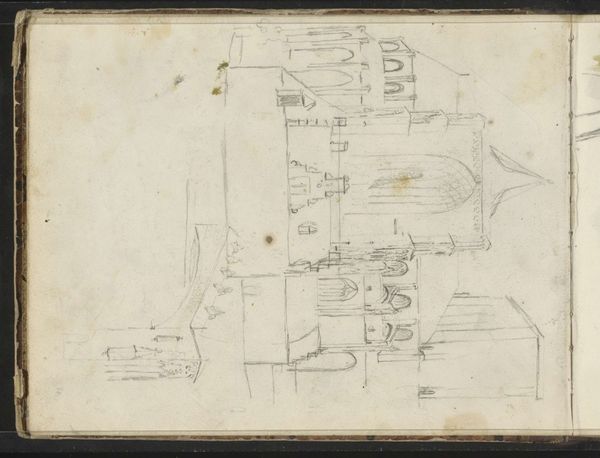
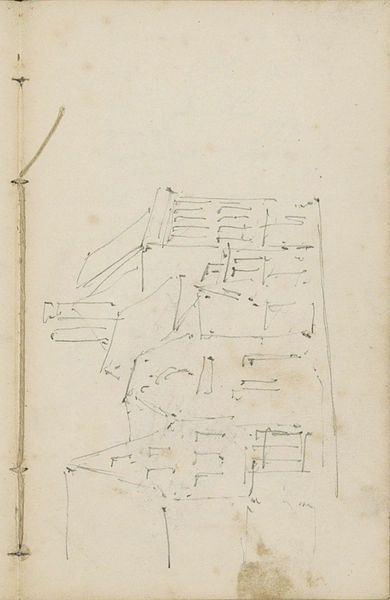
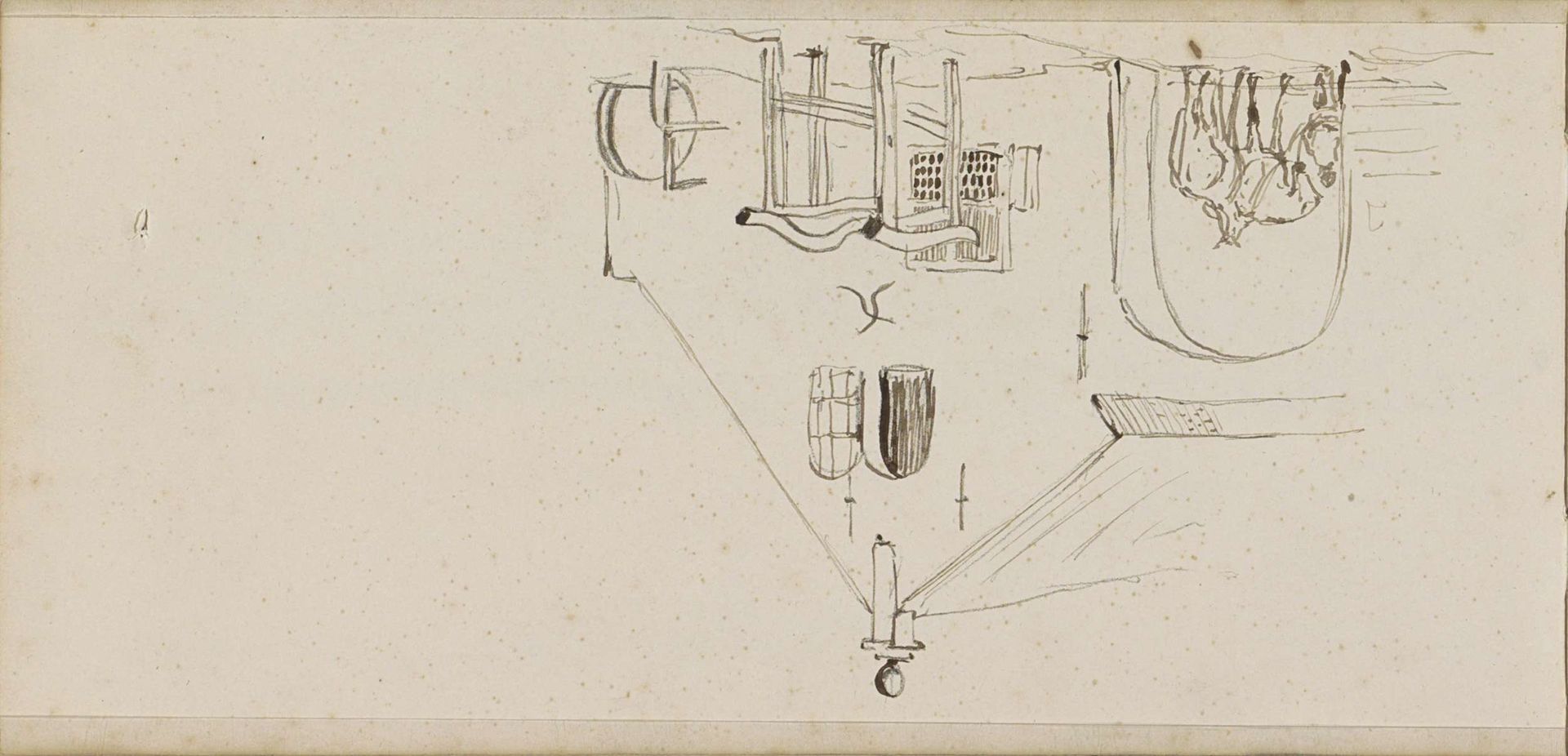
Editor: This drawing, titled "Man with horse near a house with a gate" was created around 1840 by Johannes Tavenraat. It's a humble ink drawing on paper held at the Rijksmuseum. The sketched scene is so unusual, I'm having difficulty grasping the subject. What do you see in this piece? Curator: This sketch presents a rather intriguing formal arrangement. The composition defies conventional perspective, opting instead for a somewhat flattened plane, where elements float rather than reside within a defined space. Observe the curious placement of the objects. Editor: You mean the way the image is rotated on its side? Curator: Precisely. This rotation disrupts our natural apprehension and encourages the eye to decipher the interplay of lines and forms independently of spatial logic. The artist invites us to disassociate objects. Note the contrast between the precision of the rendering of the horse and figure relative to the less defined areas. Editor: So you are looking at it as an intellectual exercise in abstraction rather than a snapshot of something in reality? Curator: Exactly. The lack of tonal variation contributes to a uniform visual experience where no element dominates another through shading or light. One might even consider this a proto-cubist investigation of form rendered in the humble medium of ink on paper. Editor: Interesting. It sounds like looking at this sketch has prompted you to examine the essence of the components rather than looking for narrative. I'll certainly look at sketches differently from now on. Curator: Indeed, the piece encourages a reading of artistic intention through structure. It brings to focus one possible arrangement among many. It brings a question: does intention dictate order? Or the reverse.
Man met paard bij een huis met een poort
1840

Johannes Tavenraat
1809 - 1881Location
RijksmuseumArtwork details
- Medium
- drawing, paper, ink
- Location
- Rijksmuseum
- Copyright
- Rijks Museum: Open Domain
Tags
Comments
Share your thoughts
About this artwork
Editor: This drawing, titled "Man with horse near a house with a gate" was created around 1840 by Johannes Tavenraat. It's a humble ink drawing on paper held at the Rijksmuseum. The sketched scene is so unusual, I'm having difficulty grasping the subject. What do you see in this piece? Curator: This sketch presents a rather intriguing formal arrangement. The composition defies conventional perspective, opting instead for a somewhat flattened plane, where elements float rather than reside within a defined space. Observe the curious placement of the objects. Editor: You mean the way the image is rotated on its side? Curator: Precisely. This rotation disrupts our natural apprehension and encourages the eye to decipher the interplay of lines and forms independently of spatial logic. The artist invites us to disassociate objects. Note the contrast between the precision of the rendering of the horse and figure relative to the less defined areas. Editor: So you are looking at it as an intellectual exercise in abstraction rather than a snapshot of something in reality? Curator: Exactly. The lack of tonal variation contributes to a uniform visual experience where no element dominates another through shading or light. One might even consider this a proto-cubist investigation of form rendered in the humble medium of ink on paper. Editor: Interesting. It sounds like looking at this sketch has prompted you to examine the essence of the components rather than looking for narrative. I'll certainly look at sketches differently from now on. Curator: Indeed, the piece encourages a reading of artistic intention through structure. It brings to focus one possible arrangement among many. It brings a question: does intention dictate order? Or the reverse.
Comments
Share your thoughts