About this artwork
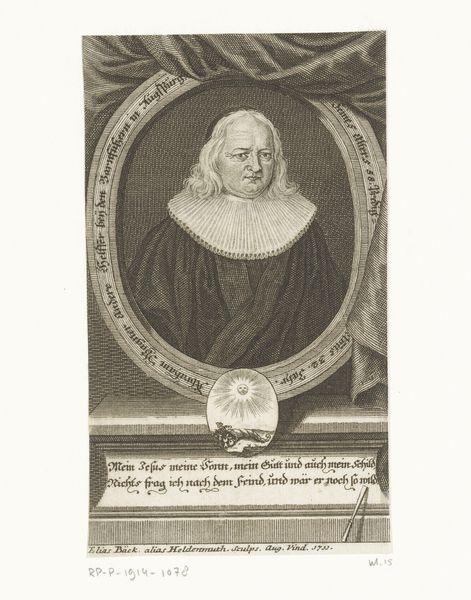
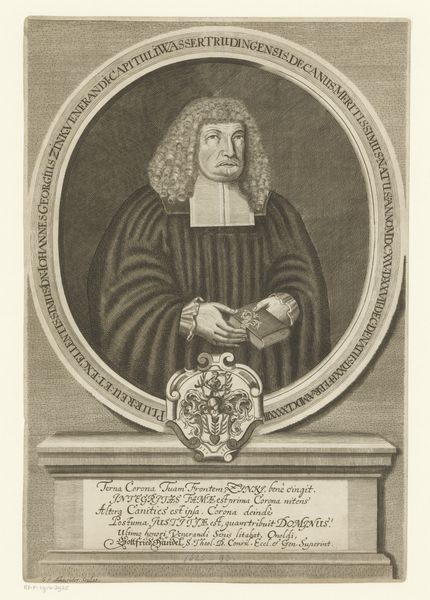
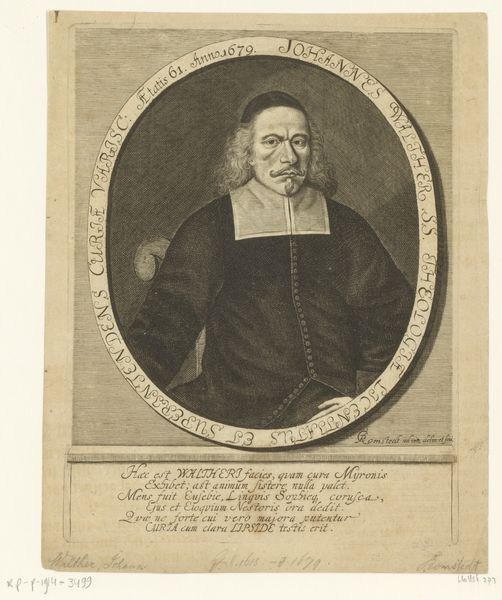
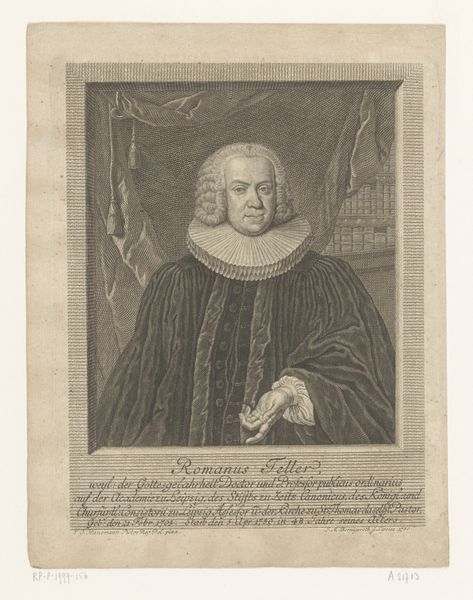
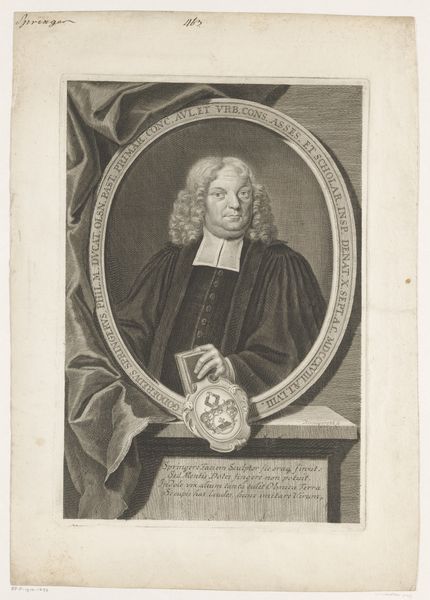
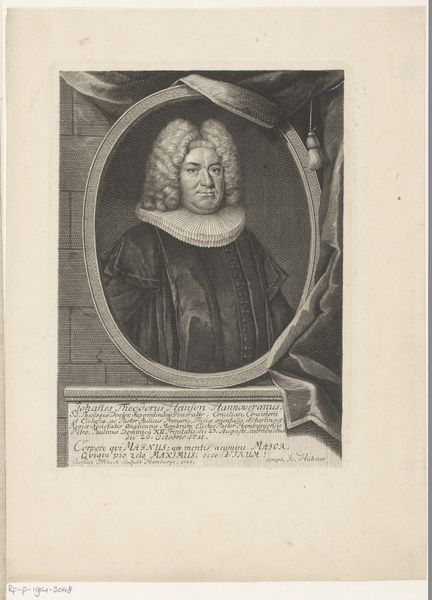
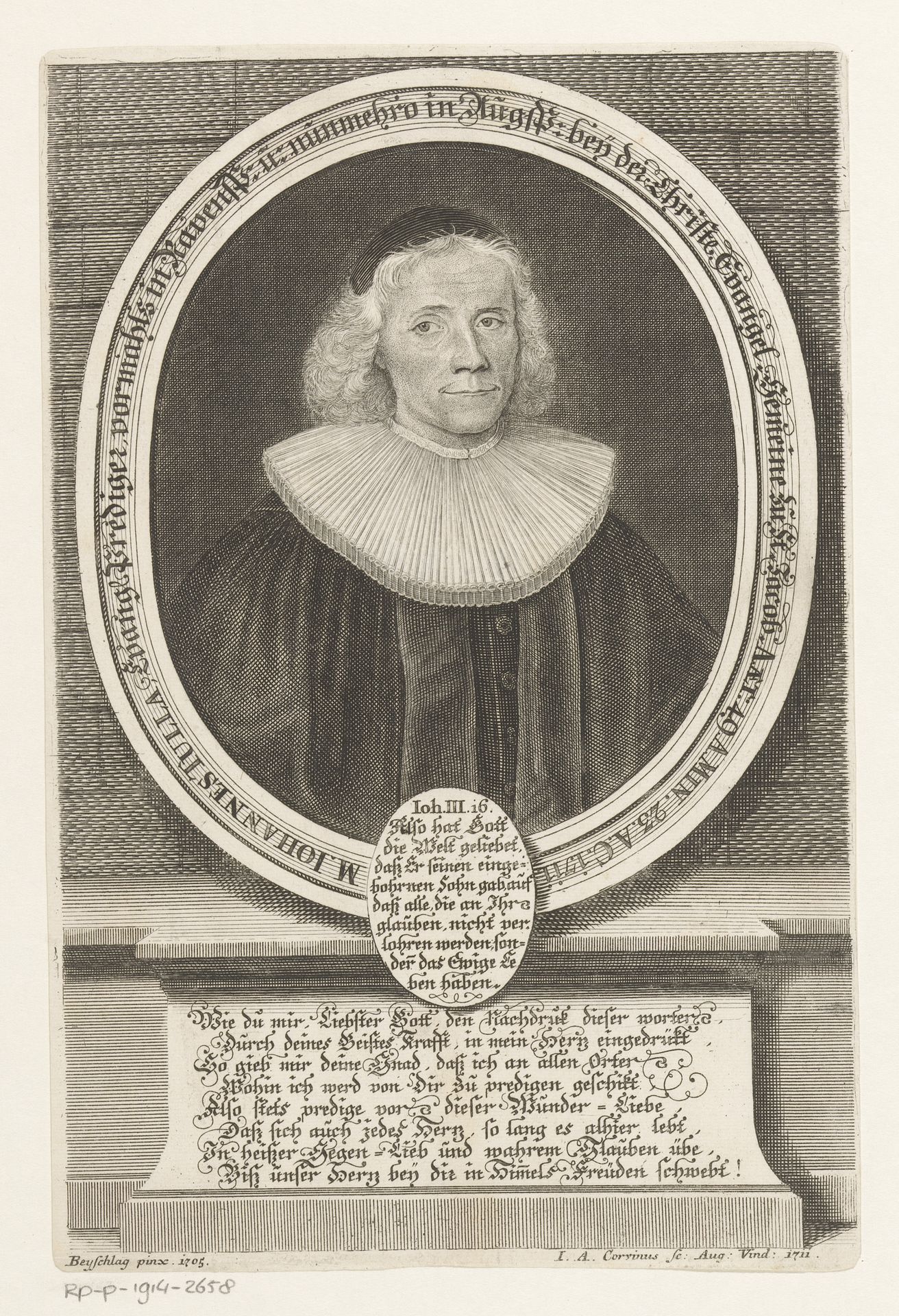
This is Johann August Corvinus's etched portrait of Johannes Tulla, likely created around 1731. Note the stark contrast, where the subject's face emerges from a densely detailed background of text and symbolic ornamentation. The circular frame around Tulla's head creates an immediate focal point, drawing our attention to his composed expression. The use of oval shapes throughout the composition—in the frame and the inscription below—serves to unify the disparate elements. The artist masterfully employs line and texture to convey a sense of depth and dimension, particularly in the rendering of Tulla's ruffled collar and flowing hair. The text surrounding the portrait isn't merely decorative. It integrates theological context that emphasizes ideas of faith and redemption. The placement of these words around Tulla suggests the weight of religious authority. The formal structure of the piece—the calculated arrangement of text, image, and ornamentation—functions to situate Tulla within a complex web of meaning.
Portret van Johannes Tulla op 49-jarige leeftijd
1711

Johann August Corvinus
1683 - 1738Location
RijksmuseumArtwork details
- Medium
- print, engraving
- Dimensions
- height 242 mm, width 160 mm
- Location
- Rijksmuseum
- Copyright
- Rijks Museum: Open Domain
Tags
Comments
Share your thoughts
About this artwork
This is Johann August Corvinus's etched portrait of Johannes Tulla, likely created around 1731. Note the stark contrast, where the subject's face emerges from a densely detailed background of text and symbolic ornamentation. The circular frame around Tulla's head creates an immediate focal point, drawing our attention to his composed expression. The use of oval shapes throughout the composition—in the frame and the inscription below—serves to unify the disparate elements. The artist masterfully employs line and texture to convey a sense of depth and dimension, particularly in the rendering of Tulla's ruffled collar and flowing hair. The text surrounding the portrait isn't merely decorative. It integrates theological context that emphasizes ideas of faith and redemption. The placement of these words around Tulla suggests the weight of religious authority. The formal structure of the piece—the calculated arrangement of text, image, and ornamentation—functions to situate Tulla within a complex web of meaning.
Comments
Share your thoughts