print, engraving
# print
#
classical-realism
#
perspective
#
form
#
ancient-mediterranean
#
line
#
cityscape
#
history-painting
#
academic-art
#
engraving
Dimensions: 230 mm (height) x 274 mm (width) (monteringsmaal), 215 mm (height) x 264 mm (width) (plademaal)
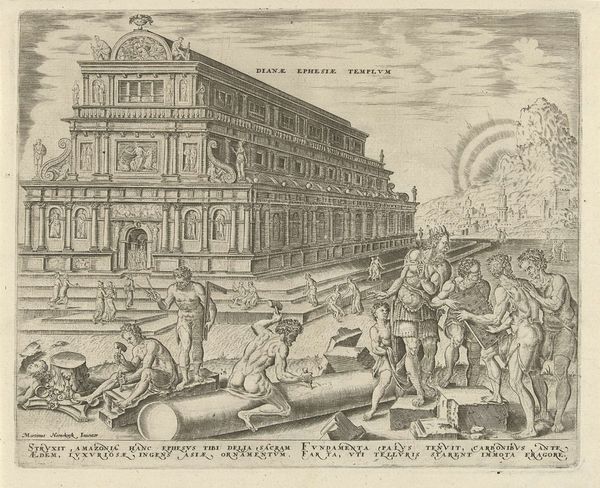
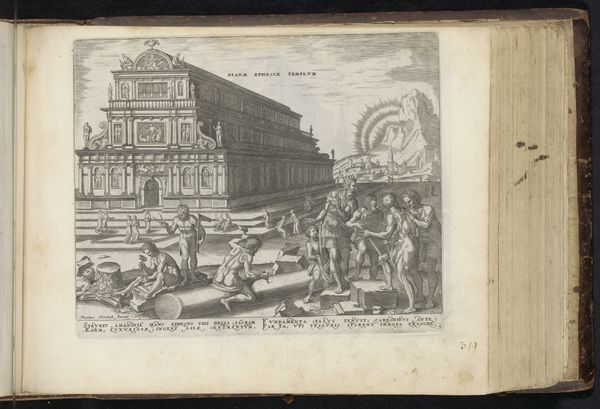
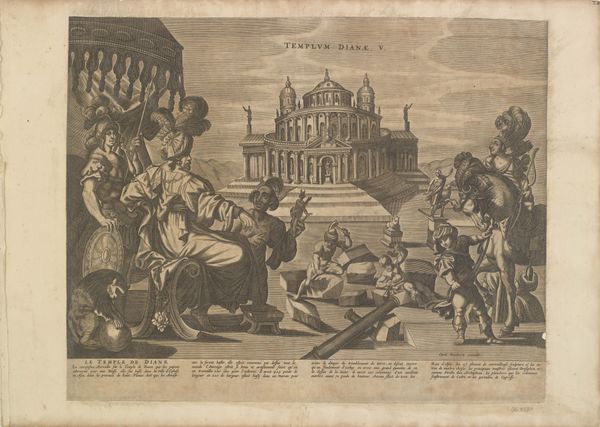
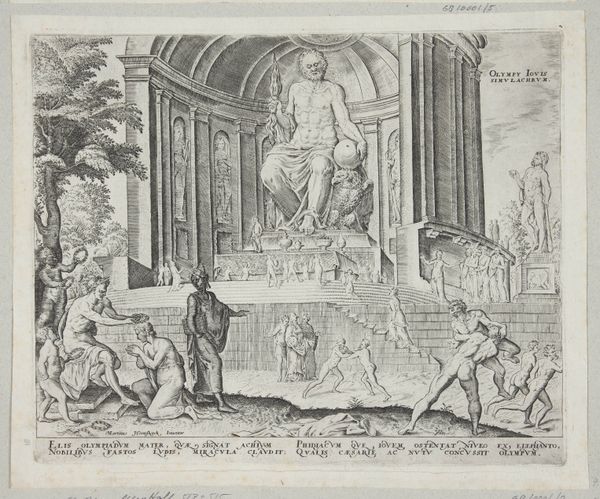
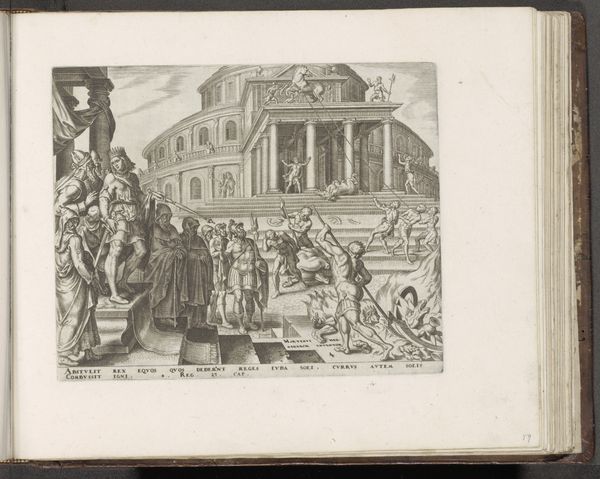
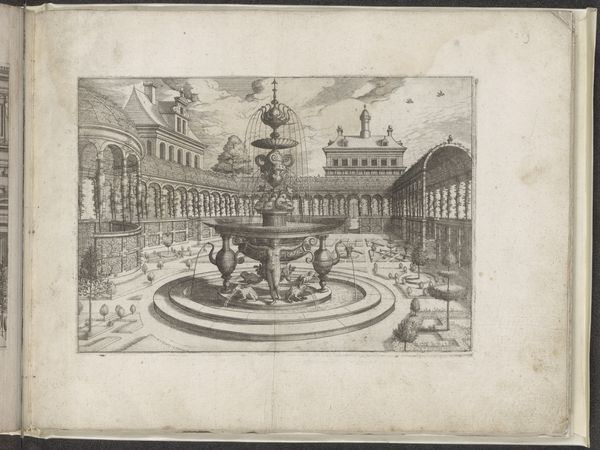
Philips Galle created this engraving of "The Temple of Diana in Ephesus" sometime between 1537 and 1612, reflecting a period of European fascination with classical antiquity. Galle, working in the Netherlands, was part of a larger artistic movement that sought to revive and reimagine ancient architectural wonders. This piece isn't just a depiction of a temple; it's an engagement with ideas about civilization, religion, and power. The temple, dedicated to a female deity, stood as a symbol of feminine strength and divine authority in the ancient world. Galle's representation comes at a time of shifting religious and social norms in Europe, and invites us to consider the roles of women in society. Look at the figures constructing the temple. What does it say about labor, community, and the act of creation? What does it mean to rebuild and reimagine such a symbol in a different time and place? The print serves as a point of reflection on cultural memory and the stories we tell ourselves about the past.
Comments
No comments
Be the first to comment and join the conversation on the ultimate creative platform.
 Collect
 React
React Comment
More like this