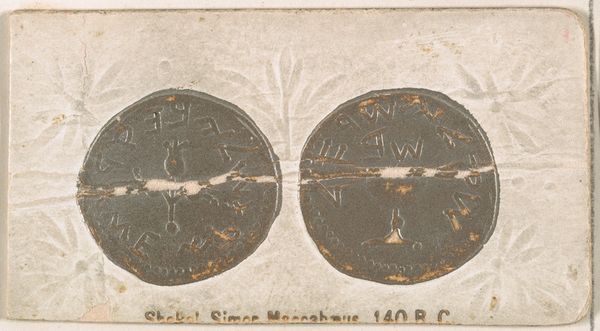
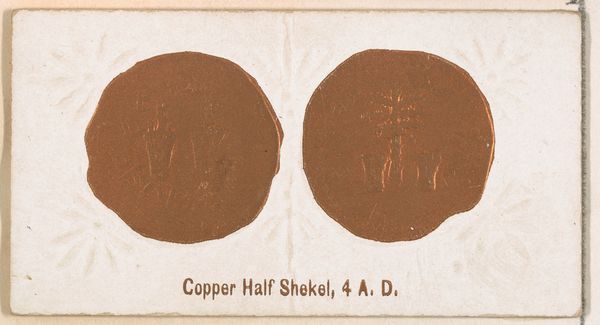
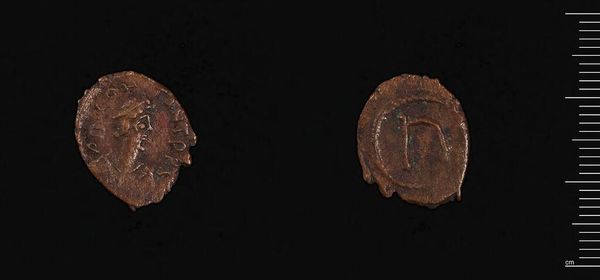
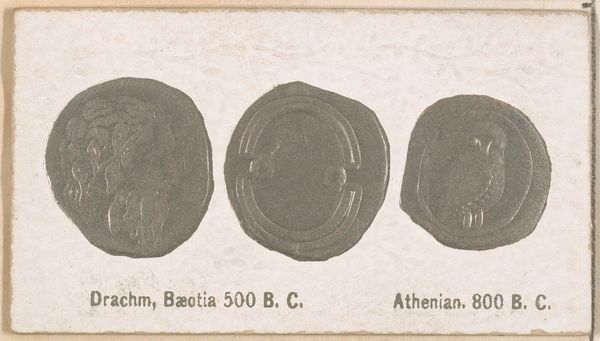
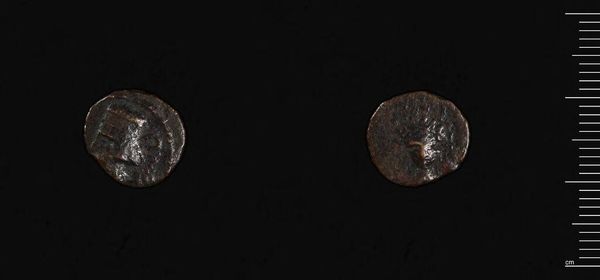
Procurator Rufus, 33 A.D. / Pontius Pilate, 29 A.D., from the Ancient Coins series (N180) issued by Wm. S. Kimball & Co. 1888
0:00
0:00


drawing, print, paper
#
portrait
#
drawing
# print
#
paper
#
coloured pencil
#
ancient-mediterranean
Dimensions: Sheet: 1 1/2 × 2 5/8 in. (3.8 × 6.7 cm)
Copyright: Public Domain
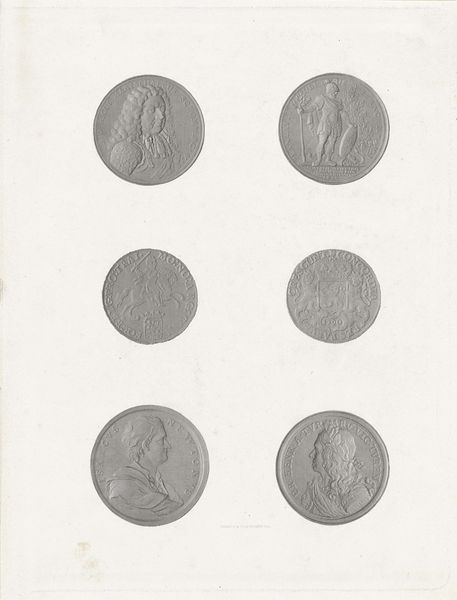
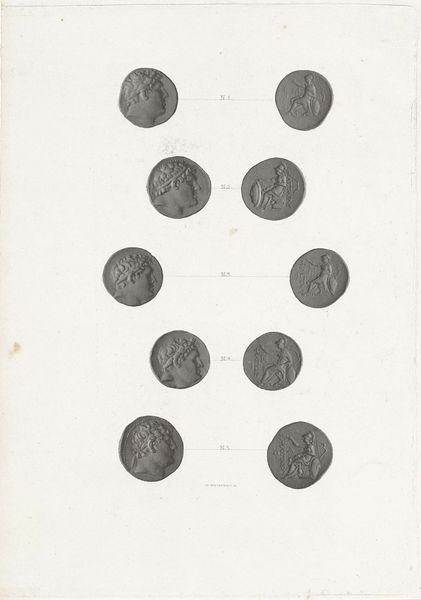
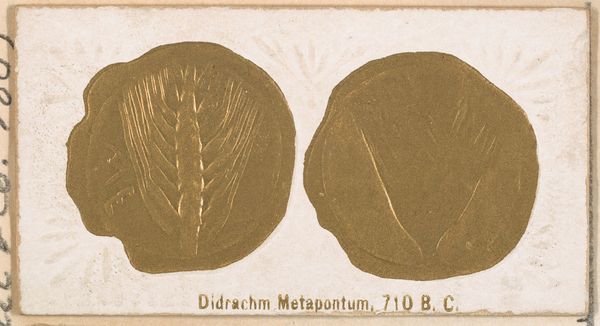
This small chromolithograph from an "Ancient Coins" series was printed by the Wm. S. Kimball & Co., a 19th-century American tobacco company who included it as a collectible insert in their cigarette packs. The coins it depicts were minted in Judea under Roman rule. The images reproduce coins issued by Pontius Pilate and his successor, Procurator Rufus. Pilate, of course, is infamous for his role in the trial and crucifixion of Jesus. The original coins were a form of political propaganda and were meant to be a display of Roman power and authority. The choice to reproduce these coins as collectible trading cards speaks volumes about how the politics of imagery evolve with time and institutional context. Originally, the coins were symbols of imperial power. In nineteenth-century America, they became exotic collectible objects, divorced from their original context but still carrying a whiff of ancient power. Understanding such images requires careful research into both their original and subsequent contexts, including numismatic studies, religious histories, and the history of consumer culture.
Comments
No comments
Be the first to comment and join the conversation on the ultimate creative platform.
 Collect
 React
React Comment
More like this