About this artwork
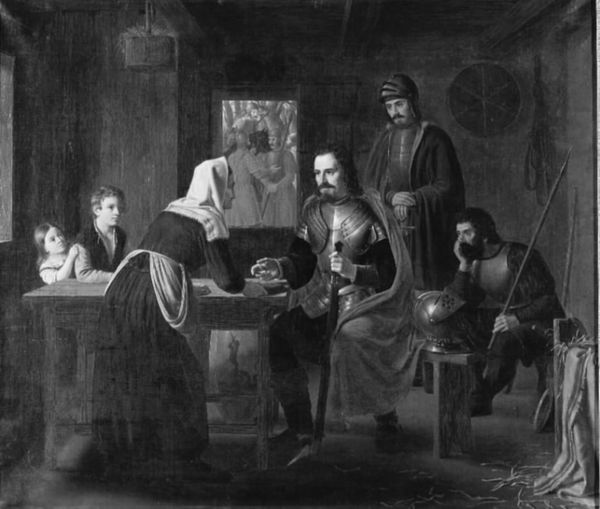
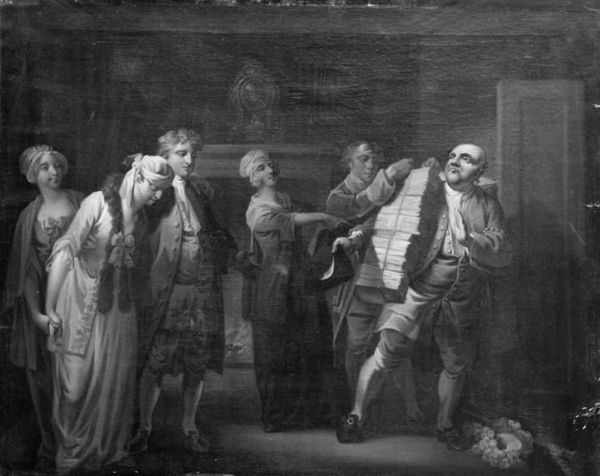
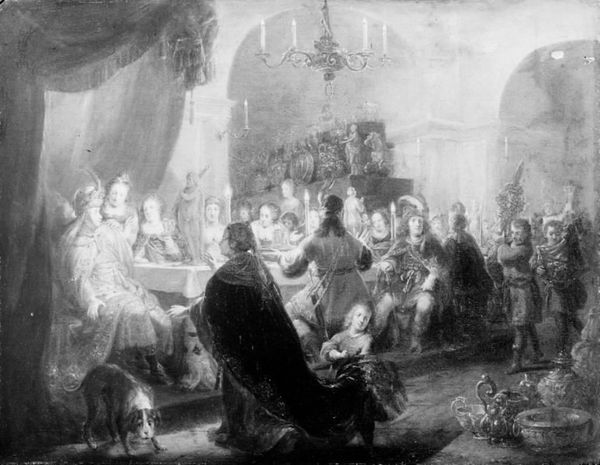
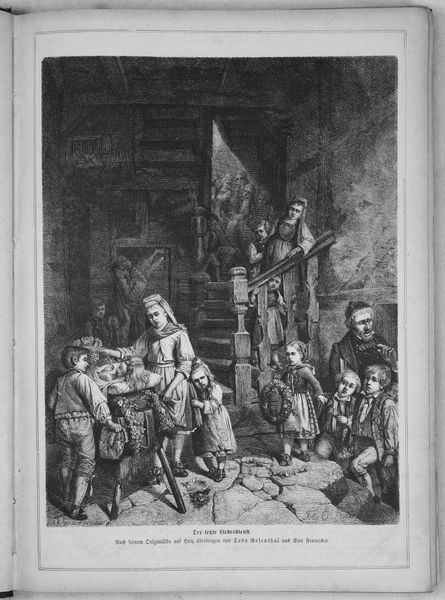
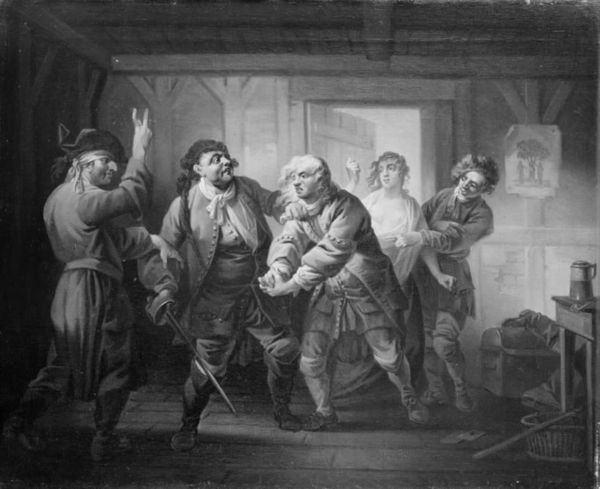
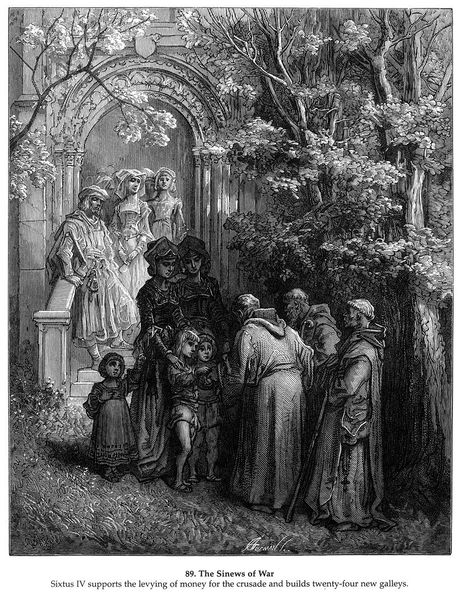
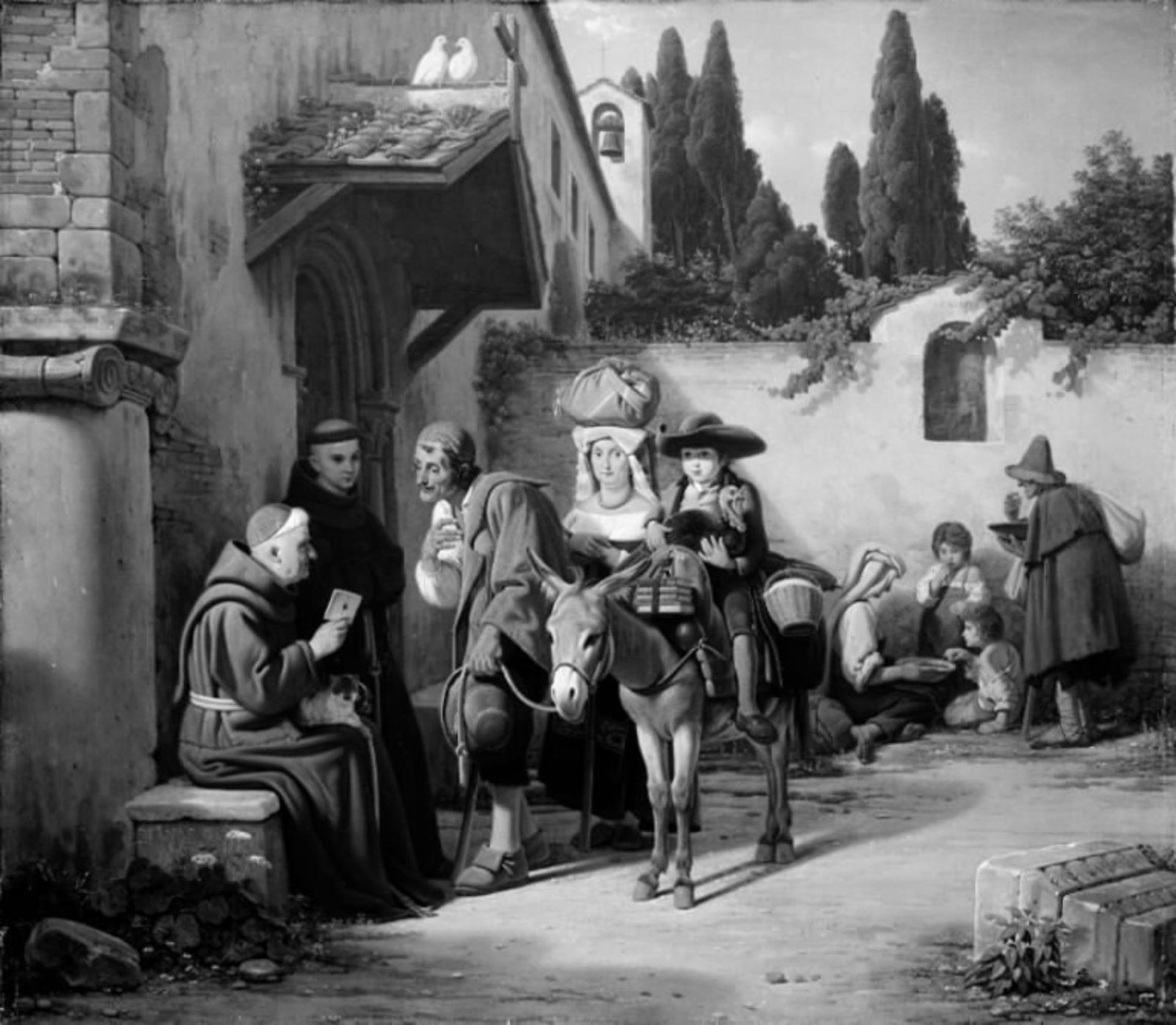
Ernst Meyer painted "A Little Boy is Taken to the Monastery by His Parents" with oil on canvas in the 19th century. The smooth finish and muted tones of the oil paint lend the scene a sense of solemnity and realism, drawing the viewer into the emotional weight of the moment. Meyer uses oil painting techniques to depict a narrative steeped in social context. The artist carefully built up layers of thin glazes to create luminosity. The way he captured the texture of the clothing, the stone walls, and the worn faces speaks to the era's focus on careful observation and skill, where academic training was highly valued. The choice of oil paint also implies the economic conditions of the time. Oil paint was a relatively expensive medium, suggesting that Meyer had access to resources and patronage. This artwork serves as a visual record of a specific cultural practice in 19th-century Europe, blurring the lines between fine art and social commentary.
A Little Boy is Taken to the Monastery by His Parents
1835 - 1838


Artwork details
- Medium
- painting, oil-paint
- Dimensions
- 63 cm (height) x 71.5 cm (width) (Netto)
- Location
- SMK - Statens Museum for Kunst
Tags
Comments
Share your thoughts
About this artwork
Ernst Meyer painted "A Little Boy is Taken to the Monastery by His Parents" with oil on canvas in the 19th century. The smooth finish and muted tones of the oil paint lend the scene a sense of solemnity and realism, drawing the viewer into the emotional weight of the moment. Meyer uses oil painting techniques to depict a narrative steeped in social context. The artist carefully built up layers of thin glazes to create luminosity. The way he captured the texture of the clothing, the stone walls, and the worn faces speaks to the era's focus on careful observation and skill, where academic training was highly valued. The choice of oil paint also implies the economic conditions of the time. Oil paint was a relatively expensive medium, suggesting that Meyer had access to resources and patronage. This artwork serves as a visual record of a specific cultural practice in 19th-century Europe, blurring the lines between fine art and social commentary.
Comments
Share your thoughts