About this artwork
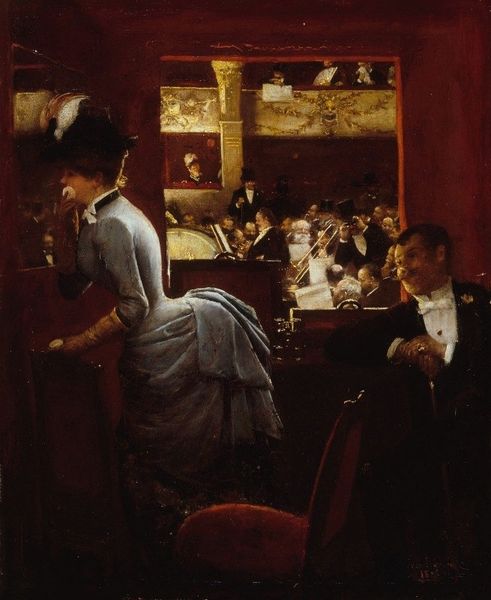
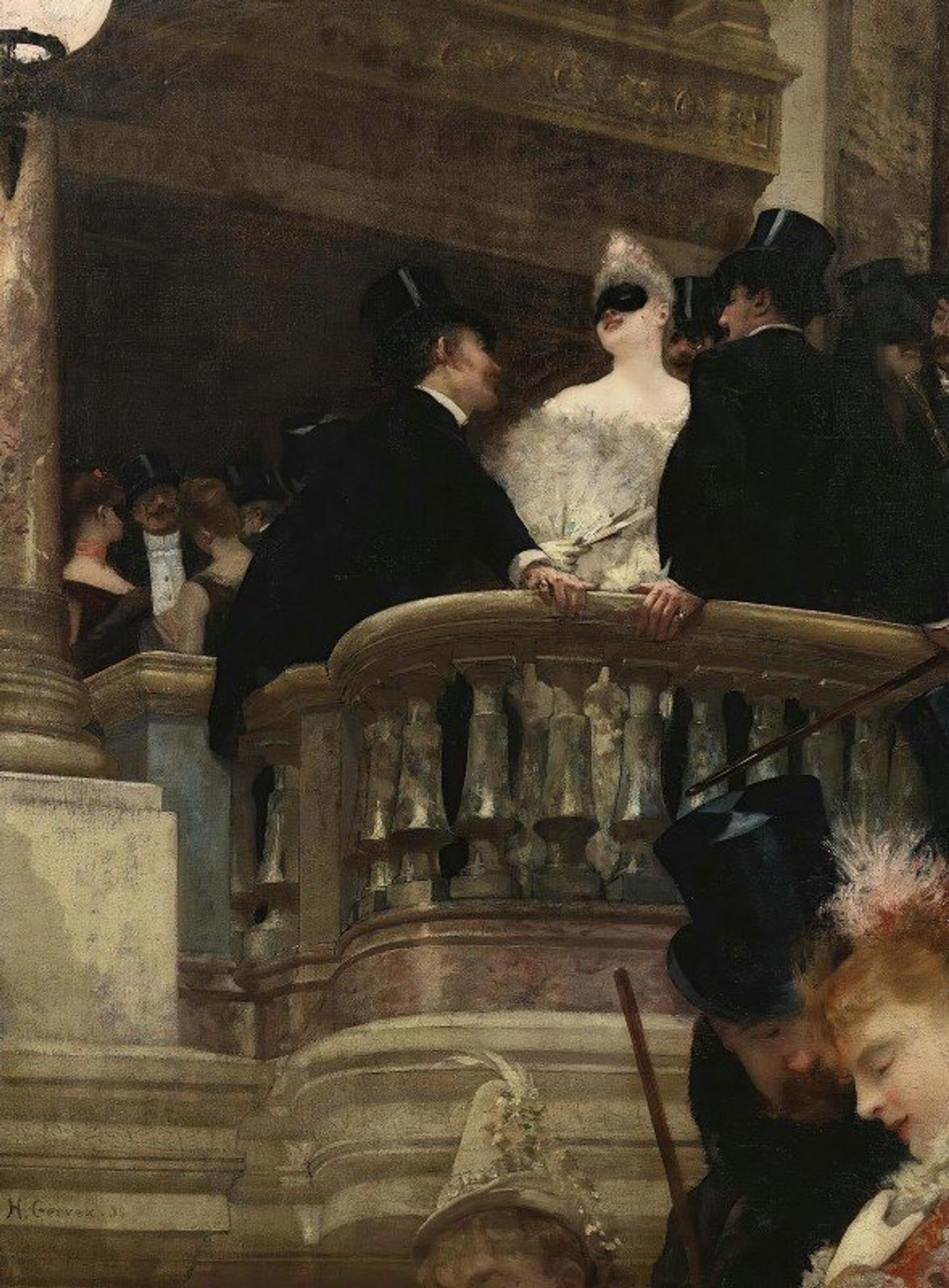
Curator: Henri Gervex transports us to a lavish affair with "Le Bal de l’Opéra," painted in 1886. What are your initial thoughts? Editor: It's undeniably opulent. There's a palpable sense of hushed intrigue amidst the gathering; the soft impasto, especially, adds a dreamlike quality to this slice of Parisian high society. Curator: Note how Gervex organizes the composition. We see figures positioned in receding planes; observe the balcony scene in relation to the shadowy crowds and ornate architectural backdrop. How does that direct your viewing? Editor: Precisely. This hierarchical staging reflects the socio-political dynamics of the era; wealth and status prominently displayed. This visual layering isn't just about spatial depth. Curator: Absolutely. Gervex cleverly utilizes chiaroscuro—the sharp contrast between light and shadow—to emphasize key figures. The woman in white, for example, becomes a focal point due to this play of light. Are there potential connotations? Editor: Undoubtedly, and let's acknowledge that there is a slightly erotic current running through this image, amplified by the masquerade element, by masked people who might get away with a bit of transgression! The ball allowed social classes to mix, but more likely, these are scenes from the gilded lives of elites on display at the Opera. Curator: It’s a very complex, compelling snapshot into late 19th-century Parisian life, indeed, and this tension between visibility and anonymity really characterizes the society. Gervex also subtly criticizes class inequality. Editor: And Gervex isn't afraid to delve into these complexities, making "Le Bal de l’Opéra" not just a pretty picture, but also a complex representation of a society at a turning point. Curator: Agreed; reflecting on it all, it remains a vibrant meditation on light, shadow, and social structure, inviting us to reflect on both the glittering surface and the deeper currents of 1880s Paris.

Artwork details
- Copyright
- Public Domain: Artvee
Comments
Share your thoughts
About this artwork
Curator: Henri Gervex transports us to a lavish affair with "Le Bal de l’Opéra," painted in 1886. What are your initial thoughts? Editor: It's undeniably opulent. There's a palpable sense of hushed intrigue amidst the gathering; the soft impasto, especially, adds a dreamlike quality to this slice of Parisian high society. Curator: Note how Gervex organizes the composition. We see figures positioned in receding planes; observe the balcony scene in relation to the shadowy crowds and ornate architectural backdrop. How does that direct your viewing? Editor: Precisely. This hierarchical staging reflects the socio-political dynamics of the era; wealth and status prominently displayed. This visual layering isn't just about spatial depth. Curator: Absolutely. Gervex cleverly utilizes chiaroscuro—the sharp contrast between light and shadow—to emphasize key figures. The woman in white, for example, becomes a focal point due to this play of light. Are there potential connotations? Editor: Undoubtedly, and let's acknowledge that there is a slightly erotic current running through this image, amplified by the masquerade element, by masked people who might get away with a bit of transgression! The ball allowed social classes to mix, but more likely, these are scenes from the gilded lives of elites on display at the Opera. Curator: It’s a very complex, compelling snapshot into late 19th-century Parisian life, indeed, and this tension between visibility and anonymity really characterizes the society. Gervex also subtly criticizes class inequality. Editor: And Gervex isn't afraid to delve into these complexities, making "Le Bal de l’Opéra" not just a pretty picture, but also a complex representation of a society at a turning point. Curator: Agreed; reflecting on it all, it remains a vibrant meditation on light, shadow, and social structure, inviting us to reflect on both the glittering surface and the deeper currents of 1880s Paris.
Comments
Share your thoughts