About this artwork
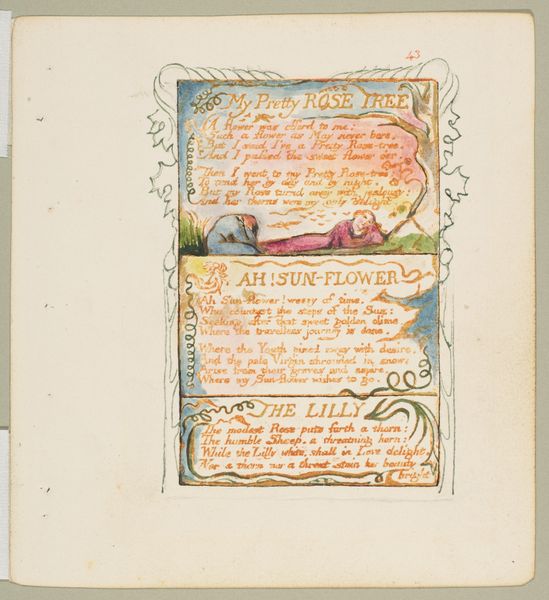
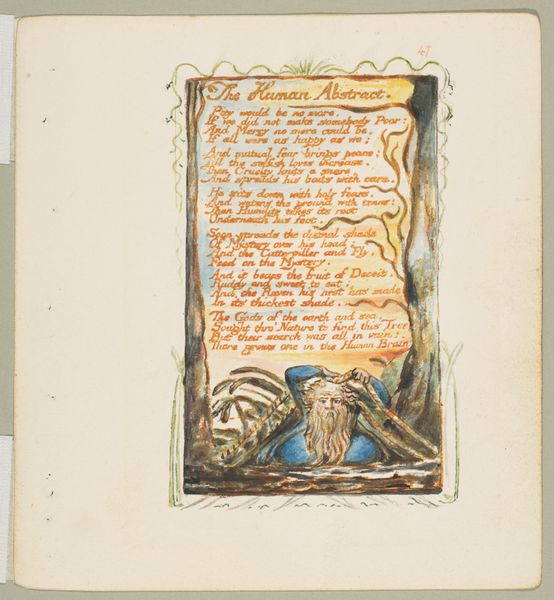
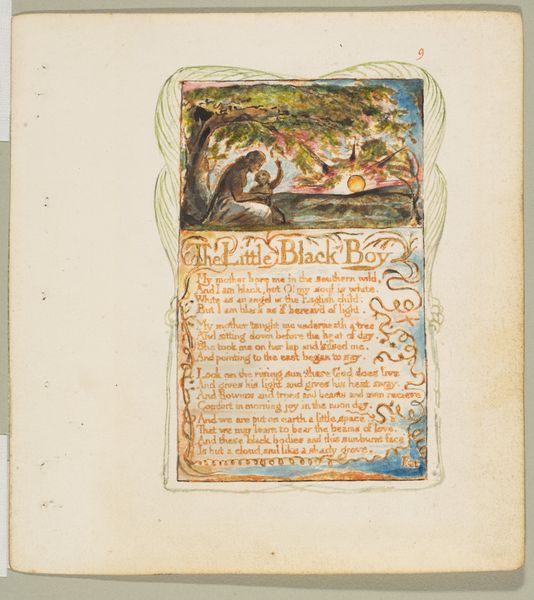
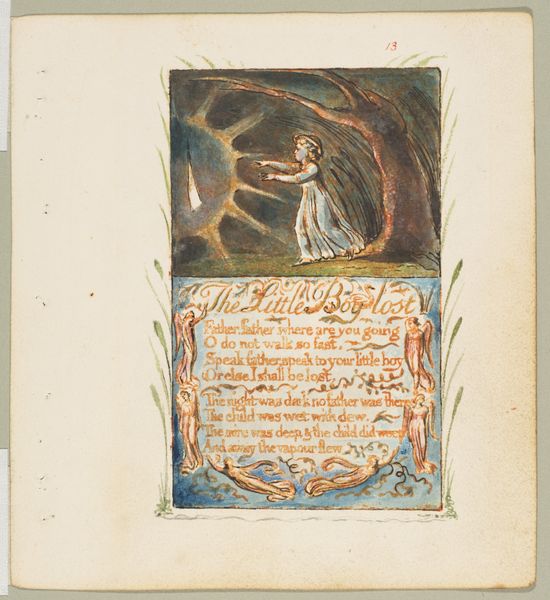
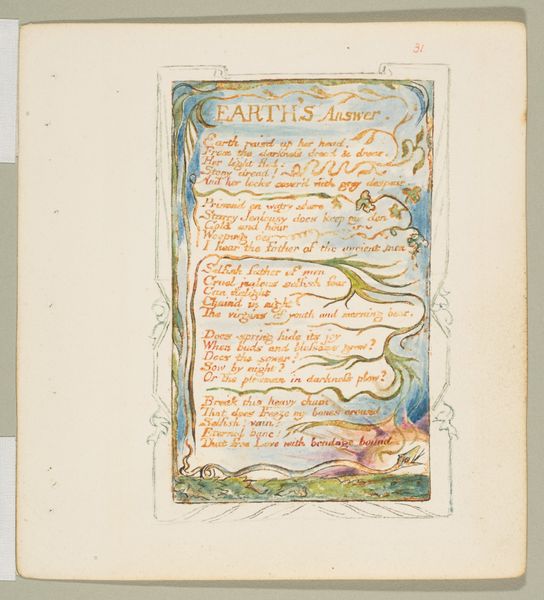
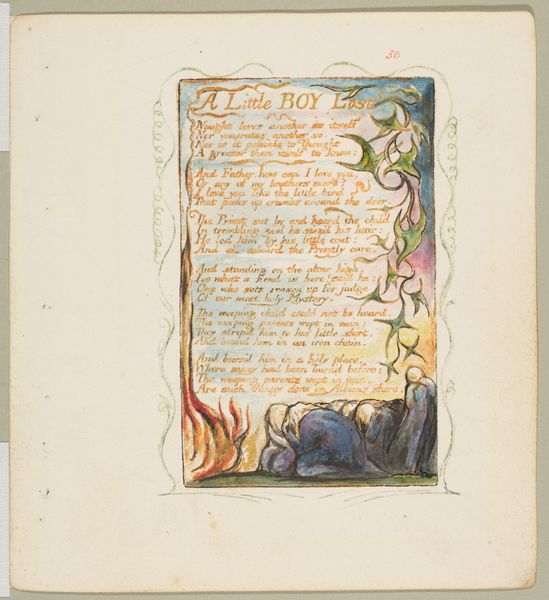
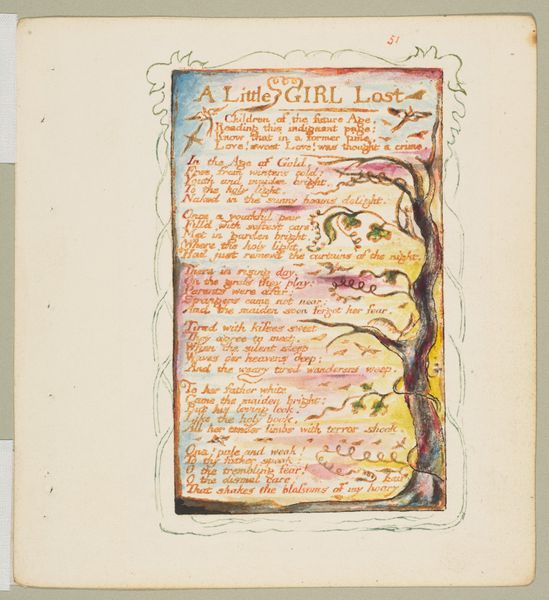
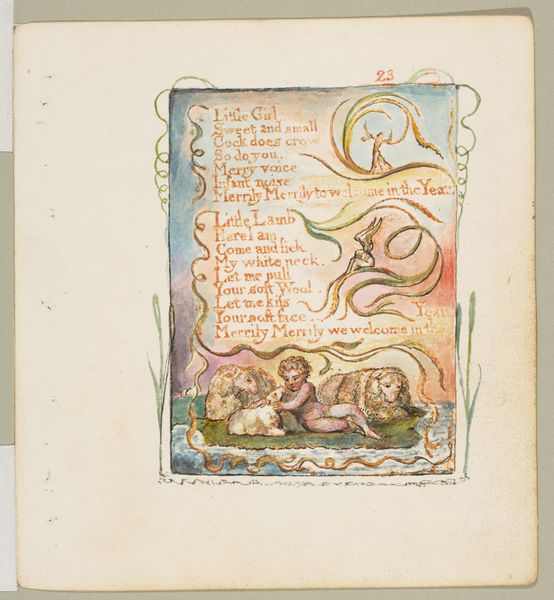
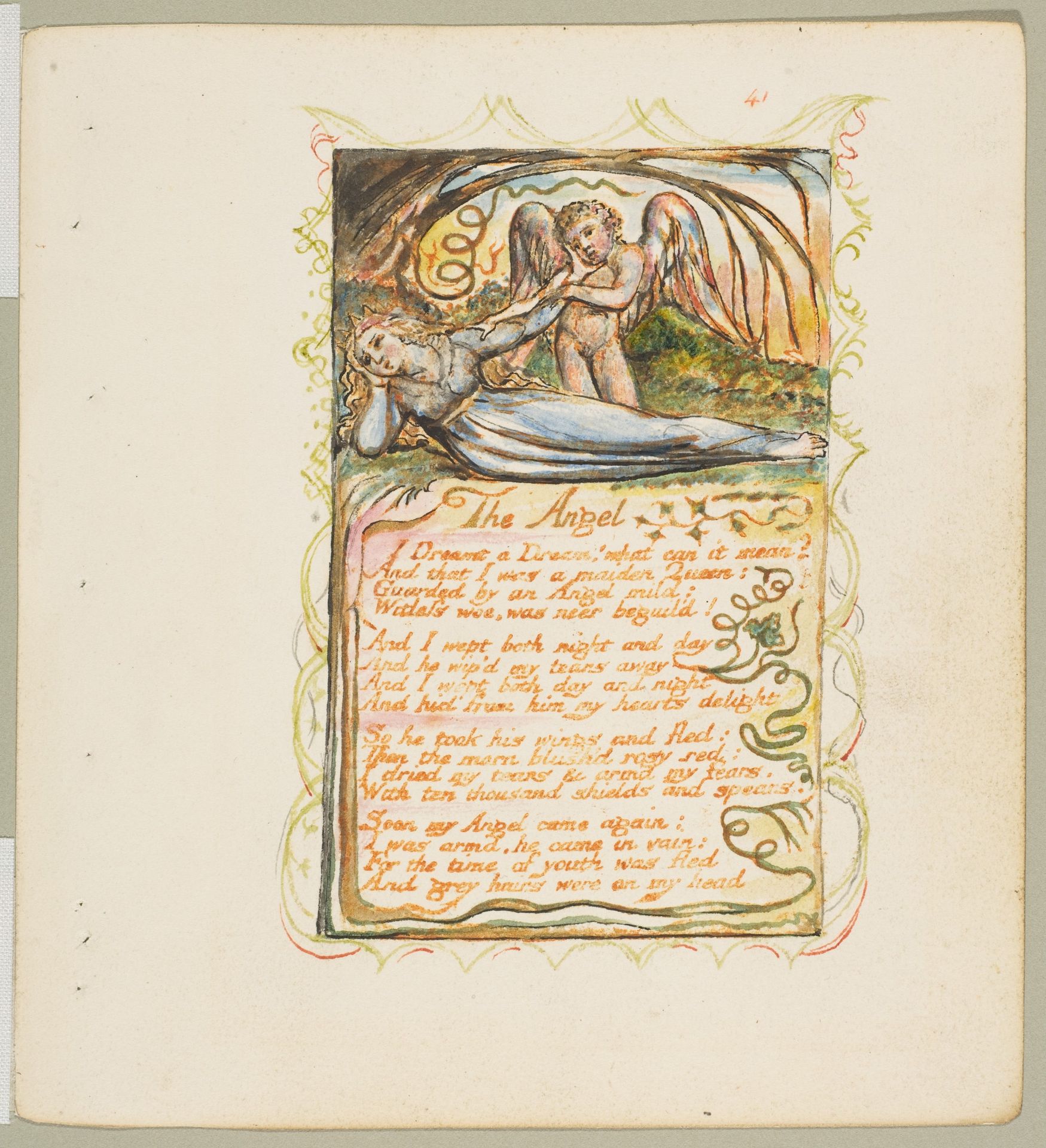
This watercolor etching, "The Angel," from William Blake's *Songs of Experience*, presents us with a fallen maiden and a winged figure amidst a dark, sylvan scene. Angels, traditionally messengers of the divine, appear here in a more ambiguous light. This recalls the classical motif of Eros and Psyche, where the god's presence is both a blessing and a burden. The image reminds me of similar themes in Renaissance paintings where the angel is not simply a benevolent protector but embodies a complex, even troubling, aspect of human experience. This symbol evolves through time, reflecting our changing understanding of innocence, desire, and loss. Blake engages us on a deep, subconscious level, where the boundaries between the sacred and the profane blur, and the emotional weight of the image lingers long after we've turned away.
Songs of Experience: The Angel
1794 - 1825


Artwork details
- Medium
- drawing, print, watercolor
- Dimensions
- sheet: 6 3/16 x 5 9/16 in. (15.7 x 14.1 cm)
- Location
- Metropolitan Museum of Art, New York, NY
- Copyright
- Public Domain
Tags
drawing
narrative-art
figuration
watercolor
coloured pencil
romanticism
watercolor
Comments
Be the first to share your thoughts about this work.
About this artwork
This watercolor etching, "The Angel," from William Blake's *Songs of Experience*, presents us with a fallen maiden and a winged figure amidst a dark, sylvan scene. Angels, traditionally messengers of the divine, appear here in a more ambiguous light. This recalls the classical motif of Eros and Psyche, where the god's presence is both a blessing and a burden. The image reminds me of similar themes in Renaissance paintings where the angel is not simply a benevolent protector but embodies a complex, even troubling, aspect of human experience. This symbol evolves through time, reflecting our changing understanding of innocence, desire, and loss. Blake engages us on a deep, subconscious level, where the boundaries between the sacred and the profane blur, and the emotional weight of the image lingers long after we've turned away.
Comments
Be the first to share your thoughts about this work.