About this artwork
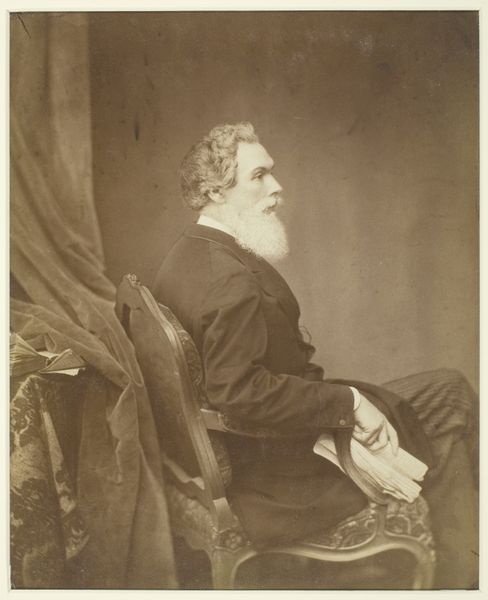
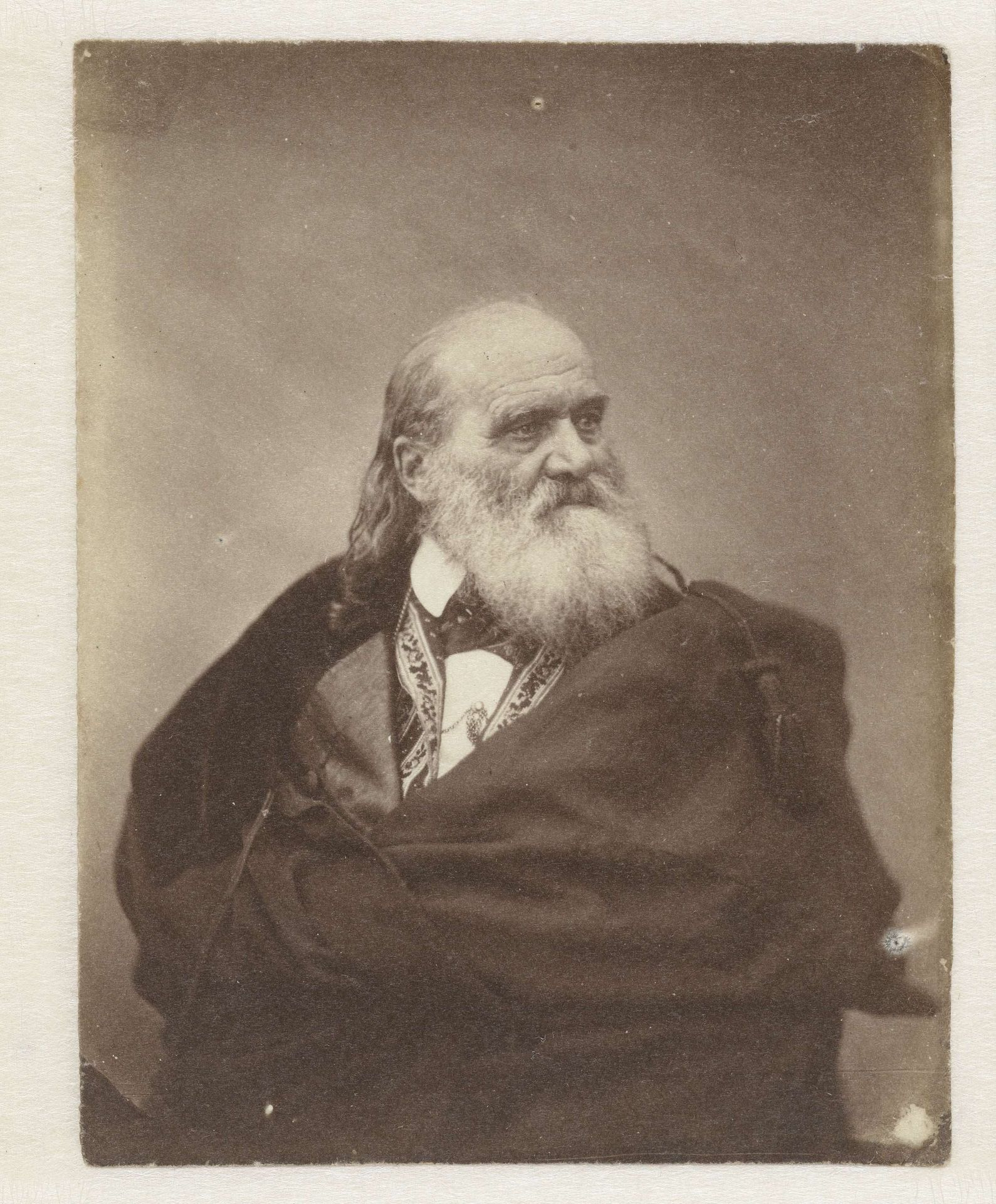
Editor: Here we have Nicolaas Henneman’s “Portret van een man, bekend als Signor Sentura,” a daguerreotype from around 1853. The man's expression is really striking, dignified but with a hint of weariness. How do you read this portrait? Curator: I see a powerful commentary on the emerging concept of celebrity and identity in the mid-19th century. Consider the sitter's distinctive appearance—the long hair, the ornate neckwear. This was a period of rapid social change, and photography democratized portraiture, making images accessible to a broader public. To me, this is less about a literal depiction and more about constructing a persona. What does his specific look evoke for you in the context of the era? Editor: That's fascinating. I hadn't considered the element of constructed persona. The clothing seems deliberately chosen to project a certain image. Curator: Precisely. Think about the political climate of the 1850s – rising nationalism, the reverberations of the 1848 revolutions. How might this carefully constructed image of "Signor Sentura" be performing or responding to those anxieties and aspirations? Photography isn't neutral; it’s always participating in a dialogue with power. Editor: So you're saying it might be reflecting or even challenging societal norms of the time? Curator: Absolutely. Early photography offered a space for individuals to self-fashion, potentially disrupting traditional hierarchies and ideas of representation. Is he part of some cultural movement? What does that adornment signify? Editor: I hadn’t thought of this image in terms of social commentary before. I’m going to rethink how I approach portraits now. Thanks for opening up those new paths. Curator: My pleasure. These images are cultural artifacts deeply embedded in complex historical realities. Hopefully we have shed some light on the topic.

Artwork details
- Medium
- daguerreotype, photography
- Dimensions
- height 120 mm, width 94 mm
- Copyright
- Rijks Museum: Open Domain
Tags
Comments
Share your thoughts
About this artwork
Editor: Here we have Nicolaas Henneman’s “Portret van een man, bekend als Signor Sentura,” a daguerreotype from around 1853. The man's expression is really striking, dignified but with a hint of weariness. How do you read this portrait? Curator: I see a powerful commentary on the emerging concept of celebrity and identity in the mid-19th century. Consider the sitter's distinctive appearance—the long hair, the ornate neckwear. This was a period of rapid social change, and photography democratized portraiture, making images accessible to a broader public. To me, this is less about a literal depiction and more about constructing a persona. What does his specific look evoke for you in the context of the era? Editor: That's fascinating. I hadn't considered the element of constructed persona. The clothing seems deliberately chosen to project a certain image. Curator: Precisely. Think about the political climate of the 1850s – rising nationalism, the reverberations of the 1848 revolutions. How might this carefully constructed image of "Signor Sentura" be performing or responding to those anxieties and aspirations? Photography isn't neutral; it’s always participating in a dialogue with power. Editor: So you're saying it might be reflecting or even challenging societal norms of the time? Curator: Absolutely. Early photography offered a space for individuals to self-fashion, potentially disrupting traditional hierarchies and ideas of representation. Is he part of some cultural movement? What does that adornment signify? Editor: I hadn’t thought of this image in terms of social commentary before. I’m going to rethink how I approach portraits now. Thanks for opening up those new paths. Curator: My pleasure. These images are cultural artifacts deeply embedded in complex historical realities. Hopefully we have shed some light on the topic.
Comments
Share your thoughts