drawing, print, ink
#
drawing
#
narrative-art
# print
#
asian-art
#
ink
#
folk-art
#
watercolour illustration
#
genre-painting
Dimensions: height 378 mm, width 451 mm
Copyright: Rijks Museum: Open Domain
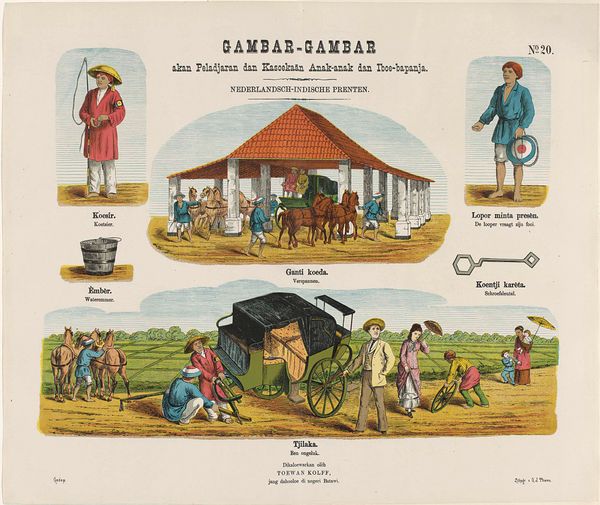
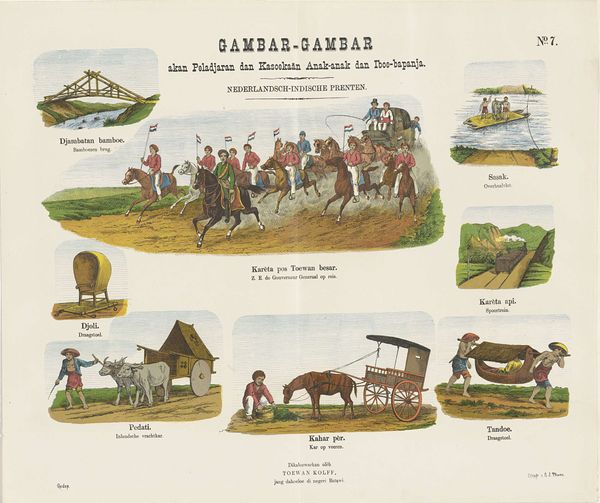
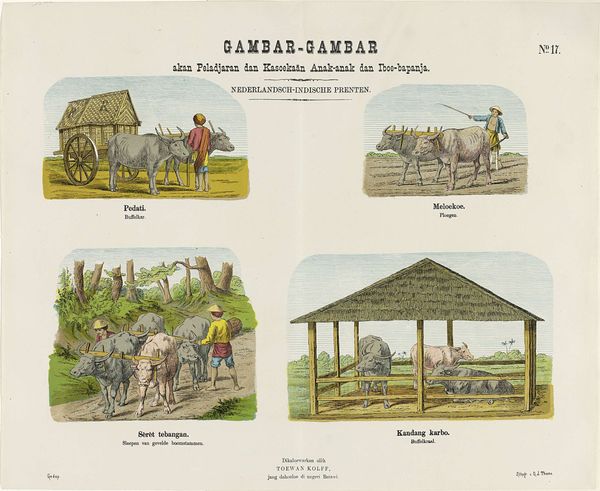
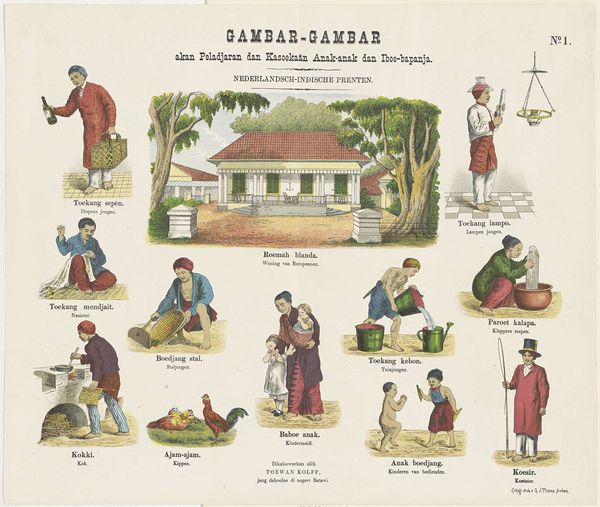
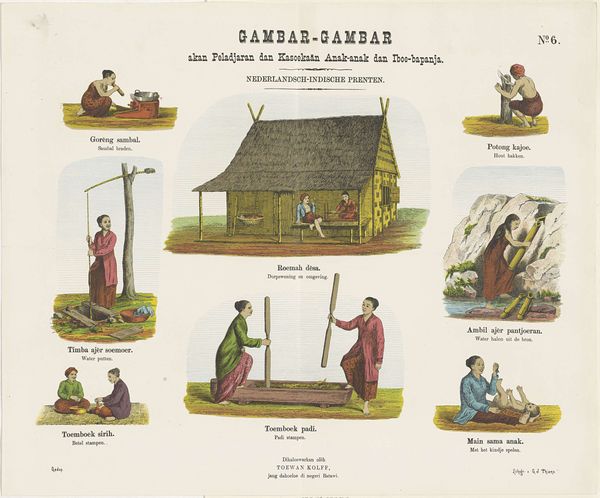
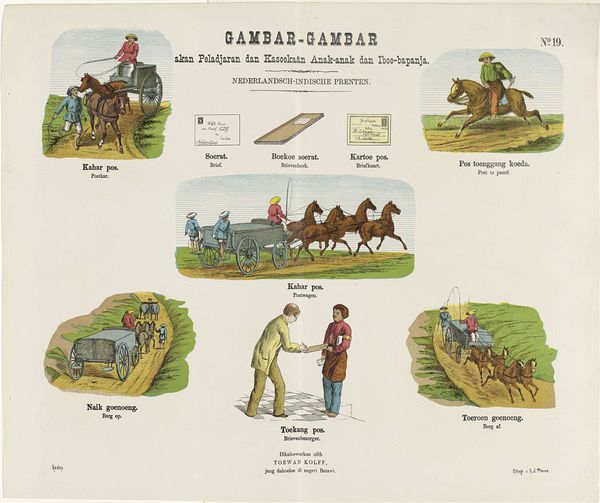
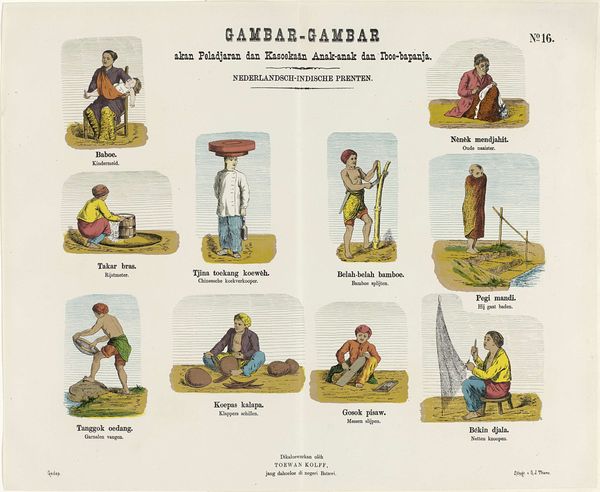
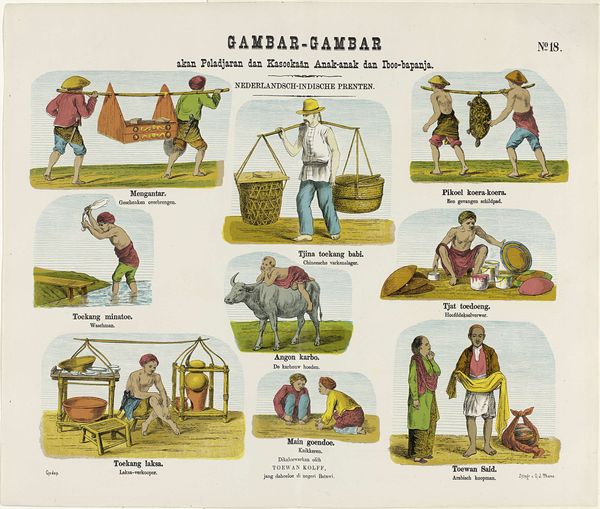
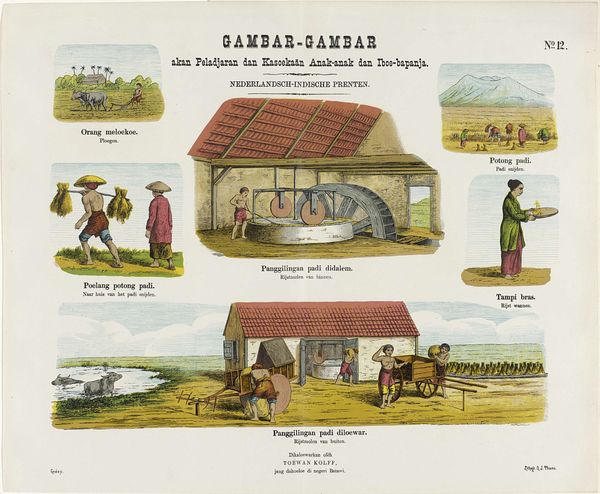
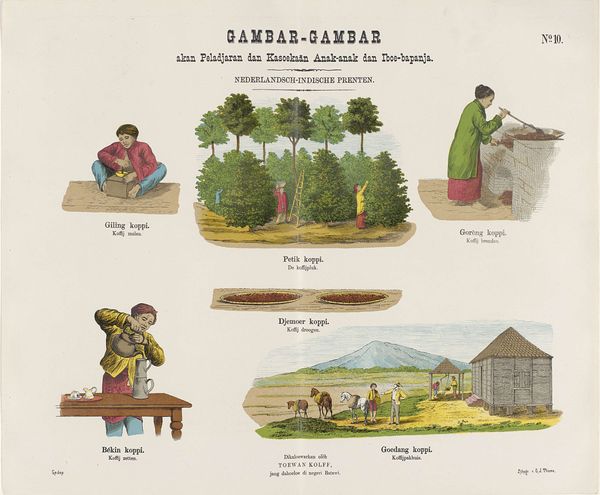
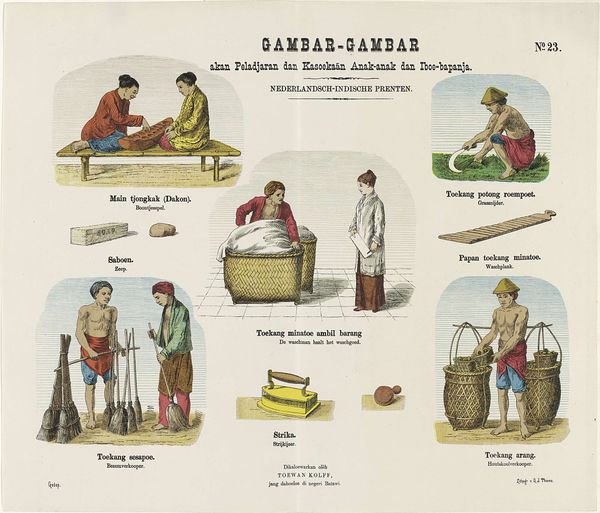
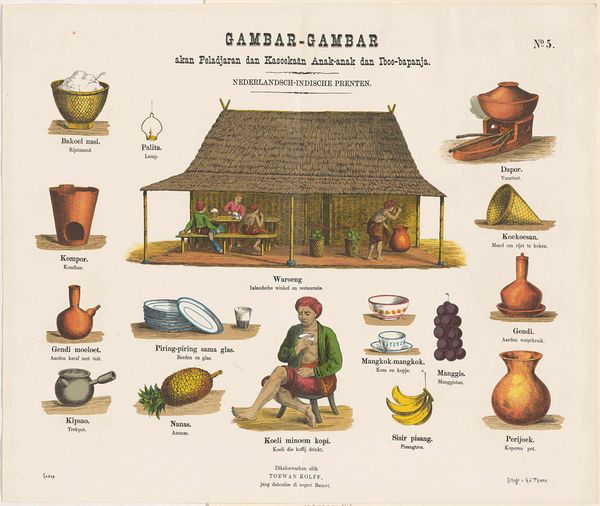
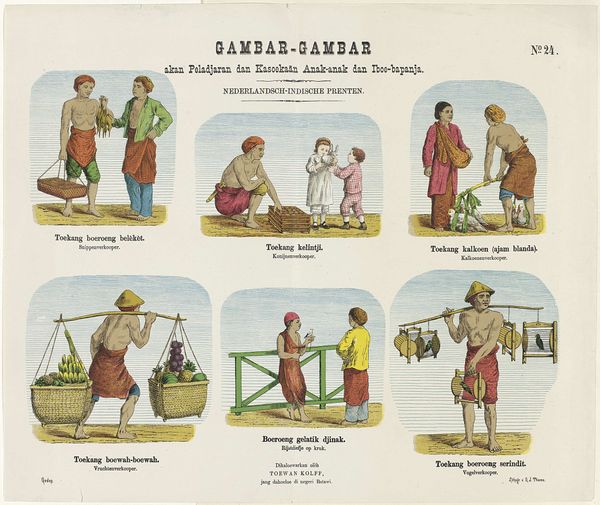
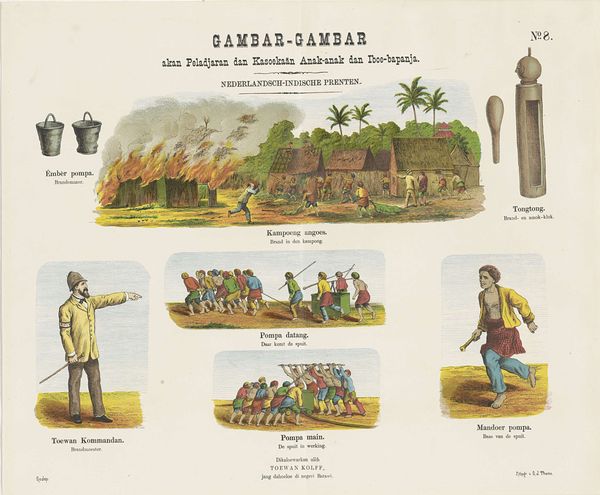
Curator: Looking at “Criminaliteit en beveiliging,” created between 1868 and 1881 by Gualtherus Kolff, what strikes you? Editor: My immediate impression is one of fragmentation. It feels like a page torn from an instructional manual. The layout is visually jarring with disparate scenes and objects floating in space, lacking a cohesive compositional strategy. Curator: That fragmentation is deliberate. These prints, especially popular in colonial contexts, served a specific pedagogical purpose, disseminating knowledge, and, crucially, shaping perceptions of crime and security within a specific social order. The organization reflects a didactic impulse. Editor: True, the linear arrangement suggests a system. Yet, from a purely visual perspective, the chromatic range feels muted, and the individual vignettes don't engage in any formal dialogue with one another, resulting in visual discord. Look at how flat everything is: it lacks depth and contrast, further disrupting spatial coherence. Curator: Absolutely. This artistic style mirrors its function. Meant for widespread distribution, possibly as a supplement in schools or among administrators, aesthetics take a backseat to legibility and impact. These images aimed to inform and, often, to control perceptions, legitimizing colonial power through visual narratives of order and deviance. The image becomes a tool, reinforcing certain ideological narratives. Editor: So, while aesthetically subdued, it functions as a type of social script, directing viewers toward a specific colonial consciousness? I notice the depictions of weapons on one side and of a settlement on the other side; do these also symbolize that form of governance? Curator: Precisely. And what might appear visually “flat” to our modern eyes could signify a strategic clarity intended for immediate assimilation and adherence. The arrangement reinforces a power dynamic, with armed enforcers patrolling social order. Editor: Seeing it through this lens, the print evolves from a disorganized assortment into a subtly persuasive argument for order in an unfamiliar society. Curator: Yes, the artist does an excellent job representing his culture and vision through this print! Editor: Absolutely; and viewing the art using an historical viewpoint changes the work completely.
Comments
No comments
Be the first to comment and join the conversation on the ultimate creative platform.
 Collect
 React
React Comment
More like this